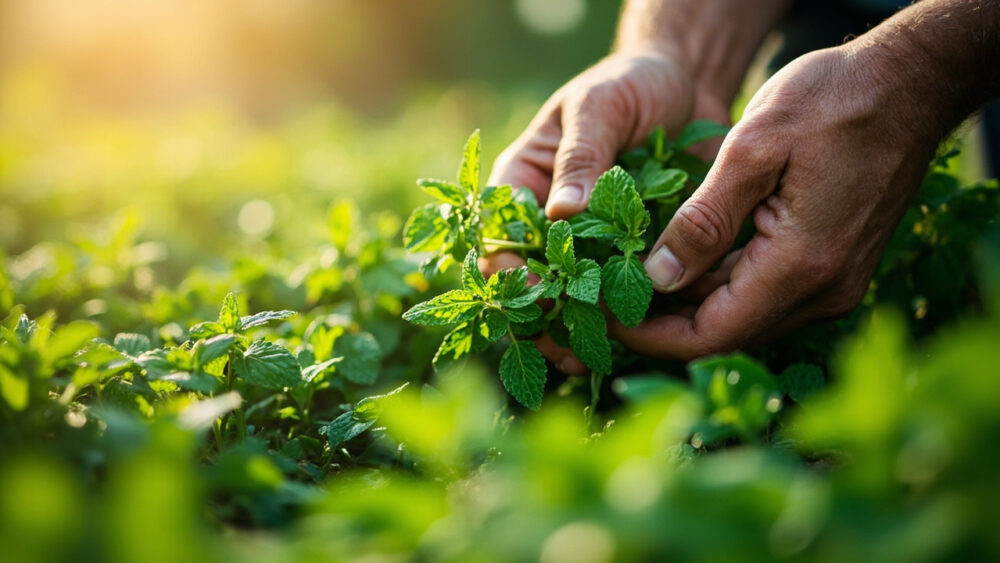
The short answer: harvest spearmint in the morning, right after the dew dries, by snipping stems just above a leaf node once the plant is 4 to 6 inches tall. Do this repeatedly through the growing season rather than waiting for one big cutting. Spearmint rewards frequent, light harvesting far more than one aggressive chop.
Most people ruin this in one of two ways. Either they wait too long and end up with woody, bitter stems, or they hack the whole plant down to the dirt in July and wonder why it sulks for a month. There is also a timing question almost nobody asks until it is too late: whether to harvest before or after the plant flowers, and what that decision actually does to flavor.
Stick around and you will get the exact cues that tell you a stem is ready, the harvest window that changes across the season, the cutting technique that keeps the patch bushy instead of leggy, and simple curing steps for whatever you cannot use fresh. The savable Spearmint at a Glance card is waiting at the bottom once you have the full picture.
The Signs Your Spearmint Is Actually Ready
Spearmint is ready for its first real harvest once stems hit 4 to 6 inches tall and carry at least three or four full sets of leaves. That usually happens 6 to 8 weeks after planting, sooner if the patch is established and the weather has been warm.
Leaf color and size
Look for leaves that are fully sized for the variety, a deep, even green, not pale or yellow at the edges. Pale new growth usually means the plant wants more nitrogen or more consistent moisture, not that it is ready to cut.
Stem feel
Grab a stem near the top. If it snaps cleanly, it is young and tender, exactly what you want. If it bends and feels rubbery or fibrous, that section has already started going woody and is past its prime for fresh eating.
Scent test
Crush a leaf between your fingers. Ready spearmint smells sharp and sweet immediately, no rubbing required. Weak scent usually means the plant is stressed, underwatered, or growing in too much shade.
Once you know what ready looks and smells like, the next question is when in the season to actually go after it.
The Timing Window, and What Early or Late Costs You
The best harvest window runs from late spring through late summer, anchored more to plant maturity than to the calendar. In most zones that is roughly 6 to 10 weeks after your last frost, once nights are reliably above 50°F and the plant has put on real leaf mass.
Harvest too early, on stems under 4 inches with only one or two leaf sets, and you weaken a plant that has not built enough root reserve yet. It will recover, but growth stalls for a week or two.
Harvest too late, after stems have gone tall, hollow, and start budding flowers, and the leaves turn noticeably more bitter and lose fragrance. This is the guess almost everyone gets backward: they assume letting mint grow longer means a bigger, better harvest. In reality, flavor peaks well before flowering, and once buds form the plant redirects energy into seed production, not leaf quality.
If you already have flower buds, harvest immediately rather than waiting, since flavor only declines from that point on.
Knowing when to cut is half the job. How you cut determines whether the plant bounces back strong or spirals.
How to Harvest Spearmint Step by Step
Cut in the morning after dew has dried but before the heat of the day, since that is when essential oil concentration in the leaves is highest and the plant is least stressed by losing foliage.
- Choose your stems. Pick stems with several healthy leaf sets, avoiding any that are flowering or clearly woody at the base.
- Cut above a node. Snip about a third to half of the stem’s length, always just above a leaf node or pair of leaves, using clean scissors or pruning snips rather than pinching, which can bruise the stem.
- Work around the patch. Take a little from many stems rather than stripping a few plants bare, which keeps the whole patch producing evenly.
- Stop at a third. Never remove more than about a third of the plant’s total growth in a single harvest, even if it looks like it can spare more.
Cutting above a node matters more than most people realize, because that is exactly where the plant will branch and send out two new stems instead of one. That single habit is the difference between a bushy, productive patch and a thin, leggy one that keeps falling over.
Once the cuttings are in your hand, what you do in the next hour matters almost as much as the cut itself.
What to Do With Spearmint Right After Cutting
Get cut stems out of direct sun and into water or a damp cloth within a few minutes, since mint leaves wilt fast and lose oil quickly once separated from the plant.
For immediate use, rinse gently in cool water, shake off excess moisture, and treat the stems like fresh cut flowers in a glass of water on the counter. They will hold well for several days that way.
For anything you are not using within a day or two, this is the moment to decide between drying and freezing rather than letting the harvest sit in the crisper drawer losing flavor.
What you do next also determines whether your spearmint patch keeps producing or starts to peter out.
Keeping the Harvest Coming All Season
Spearmint is one of the few herbs that genuinely gets better the more you cut it, as long as you cut correctly and feed it a little in return.
Harvest every 1 to 2 weeks during active growing season rather than letting stems get long between cuttings. Frequent light harvesting keeps the plant bushy and delays flowering, which keeps flavor strong for months instead of weeks.
After a heavier harvest, give the patch a light feeding with a balanced fertilizer and keep soil evenly moist, since mint is a heavy feeder and drinker compared to most herbs. Skip fertilizing right before a harvest you plan to eat fresh; feed after cutting instead.
If a section of the patch does bolt to flower before you catch it, cut those stems back hard to just above the lowest leaf set. They will not be great eating, but the hard cut resets that section and pushes fresh, tender growth within a couple of weeks.
Drying and Storing What You Cannot Use Fresh
To dry: bundle 5 to 8 stems with a rubber band and hang them upside down in a dark, dry, well-ventilated spot out of direct sun. They are fully dry and ready to store in 1 to 2 weeks, when leaves crumble easily between your fingers. Strip the dried leaves off the stems and store whole or crumbled in an airtight jar out of light, where they will hold good flavor for 6 to 12 months.
To freeze: strip leaves from stems, pack them into ice cube trays, top with water, and freeze. Pop the cubes into a freezer bag once solid and drop one straight into hot water or a recipe as needed.
Both methods beat refrigerating loose fresh mint, which fades within days no matter how well you wrap it.
Everything above works whether this is your first cutting of the season or your fifth, and it all boils down to the numbers below.
Spearmint at a Glance
- When to start harvesting: once stems reach 4 to 6 inches tall with three or four leaf sets, usually 6 to 8 weeks after planting.
- Best time of day: morning, after dew dries and before peak heat, when oil concentration in the leaves is highest.
- How to cut: snip a third to half of each stem’s length just above a leaf node, using clean scissors, not a pinch.
- How much to take: no more than a third of the plant’s total growth in any single harvest.
- How often: every 1 to 2 weeks during the growing season to keep growth bushy and flavor strong.
- Watch for: flower buds forming, which signal flavor is about to decline; harvest immediately if you see them.
- Storage: hang-dry for 1 to 2 weeks or freeze chopped leaves in water in ice cube trays for months of use.
Cut a little, cut often, always just above a node, and spearmint will outproduce almost anything else in your herb bed.
Get greedy with one giant harvest and you trade months of good leaves for a single so-so batch.