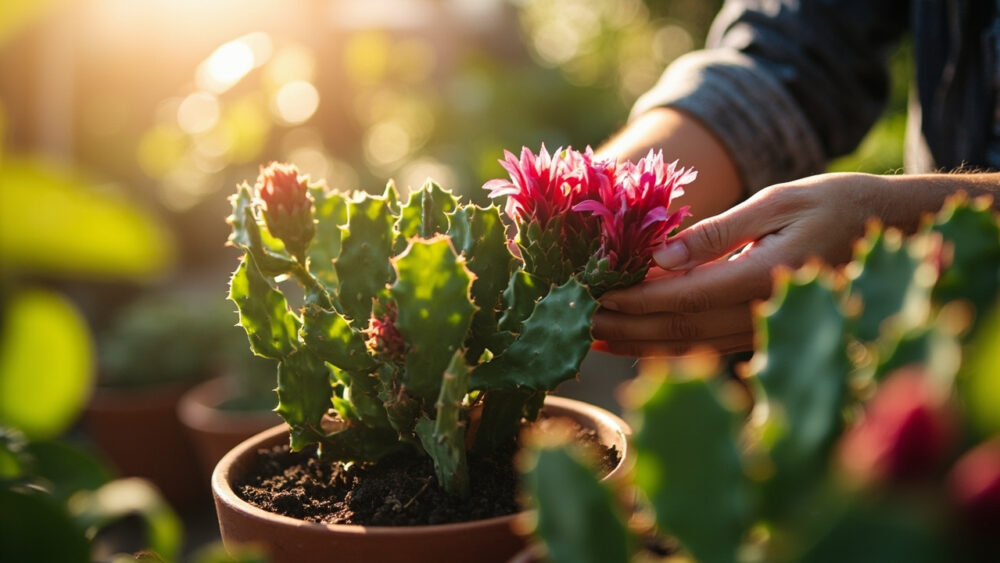
Christmas cactus grows best in bright, indirect light, a fast-draining potting mix, and a pot only barely bigger than its roots, and if you want it to actually rebloom you need to give it cool nights and shortening days starting in early fall. That is the whole plant in one sentence. Learning how to grow christmas cactus successfully is less about daily fuss and more about getting a few seasonal cues right at the moments that matter.
Most of this plant’s reputation for being fussy comes from one mistake: people treat it like a desert cactus and starve it of water, when it is actually a jungle succulent that grows on trees in Brazil. Get that backwards and you will watch it sulk for years without ever flowering.
There is also a sign almost everyone misreads, a plant that drops flower buds right before they open, and the honest answer to the question you are already forming: why did it bloom beautifully last year and do nothing this year. All three get answered below, and the save-able Christmas Cactus at a Glance card is waiting at the bottom once you have the full picture.
When to Plant or Repot Christmas Cactus
Christmas cactus is not planted from seed on any kind of schedule tied to frost dates, since it is grown indoors as a houseplant across nearly all of the US, hardy outdoors only in zones 9 through 11 where nights stay above roughly 50°F. What you are really timing is repotting and propagation, and both go best in spring through early summer, after the plant finishes blooming and before it pushes hard new growth.
Repot only when it is clearly root-bound, meaning roots circling tightly at the drainage hole or the plant drying out within a day or two of watering. This species actually blooms better slightly pot-bound, so do not repot every year out of habit.
If you are starting a new plant from a cutting, take it in late spring or early summer when the plant is actively growing, never right before or during bloom season.
Next comes the part most people skip entirely: picking a spot that suits how this plant actually lives in the wild.
Choosing the Spot and Preparing the Soil
Christmas cactus wants bright, indirect light, the kind you get a few feet back from an east or west window. Direct south-facing sun through glass, especially in summer, scorches the flat leaf segments and turns them dull red or purplish at the edges.
Soil is where most store-bought plants are already set up to fail. The dense, water-retentive mix many nurseries use stays wet for a week or more, and this plant’s roots rot in soggy soil far faster than people expect from something called a cactus.
Use a mix built for drainage: a standard cactus or succulent potting mix, or regular potting soil cut with perlite or coarse sand at roughly one part grit to two parts soil. The pot needs a drainage hole, no exceptions, and terracotta is a genuinely good choice here because it wicks moisture out of the soil between waterings.
With the right mix ready, planting itself only takes a few careful steps.
Planting Christmas Cactus, Step by Step
- Size the pot right. Choose a container only 1 to 2 inches wider in diameter than the current root mass. Oversized pots hold excess moisture the roots cannot use fast enough.
- Set the depth. Plant at the same depth it was growing before, roots covered but no stem segments buried, since buried pads can rot.
- For cuttings, let them callus first. Snip a segment 2 to 3 pads long at a natural joint, let the cut end dry and callus for 24 to 48 hours, then insert it about an inch deep into the mix.
- Space multiple cuttings 2 to 3 inches apart if you are filling one pot with several for a fuller look.
- Water lightly right after planting, then hold off watering again until the top inch of soil is dry, which for cuttings can take a week or two while roots establish.
Getting the plant in the ground right is only half the job, since what happens over the next several months decides whether you get flowers at all.
Watering and Feeding Through the Season
If you assumed thick, fleshy leaves mean this plant wants to dry out like a desert cactus, that guess is exactly backwards. Christmas cactus is an epiphyte from humid Brazilian forests, and it wants soil that stays lightly moist during active growth, spring through early fall, then noticeably drier once flower buds are setting.
Check moisture by feeling an inch down with your finger. Water thoroughly when that inch feels dry, then let the excess drain completely and never let the pot sit in a saucer of standing water.
Feed monthly from spring through late summer with a balanced, water-soluble houseplant fertilizer at half the label strength. Stop feeding entirely from early fall once you start bud-set prep, since a late nitrogen push encourages leaf growth over flowers.
Humidity matters more than most houseplant guides admit. Dry indoor winter air from forced-air heating is a common reason buds shrivel before opening, so a nearby humidity tray or pebble tray helps more than people expect.
Get the water and light routine steady, and you have already dodged most of what actually kills this plant.
Problems That Actually Strike, and How to Head Them Off
Bud drop is the sign almost everyone misreads. Growers assume it is disease or a pest, but it is almost always a sudden change: moving the plant, a draft from a door or heating vent, or an inconsistent watering schedule right as buds are forming. Keep the plant in one stable spot from bud set until flowering finishes.
Limp, shriveled segments mean underwatering; segments that turn translucent, mushy, or drop off in clumps mean root rot from overwatering or a pot with no drainage. Root rot is the harder problem, and it usually means unpotting, trimming away any black or mushy roots, and repotting fresh into dry mix.
Mealybugs and spider mites show up occasionally, mealybugs as small white cottony clusters in the joints between segments, spider mites as fine webbing with speckled, dull leaves. Treat with insecticidal soap or a labeled houseplant insecticide, following the product label exactly, and isolate the plant from other houseplants while you treat it.
Christmas cactus is not considered toxic to cats, dogs, or people, but any houseplant ingestion that causes vomiting, drooling, or lethargy in a pet is worth a call to your veterinarian rather than waiting it out.
Once the plant is healthy and stable, the last piece of the puzzle is getting it to actually flower on schedule.
When and How Christmas Cactus Blooms
Here is the honest answer to why last year’s plant bloomed and this year’s has not: Christmas cactus needs both cool nights and long, uninterrupted dark periods to set buds, and one missed month of that in early fall is enough to skip the whole season.
Starting roughly six to eight weeks before you want blooms, usually beginning in late September or early October for a December flowering, give the plant 12 to 14 hours of complete darkness each night along with nighttime temperatures around 50 to 65°F. A spare room, closet, or covered spot away from all artificial light works, since even a hallway light or a phone screen glow can interrupt the cycle.
Once you see tiny bud nubs forming at the segment tips, the hard part is over. Move the plant back to its normal bright spot and keep watering and light steady, and buds will swell and open over several weeks.
Flowers typically last one to two weeks each, and a mature, well-set plant will often carry blooms from late November into January depending on when the dark treatment started.
With bloom timing sorted, everything you need day to day fits on one short list.
Christmas Cactus at a Glance
- When to plant or repot: spring through early summer, right after blooming finishes, and only when clearly root-bound.
- Light: bright, indirect light year-round, never direct hot afternoon sun through glass.
- Soil and pot: fast-draining cactus or succulent mix, a pot with drainage holes only 1 to 2 inches wider than the root mass.
- Watering: water when the top inch of soil is dry, moist during active growth, drier once buds are setting, never left standing in water.
- Feeding: half-strength balanced fertilizer monthly from spring through late summer, then stop by early fall.
- Bloom trigger: six to eight weeks of 12 to 14 hours of uninterrupted darkness and 50 to 65°F nights, started in late September or early October for winter flowers.
- Watch for: bud drop from sudden moves or drafts, mushy segments from overwatering, mealybugs or spider mites treated with insecticidal soap per label.
Get the drainage right and the fall dark treatment right, and this plant will reward you with flowers for decades.
Everything else, the watering, the feeding, the light, is just steady maintenance in between.