Panicle hydrangeas care comes down to three things this plant genuinely demands: full sun, well-drained soil that never goes bone dry, and a hard prune in late winter that most people are too scared to do. Get those three right and a panicle hydrangea (Hydrangea paniculata, the kind sold as Limelight, Little Lime, or Pinky Winky) will bloom reliably every single year with almost no drama. This is the easiest hydrangea to grow and the most forgiving of a bad pruning cut, which is exactly why it makes a good starting point.
But there are still specific ways to waste a season with this plant. The wrong pruning timing does not kill it, but it can cost you flowers for a full year. The color question trips up almost everyone who grew a bigleaf hydrangea first. And the honest answer to “why won’t mine bloom” is almost never what people assume.
Stick with this and you will hit every one of those, plus the save-able Panicle Hydrangeas at a Glance card at the very bottom for the numbers you will actually want on your phone this weekend.
Light, Placement, and Temperature
Panicle hydrangeas want full sun, six or more hours a day, which sets them apart from the shade-loving hydrangeas most people picture. In hot climates, zone 7 and south, a little afternoon relief helps, but even there this is a sun plant, not a shade plant. Too little light gets you a leggy shrub with thin, floppy flower heads that flop over after rain.
These are hardy from about zone 3 through zone 8, tough enough to shrug off winters that would kill a bigleaf hydrangea’s flower buds outright. That hardiness is actually the whole reason this species blooms so reliably.
Give it 4 to 8 feet of space on all sides depending on the cultivar, since crowding it against a wall or other shrubs cuts airflow and invites the fungal problems covered further down.
Where you plant it now decides how much water you’re hauling out there all summer.
Watering: How Much, How Often, and How to Tell
Water a newly planted panicle hydrangea deeply two to three times a week for the first month, then taper to once a week once it’s rooted in. Established plants, two or more years in the ground, generally need about 1 inch of water a week from rain or irrigation, more during stretches of 85°F-plus heat.
Skip the finger-in-the-soil guess and actually check 2 to 3 inches down. If it’s dry at that depth, water. If it’s still damp, wait.
If you assumed wilting leaves mean the plant is thirsty, that guess is only half right here. Panicle hydrangeas often droop in the hottest part of a sunny afternoon even with plenty of moisture in the soil, then perk back up by evening. Check the soil before you reach for the hose. Wilting that’s still there the next morning is the real thirst signal.
A thick layer of mulch does more for consistent moisture than any amount of extra watering.
Soil, Mulch, and Feeding
Panicle hydrangeas want soil that drains but doesn’t dry out, slightly acidic to neutral, in the 6.0 to 6.5 pH range, though they’re notably more tolerant of average garden soil than other hydrangea species. Unlike bigleaf hydrangeas, soil pH here does not shift bloom color. That’s a bigleaf hydrangea trick, and it does not work on panicle types no matter how much aluminum sulfate you dump in.
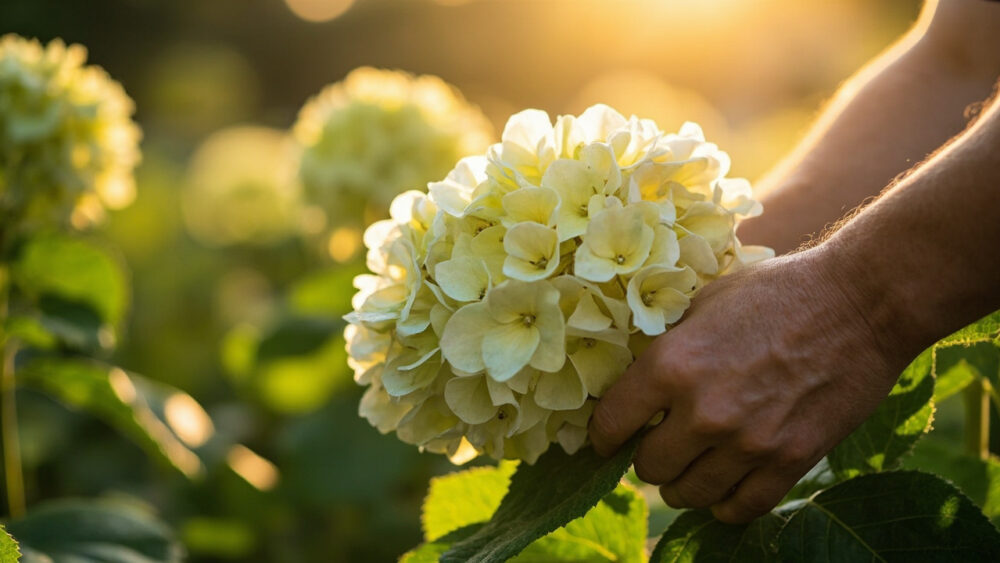
Panicle hydrangea flowers change color on their own schedule as the season runs its course, typically shifting from white or lime green toward pink or burgundy as summer ages into fall, driven by temperature and time, not soil chemistry.
Feed once in early spring with a balanced, slow-release fertilizer as new growth starts. A 2 to 3 inch layer of mulch, kept a few inches back from the stems, holds moisture and moderates soil temperature through summer heat.
Skip the extra feedings. Too much nitrogen buys you leaves at the expense of flowers, and that’s a trade nobody wants from this shrub.
Pruning, and the Timing Mistake That Costs a Whole Season
Panicle hydrangeas bloom on new wood, meaning the flowers form on growth made that same spring. That’s what makes this the safest hydrangea to prune hard, and also where most people freeze up out of habit from growing a different species.
Prune in late winter or very early spring, while the plant is still dormant and before new growth breaks. Cut back by a third to a half of the plant’s total size, removing any dead, crossing, or weak stems entirely.
The mistake that actually costs a season is pruning too late, after new growth has already started. You won’t lose the plant, but you’ll be cutting off buds that were about to become flowers, and you’ll spend the summer wondering why a healthy-looking shrub barely bloomed.
Skipping pruning for a year or two doesn’t kill it either, it just gets you a taller, floppier shrub with smaller flower heads that need staking after a hard rain.
Get the timing right once and you can basically run this pruning on autopilot every year after.
Problems Most Likely to Strike, and the Real Reason It Won’t Bloom
Panicle hydrangeas are genuinely low-trouble, but a few things do show up. Powdery mildew and leaf spot appear as white coating or dark spotting on leaves in humid, crowded conditions, fixed by improving airflow and, if it’s bad, a fungicide labeled for ornamental shrubs applied exactly per the label. Aphids sometimes cluster on new growth and are usually knocked back with a strong spray of water or insecticidal soap.
Now, the honest answer to the question that actually brings people here: if it isn’t blooming, the top two causes are not enough sun and pruning at the wrong time. Not soil, not fertilizer, not the weather that one week.
If you assumed a bloom problem needs a feeding fix, that guess is what sends most people to buy a fertilizer they don’t need. Count the hours of direct sun the spot actually gets, and check your own pruning calendar, before you touch the fertilizer bag again.
One more thing worth naming plainly: hydrangeas are considered toxic to dogs, cats, and horses if chewed or eaten in quantity, causing symptoms like vomiting, diarrhea, or lethargy. If a pet has eaten a meaningful amount of leaves or flowers, call your veterinarian rather than waiting to see what happens.
Once light and pruning are dialed in, the next question is simply how to know it’s actually doing well.
Signs Your Panicle Hydrangea Is Actually Thriving
A thriving panicle hydrangea pushes strong new stems each spring, holds dark green leaves without spotting, and produces large, dense flower panicles that stay upright rather than flopping to the ground. Flower heads should feel firm, not papery or brittle, and should hold their color for weeks before the seasonal shift begins.
New growth in the 12 to 24 inch range after a proper late-winter prune is a good sign the shrub has what it needs. Stunted growth under 6 inches usually points back to insufficient light or water stress, not a fertilizer shortfall.
A healthy plant also shrugs off a hot afternoon wilt and bounces back by evening without any help from you.
That resilience is really the whole point of choosing this hydrangea over the fussier kinds.
Panicle Hydrangeas at a Glance
- When to plant: spring after your last frost, or early fall while soil is still warm, giving roots time to establish before extreme heat or hard freezes.
- Light needed: full sun, six or more hours daily, with light afternoon shade acceptable in zones 7 and south.
- Watering: about 1 inch weekly once established, checked by feeling soil 2 to 3 inches down rather than by watching leaves wilt.
- Soil: well-drained, slightly acidic to neutral, pH 6.0 to 6.5, with average garden soil tolerated well.
- Feeding: one balanced, slow-release application in early spring, nothing more.
- Pruning: late winter to very early spring, before new growth breaks, cutting back a third to a half.
- Bloom color: shifts naturally with the season, white or green toward pink or burgundy, not controllable through soil pH.
If you remember one thing, remember this: full sun and late-winter pruning solve almost every problem this plant will ever have.
Everything else is just maintenance around those two decisions.