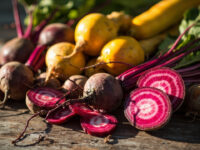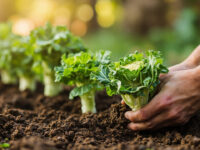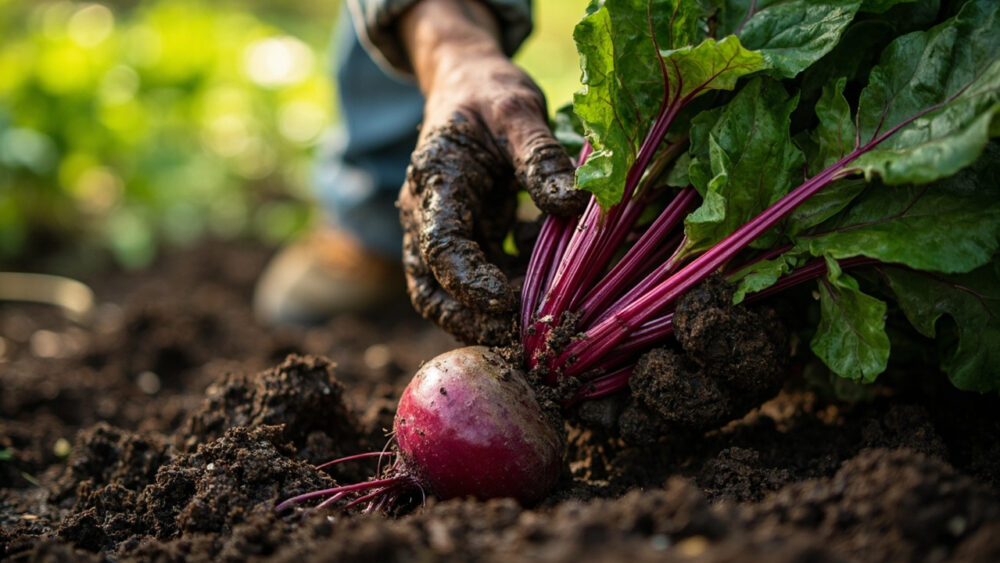
Here’s how to grow beets from seed to plate: sow them directly in the ground about 2-4 weeks before your last frost, 1/2 inch deep, thinned to 3-4 inches apart in loose, rock-free soil, and pull the roots when they hit golf ball to tennis ball size, usually 50 to 65 days later. Beets are one of the most forgiving cool-season crops you can grow, but they fail in three predictable ways, and almost nobody who struggles with them saw those failures coming.
The biggest one is not disease or pests. It is soil that looks fine on top but is compacted or rocky a few inches down, and it turns your beets into skinny, forked little roots that look like they hit a wall, because they did.
There is also a germination sign most gardeners misread completely, a nutrient trick that fixes leafy-but-small beets, and the honest answer to whether you should thin your seedlings at all. Stick around, because the save-able Beets at a Glance card is waiting at the bottom once you have the full picture.
When to Plant Beets
Beets are a cool-season crop that actually tolerates a light frost once established, so you do not need to wait for warm soil the way you would for beans or squash.
Direct sow as soon as soil can be worked and has warmed to at least 40°F, typically 2 to 4 weeks before your last expected frost. Germination happens fastest between 50°F and 85°F, so a soil thermometer beats guessing.
In most zones you get two windows: an early spring sowing, and a second one 8 to 10 weeks before your first fall frost for an autumn crop. In zones 8 and warmer, beets also grow well through fall and winter with a spring planting mostly avoided due to summer heat causing bolting.
Get the timing right and the rest of the season gets a lot easier.
Choosing the Spot and Prepping the Soil
Beets want full sun, 6 or more hours a day, though they will tolerate light afternoon shade in hot climates. The soil matters more than the sun for this crop.
Loose, deeply worked soil is non-negotiable. Beets are root vegetables, and any rock, clay clump, or compacted layer in the top 8 to 10 inches will deform the root, forcing it to grow forked, stunted, or lopsided instead of round.
Work in an inch or two of compost and rake the bed until it is crumbly and stone-free, at least down to a fist’s depth. Aim for a soil pH between 6.0 and 7.5, beets tolerate a wide range but sulk in strongly acidic soil.
Skip a soil boron deficiency and you will find out the hard way later, but first, get the bed itself right.
Planting Beets Step by Step
1. Sow at the right depth
Plant seeds 1/2 inch deep. Any deeper and germination slows dramatically, especially in cool spring soil.
2. Space generously from the start
Sow seeds about 1 inch apart in rows spaced 12 to 18 inches apart. This feels wasteful, but you will thin later, and dense sowing improves your odds since beet “seeds” are actually small clusters that often sprout multiple seedlings each.
3. Water them in and keep the surface moist
Water gently right after sowing. Beet seed germinates slowly, 5 to 14 days is normal, and the soil surface cannot be allowed to crust over or dry out in that window or germination stalls entirely.
4. Thin without guilt
Once seedlings are 2 to 3 inches tall, thin to one plant every 3 to 4 inches. This is the step most gardeners skip because it feels like killing perfectly good plants, but crowded beets stay small forever, competing for room underground.
Do not compost the thinnings, eat them. Beet greens from thinning are tender and delicious raw or sauteed.
Get spacing right at this stage and feeding decisions later on actually matter.
Watering and Feeding Through the Season
Beets need consistent moisture, about 1 inch of water a week from rain or irrigation, more in sandy soil or hot weather. Inconsistent watering is what causes the woody, zoned rings you sometimes find when you slice a beet open, the root essentially pauses and restarts growth every time it dries out.
If your beets are producing lush tops but small, slow rootsmost gardeners assume they need more nitrogen and reach for a high-nitrogen fertilizer. That guess makes the problem worse, pushing even more leaf growth at the root’s expense.
What beets actually need for good root development is phosphorus and potassium, plus a nutrient most home gardeners never think about: boron. A boron deficiency causes exactly this symptom, healthy-looking greens over hollow, cracked, or stunted roots. A balanced organic fertilizer or one labeled for root vegetables usually covers it; true boron deficiency is more common in sandy or heavily leached soils and shows up as internal black spotting when you cut the beet open.
Feed lightly once, about 3 weeks after sowing, and keep watering steady from there.
Problems to Watch For
Beets are relatively low-drama, but a few issues show up often enough to plan for.
- Leaf miners: pale, winding tunnels in the leaves. Remove affected leaves as you see them; row covers at planting time prevent the adult flies from laying eggs in the first place.
- Cercospora leaf spot: small tan spots with reddish borders in humid weather. Improve airflow by thinning properly, avoid overhead watering late in the day, and remove badly spotted leaves.
- Flea beetles: small shot-holes in young leaves. Seedlings usually outgrow minor damage. Row covers help protect them early.
- Forked or misshapen roots: almost always rocky or compacted soil, not a pest or disease at all.
- Bolting (flowering early): triggered by a hot spell after a cold snap, common when spring beets get planted too late and hit summer heat.
None of these are usually crop-ending if you catch them early, which just leaves the best part.
When and How to Harvest Beets
Beets are ready in roughly 50 to 65 days from sowing, depending on variety, but the calendar is a rough guide, the root itself tells you the real answer.
Check by feelnot just by looking at the top of the soil. Brush soil away from the shoulder of the root, it should feel firm and measure roughly 1.5 to 3 inches across for the best flavor and texture.
Beets left too long in the ground get woody and fibrous, especially in warm soil, so do not wait for them to get large thinking bigger is better. Smaller and younger is almost always the better eating beet.
Pull by grasping the greens near the base and lifting, loosening stubborn soil with a hand fork first rather than yanking, which can snap the root.
Harvest greens separately anytime the leaves are 4 to 6 inches long, cutting a few outer leaves per plant lets the root keep growing.
Once you have pulled your first beet, the only thing left to nail down is keeping all these numbers straight next time, which is exactly what the card below is for.
Beets at a Glance
- When to plant: direct sow 2 to 4 weeks before last frost, soil at least 40°F, second sowing 8 to 10 weeks before first fall frost.
- Depth and spacing: 1/2 inch deep, 1 inch apart at sowing, thinned to 3 to 4 inches once seedlings reach 2 to 3 inches tall.
- Sun and soil: full sun, loose stone-free soil worked 8 to 10 inches deep, pH 6.0 to 7.5.
- Water: about 1 inch per week, kept consistent to avoid woody, ringed roots.
- Feeding: light feed around 3 weeks in, favoring phosphorus, potassium, and boron over heavy nitrogen.
- Days to harvest: 50 to 65 days, root ready at 1.5 to 3 inches across.
- Common problems: leaf miners, cercospora leaf spot, flea beetles, forked roots from compacted soil, bolting from a cold-then-hot spring.
Get the soil loose and the spacing generous, and beets more or less grow themselves from there.
Everything else, the feeding, the pest watching, the timing, is just fine-tuning around that one foundation.