Nine times out of ten, a yellowing monstera is sitting in soil that stays wet too long, and the fix is to let it dry out properly and check the roots before you do anything else. That single mistake, overwatering, causes more yellow monstera leaves than every other cause combined. But it is not the only culprit, and the plant is telling you which one you have if you know where to look.
Most people blame the light first. That is usually wrong, and chasing a light fix while the real problem is a soggy root ball wastes weeks you do not have. The detail that actually matters is where the yellowing shows up: which leaf, which part of that leaf, and whether it is spreading or isolated.
Below is every real cause ranked by how often it is the actual answer, how to confirm each one on your own plant in about two minutes, and whether the leaf comes back or not. Save the diagnosis checklist at the bottom for when you are standing at the pot and need the short version.
Causes, Most to Least Likely
1. Overwatering or root rot
This is the default suspect for good reason. Confirm it by sliding the plant out of its pot or pushing a finger two inches down into the soil. Roots that are brown, mushy, or slip off their fibrous core in your hand mean rot. Soil that stays wet a week or more after watering is the setup even before rot sets in.
Fix: trim away any black or mushy roots with clean scissors, repot into fresh, fast-draining aquroid mix, and let the pot dry out noticeably between waterings from now on. If the pot has no drainage hole, that is the actual root cause and it needs one.
The yellow leaf you already have will not turn green again, but the next section tells you if the plant itself is fine.
2. Underwatering, more rare than people assume
Monstera droops and its leaves go crisp-yellow at the edges before the whole leaf commits, and the soil pulls away from the pot’s sides. Confirm it by checking if the soil is bone dry two or more inches down and the pot feels light for its size.
Fix: water thoroughly until it runs from the drainage hole, then get on an actual schedule instead of watering on a guess. Most monsteras in bright indirect light want water again when the top two to three inches of soil are dry, roughly every seven to twelve days indoors, longer in low light or winter.
If the soil was wet, not dry, skip ahead because you are dealing with something else entirely.
3. Old leaf shedding a natural process, not a problem
Monsteras drop their oldest, lowest leaves as they grow new ones at the top. This is normal turnover, not disease. Confirm it by checking that only one lower or older leaf is yellowing at a time, the rest of the plant looks healthy, and new growth is still emerging.
Fix: nothing to fix. Let the leaf yellow fully and remove it at the base once it is mostly brown, or leave it until it drops on its own.
If more than one leaf at a time is affected, or a young upper leaf is yellowing, keep reading, because that is not this.
4. Too much direct sun
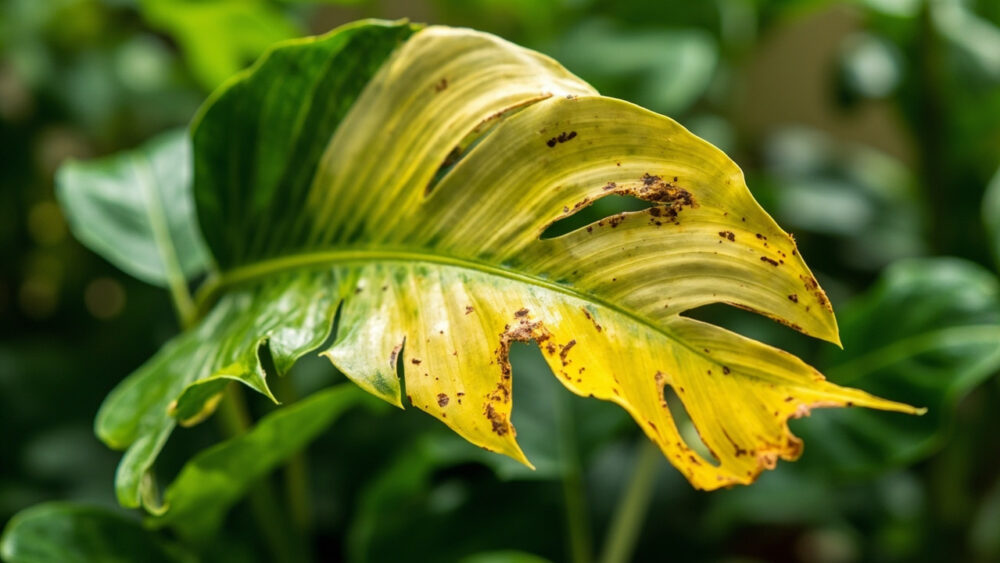
Monsteras are understory plants in the wild and burn easily in hot, direct light. Confirm it by checking if the yellowing leaf faces a south or west window with unfiltered afternoon sun, and whether the yellow patches have crisp, papery, tan-brown centers rather than solid even yellow.
Fix: move the plant back from the glass or add a sheer curtain, and expect bright indirect light instead, which for a monstera means it can sit within a few feet of a bright window without hot rays landing directly on the leaves for hours.
Sun damage is easy to confuse with something more serious, and the tell-apart section below clears that up fast.
5. Nutrient deficiency
A monstera that has not been fed in over a year, especially one that is pot-bound, can run out of nitrogen. Confirm it by checking for pale, uniform yellowing that starts on the oldest lower leaves and moves evenly across the whole leaf, with no dry patches or dark spots, in a plant that has been in the same soil a long time.
Fix: feed with a balanced liquid houseplant fertilizer at half strength during active growth in spring and summer, and repot if roots are circling tightly at the pot’s edge.
Feeding a plant that is actually overwatered will not help and can make root rot worse, so confirm this one before you reach for fertilizer.
6. Cold drafts or temperature swings
Monstera hates sitting near an AC vent, a drafty window, or an exterior door in winter. Confirm it by checking the plant’s location: leaves nearest the cold source yellow first, sometimes with a slightly limp or dull texture, and the problem tracks with a recent cold snap or a newly moved plant.
Fix: relocate it away from drafts and vents, keep it above roughly 60°F, and give it a few weeks to stabilize before judging the results.
Once you have ruled out temperature, you have covered every common cause, and it is time to line them up side by side.
How to Tell the Causes Apart
Location on the plant is the fastest tell. Old, bottom leaves yellowing one at a time is normal shedding or nutrient deficiency. New or upper leaves yellowing is almost always water-related or sun damage.
Pattern on the leaf matters next. Even, all-over pale yellow points to nutrients or age. Yellow with crisp brown, papery centers points to sun. Yellow that turns mushy or translucent points to overwatering.
Soil and root condition settles anything still unclear. Wet soil plus soft brown roots is rot. Dry soil plus crisp yellow edges is thirst. Dry soil with firm white roots and slow, even yellowing is more likely nutrients or light.
Once you know which bucket you are in, the next question is the one everyone actually wants answered.
Will It Recover?
A leaf that has already turned yellow is not going back to green, full stop, regardless of the cause. The real question is whether the plant recovers, and that depends on what caused it.
Overwatering caught early, with roots still mostly white and firm, recovers well once repotted into dry mix and watered properly. Root rot caught late, with most roots black and mushy, is a much harder save, and if more than half the root system is gone, expect to lose more leaves before new growth resumes, if it resumes at all.
Underwatering, sun stress, cold drafts, and nutrient deficiency all have good outlooks. Fix the condition and the plant typically pushes healthy new leaves within a few weeks to a couple of months.
Normal old-leaf shedding needs no recovery because nothing was wrong to begin with.
Prevention is genuinely easier than any of these fixes, and it is short.
How to Keep It From Happening Again
Check soil moisture by feel, not by calendar. Stick a finger two inches down before every watering and only water when it comes out dry.
Use a pot with a drainage hole and a mix that includes bark, perlite, or coarse material so water moves through instead of sitting.
Keep the plant in bright, indirect light and out of hot direct sun and cold drafts, and feed lightly during spring and summer only.
Now for the two-minute version you can run right at the pot.
Diagnosis Checklist
- Check the soil two inches down: if it is wet or soggy, suspect overwatering or root rot, and go inspect the roots next.
- If the roots are brown and mushy, confirm root rot, trim the dead roots, and repot into dry, fast-draining mix.
- If the soil is bone dry and the leaf edges are crisp and curling, confirm underwatering and give it a thorough soak.
- If only one old, lower leaf is yellowing while the rest of the plant looks healthy, confirm normal shedding and do nothing.
- If the yellow patch has a dry, papery, tan center and faces strong direct sun, confirm sun scorch and move the plant back from the glass.
- If yellowing is pale, even, and on old leaves in a plant that has not been fed or repotted in over a year, confirm nutrient deficiency and feed at half strength.
- If yellowing started after a move near a vent, drafty window, or door, confirm cold stress and relocate the plant.
- Once identified, fix only that one cause, wait two to four weeks, and judge new growth rather than the damaged leaf.
Pull one yellow leaf, run the checklist, and you will know exactly what your monstera needs before you even put the watering can down.
Fix the cause, not the leaf, and the new growth will tell you if you got it right.