The fastest, most reliable way to propagate jade plant is from a leaf or stem cutting that has been allowed to dry and callus for two to three days before it ever touches soil. Skip that callusing step and you’ve already set yourself up for the number one killer of jade cuttings: rot. Once callused, a cutting pressed into barely damp cactus mix will typically root in three to six weeks.
That sounds simple, and it is, but almost everyone gets one part wrong. Most people water their new cutting the way they’d water a houseplant, and that single habit rots more jade cuttings than every other mistake combined.
There’s also a sign a lot of growers misread completely: a cutting that shrivels a little in week one looks like it’s dying, but that’s often normal moisture loss while it waits to root, not failure. Stick with me and I’ll walk through exactly what to expect week by week, plus the honest answer to the question you’re probably about to ask next, which is whether you can just stick a leaf straight into water like people do with pothos. Save-able care card is waiting at the bottom.
Why Leaf and Stem Cuttings Beat Every Other Method
Jade plant (Crassula ovata) roots so easily from cuttings that there’s rarely a reason to try anything else. Division works if you have an overgrown, multi-stemmed plant you’re willing to cut apart at the base, but it’s messier and risks damaging the parent for no real benefit.
Seed propagation is possible but painfully slow and jade rarely sets viable seed indoors anyway.
Stem cuttings root faster and give you a plant with a head start on shape, usually a small trunk and a couple of leaf pairs already in place. Leaf cuttings are slower and produce a tiny plantlet at the base of the old leaf, which eventually withers away once the new rosette is established.
Both methods use the same core technique, so the real decision is just how patient you are.
Next up: the exact steps, because this is where most of the actual mistakes happen.
Step by Step: Taking the Cutting and Getting It to Root
Taking the cutting
Choose a healthy stem tip 3 to 4 inches long, or a plump, unblemished leaf, from a plant that isn’t stressed, wilted, or recently overwatered. Use a clean, sharp knife or scissors.
For stem cuttings, cut just below a leaf node. For leaf cuttings, twist the leaf gently at its base so it detaches with the little heel intact rather than tearing across the middle. That heel is where new roots form.
Callusing, the step everyone skips
Set the cutting somewhere warm, dry, and out of direct sun for two to three days, longer for thicker stem pieces, until the cut end feels dry and slightly tough rather than wet or glossy. This is the single most-skipped step, and it’s the one that separates a rooted plant from a mushy pile of mush.
Rooting medium and placement
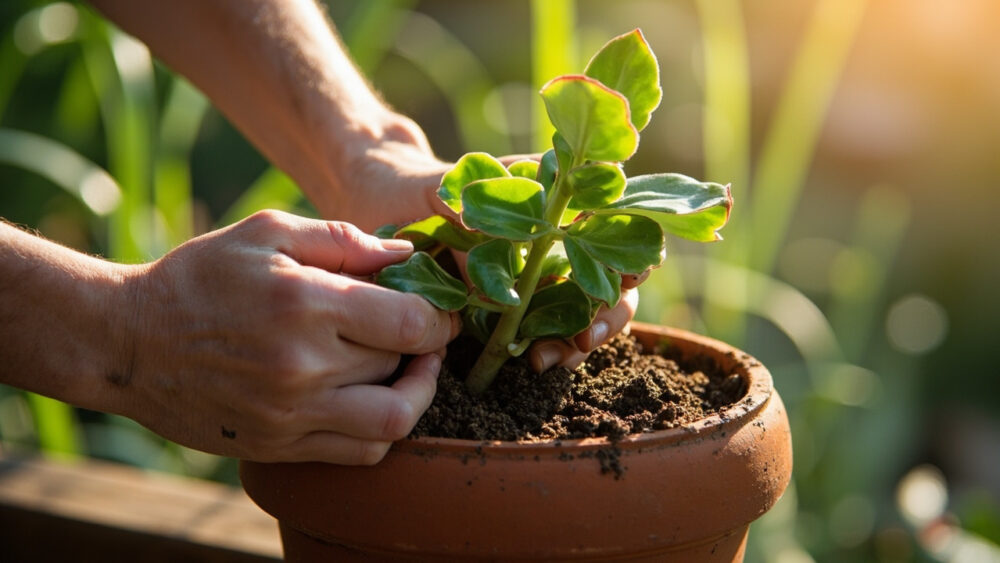
Use a fast-draining mix: straight cactus and succulent soil, or your own blend of potting soil cut with an equal part of perlite or coarse sand. Lay leaf cuttings flat on top of the soil, heel touching the surface. Insert stem cuttings upright, about half an inch to an inch deep, just enough to stand on their own.
Do not water yet.
Now let’s talk timing, because this is where patience actually pays off in a specific, checkable way.
Week by Week: What Actually Happens
Week one is the anxious week. The cutting may look slightly shriveled or dull. That’s normal moisture loss, not a dying plant, as long as it’s not soft, mushy, or discolored at the base.
Mist the soil lightly, just enough to dampen it, once every 4 to 5 days. Keep it in bright, indirect light, no direct blazing sun yet.
Weeks two through four are when roots actually form, invisibly, underground or under the leaf. You generally can’t see this happening, which is the hard part.
Resist the urge to tug on the cutting to check. A gentle, occasional tug test around week three is fine, slight resistance means roots have started.
Weeks five and six usually bring visible proof: a new tiny leaf pair emerging from a leaf cutting’s base, or new growth at the tip of a stem cutting. Once you see that, watering can move to a normal light succulent schedule, water when the top inch of soil is fully dry.
Once roots are established, the next question is when to actually pot this thing up for real.
Potting Up and Moving Outdoors or to a Permanent Pot
Wait until you see clear new growth, not just resistance to a tug, before transplanting. That’s usually five to eight weeks in, sometimes longer for leaf cuttings.
Choose a pot only slightly bigger than the root mass, with drainage holes, no exceptions. Jade sitting in a pot with no drainage in soil that stays wet is a slow-motion death sentence regardless of how well the cutting rooted.
Use the same fast-draining cactus mix for the permanent pot. If you’re moving cuttings outdoors, wait until nighttime temperatures stay reliably above 50°F, and introduce them to direct sun gradually over one to two weeks to avoid scorching leaves that grew up in indirect light.
Jade is not frost-tolerant at all, so anyone in a climate with real winters is growing this as an indoor plant or a seasonal patio plant that comes back inside well before the first frost.
That timing question solved, here’s the part that actually determines whether any of this works.
Why Most Jade Cuttings Fail, and the Fix
If you assumed more water speeds up rooting, that guess is responsible for more dead cuttings than drought ever will. Jade cuttings root through stored moisture in the leaf or stem itself. Wet soil around an uncallused or freshly cut end invites rot before roots ever get a chance to form.
The other common failure is skipping the callus step entirely and planting a fresh, wet cut straight into damp soil. That cutting often looks fine for a week, then turns black and collapses at the base with no warning.
Low light is the quieter failure. Cuttings kept in dim corners survive but root slowly or not at all; they need bright, indirect light, not full baking sun, but real brightness.
And to answer the water-propagation question directly: jade can technically root in water, but it roots slower, the roots that form are weaker and less adapted to soil, and rot risk at the stem is actually higher than in dry, well-draining mix. Soil propagation wins on every practical measure.
Get those three things right, dry callus, bright light, minimal water, and jade propagation is close to foolproof.
Jade Plant at a Glance
- Best method: stem or leaf cuttings, callused for two to three days before planting in dry cactus mix.
- Rooting time: three to six weeks for visible new growth, sometimes longer for leaf cuttings.
- Watering during rooting: light misting every four to five days, never soaking, soil should stay barely damp.
- Light needs: bright, indirect light while rooting, gradual introduction to direct sun after transplanting.
- When to pot up: once new leaves or top growth appear, usually five to eight weeks after cutting.
- Outdoor timing: move outside only once nights stay above 50°F, bring indoors well before frost.
- Biggest killer: skipping the callus step or overwatering before roots exist.
Callus the cut, keep the soil nearly dry, and give it real light. Do those three things and jade practically propagates itself.