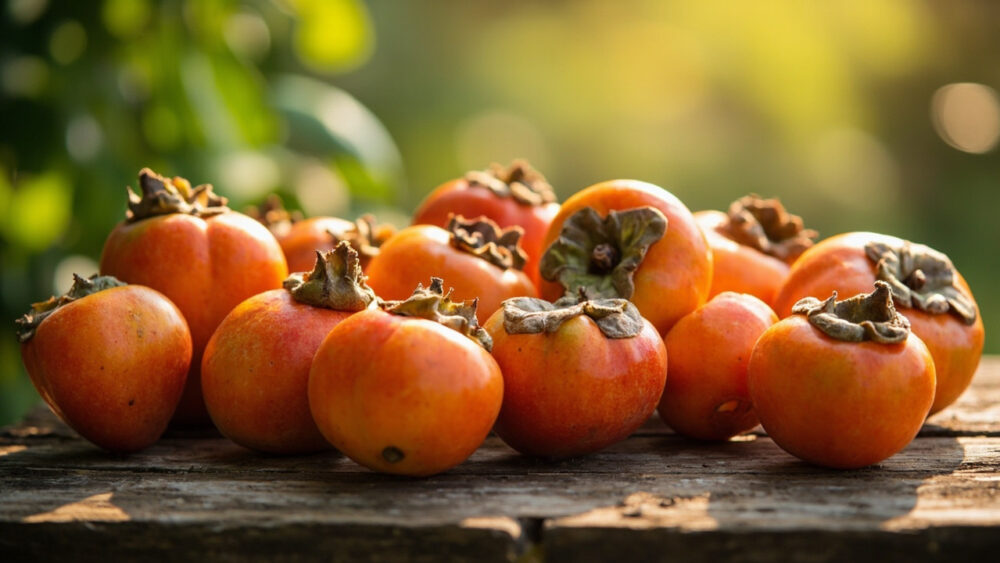
The fastest way to sort out types of persimmons is to split them into two groups first: astringent and non-astringent. Astringent types like Hachiya have to go fully soft and jelly-ripe before they are edible, while non-astringent types like Fuyu can be eaten firm, like an apple. Get that one distinction right and the rest of this list is just picking a flavor and a tree size.
Most first-time buyers grab whatever orange persimmon is at the grocery store without knowing which camp it belongs to, then bite into a rock-hard Hachiya and swear off the fruit forever. Experienced growers tend to quietly favor a completely different type, one that barely shows up in stores. Number 13 on this list is the one people misjudge the most, usually for the opposite reason you would expect. Stick around, because the back half of this list and the actual method for choosing your tree are waiting at the bottom.
Astringent Types (Must Ripen Soft to Eat)
These are the persimmons that punish impatience, but reward you with the richest, syrupy flavor once they finally go.
1. Hachiya
The classic acorn-shaped persimmon you see piled up at grocery stores every fall. It stays mouth-puckeringly astringent until it turns almost translucent and soft as a water balloon, at which point the flesh is sweet, dense, and custardy. Trees run 20 to 30 feet, need a long warm season to ripen fully, and do best in zones 7 through 10.
2. Saijo
One of the sweetest astringent types, with small, elongated fruit and a honeyed flavor once fully soft. It is also more cold-hardy than most astringent varieties, tolerating winter lows into the lower end of zone 6 with some protection. Good pick for northern growers who still want that classic jammy ripe-persimmon flavor.
3. Tanenashi
Nearly seedless and reliably productive, this older Japanese variety produces large, slightly flattened fruit that ripens earlier than Hachiya. It is a common choice in the Gulf Coast and lower Southeast because it sets fruit well in humid climates where some other astringent types struggle.
4. Great Wall
A smaller, cold-tolerant astringent type bred for a shorter growing season. The fruit is modest in size compared to Hachiya, but the tree handles zone 6 winters better than most astringent Japanese persimmons and still delivers rich flavor once fully ripe.
If waiting for fruit to turn to jelly sounds like too much patience, the next group solves that problem entirely.
Non-Astringent Types (Eat Them Firm)
These are the crunch-when-firm persimmons, mild and sweet even before they soften, which is exactly why most beginners should start here.
5. Fuyu
The most widely planted non-astringent persimmon and the one most people pick, though often for the wrong reason: they assume all persimmons need to sit and soften like Hachiya, then are pleasantly surprised Fuyu does not. It is flattened like a small tomato, mildly sweet, crisp at any stage from firm to soft, and grows well in zones 7 through 10.
6. Jiro
Very similar to Fuyu but slightly larger and a touch sweeter in many growing regions. It is a dependable non-astringent choice where Fuyu is already common, and the two are often confused at nurseries since the fruit looks nearly identical.
7. Izu
A compact tree built for small yards, rarely topping 10 to 12 feet, making it one of the better non-astringent options for container growing or tight urban lots. Fruit is medium-sized, sweet, and ready earlier in the season than Fuyu.
8. Suruga
Known for unusually high sugar content among non-astringent types, with a deep orange color and a richer flavor than Fuyu once fully colored. It ripens later in the season, so it suits growers with a long, warm autumn.
Non-astringent types are the easy button, but the next category is where things get genuinely confusing at the market.
Pollination-Variant Types (The Ones That Change Depending on Seeds)
This group trips people up because the same variety can taste astringent or mild depending on whether it was pollinated, which is worth knowing before you blame the tree.
9. Chocolate Persimmon (Maru)
Named for the dark, cinnamon-brown streaking inside the flesh, which only develops when the fruit is pollinated and seeded. Unpollinated fruit stays pale and can be astringent even at full color, so flavor is inconsistent unless you know your tree has a pollinator nearby.
10. Hyakume
A large, squat fruit that turns non-astringent and develops a spiced, almost cinnamon-like flavor when pollinated and seeded, but can stay astringent if it is not. It is a good option for growers who like a little unpredictability and don’t mind checking ripeness by taste rather than by variety label alone.
11. Gailey
Grown as much for its role as a pollinator as for its own fruit, which is small and astringent until fully soft. Many growers plant Gailey specifically to trigger the seeded, sweeter fruit on nearby chocolate persimmon or Hyakume trees rather than to eat its own harvest.
Pollination-variant types reward a little chemistry, but the next group is about surviving winter, not flavor tricks.
Cold-Hardy and American Native Types
These are the persimmons for growers north of the usual Asian persimmon comfort zone, and the underrated choice experienced gardeners quietly reach for.
12. American Persimmon (Diospyros virginiana)
A native species, not a variety, hardy to zone 4 or 5 depending on the seed source, with small, intensely sweet fruit that must go completely soft, almost mushy, before it loses its astringency. Trees grow tall, 30 to 60 feet in the wild, though grafted named selections stay more manageable. This is the one seasoned growers pick when they want low-maintenance fruit and don’t mind waiting for hard frost to finish the ripening job.
13. Meader
The one most people get completely wrong, assuming a cold-hardy American type must be a lesser fruit than the showy Asian varieties. Meader is a selected American persimmon cultivar that is self-fertile, meaning it sets fruit without a second tree nearby, unlike most American persimmons which need a male pollinator. It is hardy well into zone 5, small in stature, and produces reliably sweet fruit once fully soft.
14. Prok
Another self-fertile American selection, bred for larger fruit size than typical wild American persimmons while keeping the same cold hardiness. It is a solid choice for a single-tree backyard planting in a cold climate where fruit size actually matters to you.
One more type left, and it is the odd one out on this entire list.
The Hybrid Outlier
This last entry does not fit neatly into astringent, non-astringent, or American categories, which is exactly why it earns its own spot.
15. Nikita’s Gift
A hybrid between Asian and American persimmon species, combining the cold tolerance of American types with larger, more refined fruit closer to Asian varieties. It is astringent until soft, hardy into zone 6 with good siting, and a good pick for growers who want Asian-persimmon flavor without babying a tender tree through winter.
How to Choose the Right One
- Check your space first: American types and Hachiya need real room, 20 feet or more, while Izu and Jiro tolerate small yards or large containers.
- Match your climate next: below zone 6, look at Meader, Prok, American persimmon, or Nikita’s Gift rather than standard Asian varieties.
- Decide your purpose: eat-it-firm convenience points to Fuyu or Jiro, while patient, syrupy dessert flavor points to Hachiya, Saijo, or a ripe American persimmon.
- Check pollination needs: Gailey, chocolate persimmon, and Hyakume perform differently with or without a pollinator nearby, so confirm before you plant just one tree.
- Be honest about your care appetite: non-astringent types forgive an inattentive owner far more than astringent types, which punish an early bite with a mouth that stays chalky for an hour.
Pick based on your winters and your patience, not on which orange fruit looked prettiest at the nursery.
Get those two things right and every persimmon on this list will actually make it to your kitchen counter ripe.