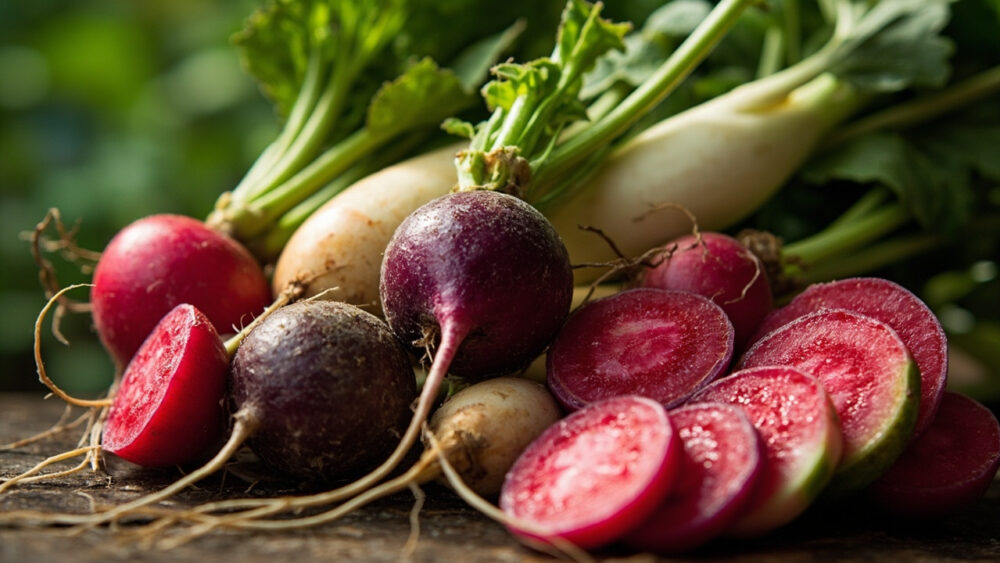
The fastest way to sort out types of radishes is by how long they take to mature, because that single trait splits the whole category into two different vegetables wearing the same name. Quick radishes are ready in 21 to 30 days and eaten young and crisp. Storage and winter radishes take 50 to 70 days and get harvested big, sometimes the size of a forearm, then kept for months in a root cellar.
Most people grab the little red globe radish at the nursery because it is the only one they can name, and then wonder why their radishes taste like fire by July. That is a timing problem, not a variety problem, and it is the first loop we untangle below. There is also a quietly beloved type that experienced gardeners plant every single season while everyone else ignores it, and it shows up under daikon and storage types.
Number 13 on this list is the one most people mistake for a turnip and grow completely wrong as a result. Stick around, because the last few entries and a simple step-by-step method for picking the right radish for your bed are waiting at the bottom.
Classic Spring Radishes
These are the fast, crunchy radishes most people picture, ready in under a month and best pulled young.
1. Cherry Belle
The default globe radish for a reason: round, bright red, white flesh, ready in about 22 to 25 days. It holds its crisp texture a few days past ideal size better than most round reds, which forgives a missed harvest window.
2. French Breakfast
Oblong, two-toned, and mild is the giveaway here, a red top fading to a white tip. It matures in around 25 to 28 days and stays sweet-mild even when slightly larger than a classic globe, making it the forgiving choice for new gardeners.
3. Easter Egg Blend
A mixed-color seed packet that grows purple, pink, white, and red globes from the same row. Flavor and timing match Cherry Belle, around 24 to 28 days, so the appeal is purely visual variety on a harvest plate.
4. White Icicle
Long, tapered, and pure white, shaped like a slim carrot rather than a globe, usually 4 to 6 inches long. It matures in about 28 days and has a sharper bite than round reds, closer to a mild horseradish note.
5. Champion
A slightly larger, slower-bolting globe radish, red-skinned and ready in around 28 days. Gardeners in warmer spring climates lean on it because it holds quality a bit longer once the weather starts warming than most quick radishes.
Every radish above turns hot and pithy fast once the weather warms, which is exactly why the next group exists.
Heat-Tolerant and Summer Radishes
These hold their texture and mild flavor longer into warm weather than a classic spring radish will.
6. Plum Purple
Deep purple skin over crisp white flesh, round to slightly oval, ready in about 25 to 30 days. It tolerates a bit more heat than Cherry Belle before turning woody, so it buys you extra weeks at the tail end of spring.
7. Sora
Bred specifically for heat tolerance, a red-white globe radish that resists the bolting and pithiness most quick radishes develop once soil temperatures climb into the 70s. Growers who want a second spring planting after the weather has already warmed reach for this one.
8. Pink Beauty
A soft pink globe with white flesh, mild and sweet, maturing around 25 days. It is not dramatically more heat tolerant than a red globe, but its flavor stays gentler under stress, which matters if bitterness is your main complaint with radishes.
Heat tolerance solves the summer problem, but flavor is a different axis entirely, and that is where the next group earns its keep.
Mild and Sweet Radishes
If radish heat is what turns you off the vegetable entirely, start here.
9. Watermelon Radish
Green and white outside, shocking pink-red inside, this is a daikon-type radish grown for its cross-section as much as its taste. It needs 50 to 60 days and cooler fall conditions to size up properly and develop that sweet, mild interior; grown too fast in heat, it turns bland and fibrous.
10. Rainbow Beauty Mix
A globe radish mix bred for gentler heat across every color in the packet, red, purple, pink, and bicolor, all maturing in a tight 25 to 30 day window. Kids’ gardens and salad growers like it because you get variety without a fire-hot outlier in the batch.
11. Sparkler
A red-and-white globe nearly identical in look to French Breakfast but rounder, ready in about 24 days with a consistently mild bite. It is an old, reliable variety that has stayed popular because it rarely disappoints, even in mediocre soil.
Mild radishes are about the eating, but the next category is about the growing, and it separates weekend gardeners from patient ones.
Daikon and Storage Radishes
This is the category that quietly gets planted by experienced gardeners while beginners stick to quick globes, because a storage radish rewards patience with months of food instead of one salad.
12. Daikon (April Cross or Minowase type)
Long, white, and genuinely large, often 12 to 18 inches and 2 to 3 inches thick, needing 50 to 60 days and deep, loose soil to grow straight instead of forked. This is the type most often confused with a parsnip in the produce aisle, and it stores for months in cold, damp conditions the way a globe radish never will.
13. Black Spanish Radish
Black, rough-skinned, and turnip-shaped, this is the entry most gardeners misjudge, because that thick charcoal skin and round body make people plant and harvest it like a turnip and pull it far too early. It actually needs 55 to 70 days to fully size up, and the payoff is a dense white interior with real heat and a texture that holds in storage all winter, sharper and longer-lasting than any daikon.
14. China Rose
A rose-pink storage radish, cylindrical and blunt-ended, maturing in around 50 to 60 days. It has a firmer bite than daikon and holds its color and crunch in storage for weeks longer than most red-skinned globes manage.
15. Miyashige
A classic Japanese daikon type, uniformly white, straight, and long at 14 to 16 inches, needing about 60 days and deep, well-worked soil free of rocks. It is the daikon variety most often used for fermenting and pickling because its dense, crisp flesh holds up to salt and time rather than turning mushy.
How to Choose the Right One
- Check your space first: quick globes and icicles need only 6 to 8 inches of depth and can go in a container, while daikon and storage types need 12 inches or more of loose, rock-free soil to grow straight.
- Match your climate: plant quick radishes 3 to 4 weeks before your last frost for a spring crop, save daikon and storage types for a planting 8 to 10 weeks before your first fall frost so they mature in cooling weather instead of summer heat.
- Decide your purpose: pick a quick globe or icicle for fresh eating within a month, pick daikon, Black Spanish, or China Rose if you want a crop that stores for winter.
- Be honest about your patience: storage radishes reward a two-month wait with real volume and shelf life, quick radishes reward impatience with almost instant results but nothing to store.
- If heat is your main problem, choose Sora or Plum Purple over a classic red globe, since they resist the pithy, sharp-tasting bolt that hot weather triggers.
- Thin seedlings to the spacing the seed packet lists, usually 2 inches for quick types and 4 to 6 inches for storage types, since crowded roots stay skinny and woody no matter which variety you picked.
Pick based on how long you are willing to wait and how much space you actually have, and almost any radish on this list will reward you.
The variety matters far less than pulling it at the right size and the right week, so watch the calendar as closely as you watch the plant.