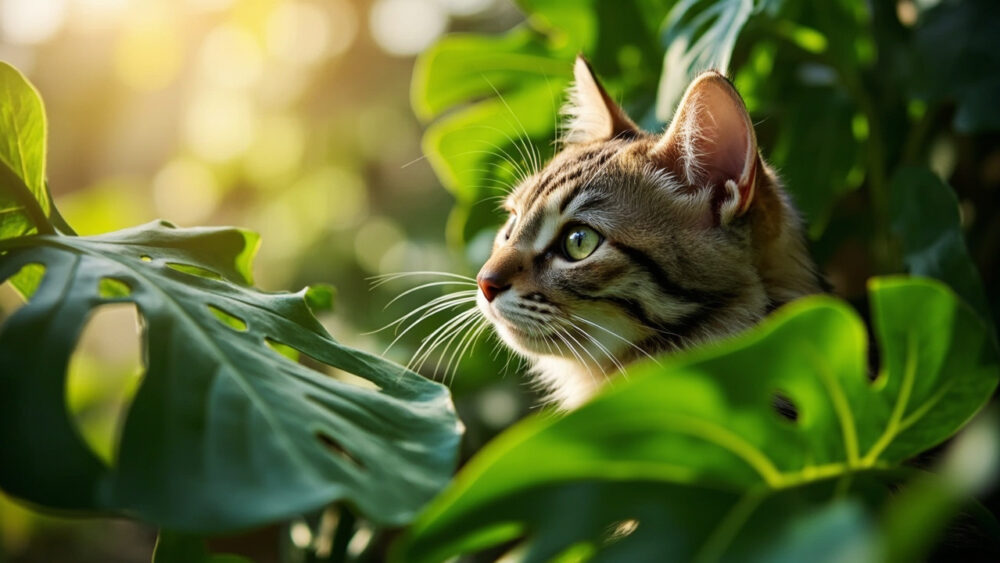
Yes, monstera is toxic to cats. Every part of the plant contains calcium oxalate crystals, and a curious cat that chews on a leaf will usually end up with a painful mouth and an upset stomach within minutes to a few hours. It is not the kind of toxicity that kills a healthy adult cat outright, but it is genuinely unpleasant, and severity depends a lot on how much your cat actually ate and how it reacted.
That “how much” question matters more than most owners realize. A cat that takes one curious nibble and spits it right back out is having a very different day than one that shreds and swallows half a leaf.
Stick around, because down at the bottom I’ve got a save-able quick-reference card with the core facts in one place, plus the signs to watch for, what actually helps, and a short list of look-alike plants that give you the same jungle look with none of the vet-visit risk.
So How Toxic Is Monstera, Really?
Monstera deliciosa, and its cousins like monstera adansonii, fall into the “mildly to moderately toxic” category for cats, not the severe or life-threatening one. The danger comes from insoluble calcium oxalate crystals embedded in the leaves, stems, and even the roots.
When a cat bites into the plant, those crystals act like tiny shards of glass, releasing on contact and digging into the soft tissue of the mouth, tongue, and throat. The reaction is immediate and usually painful enough that most cats stop after one bite rather than eating a full meal of it.
That self-limiting behavior is actually the main reason serious poisonings are rare. It is not that the plant is harmless, it is that the plant defends itself the moment a cat tries.
Knowing which parts carry the most crystals changes how you should be arranging your plant shelf.
Which Parts Are Riskiest, and Does Size of the Bite Matter
Every part of monstera contains calcium oxalate crystals, but concentration is not identical throughout the plant. Mature leaves and the thick stems tend to carry the highest crystal load, since that is where the plant stores the most cellular material.
Aerial roots and new, still-unfurling leaves are somewhat lower in concentration but not safe by any stretch. A single small nibble off a leaf tip usually causes localized mouth irritation and passes on its own once the crystals stop contacting new tissue.
A larger bite, or a cat that swallows shredded pieces, is more likely to bring on drooling, vomiting, and a genuinely miserable few hours. Kittens and small cats are at higher relative risk simply because there is less body mass to dilute the exposure.
If you’re picturing your own cat’s habits right now, the next section tells you exactly what to look for.
Signs Your Cat Chewed on Monstera
Watch for these general signs, usually appearing within minutes to a couple of hours of chewing or swallowing plant material:
- Intense drooling or foaming at the mouth
- Pawing at the face or mouth, as if trying to remove something
- Visible swelling of the lips, tongue, or throat
- Vomiting
- Reduced appetite or reluctance to eat, from mouth pain
- Loud or difficulty swallowing, in more significant exposures
Most cases stay mild and resolve within the day, but you cannot know that in advance just by looking at your cat. Some cats hide discomfort well, especially in the first hour.
If you see any of these signs, or you catch your cat mid-chew on a leaf, don’t wait to see how it plays out.
What to Actually Do If Your Cat Ate Monstera
Call your veterinarian or an animal poison control line right away for any suspected ingestion, even if your cat seems fine so far. Mouth and throat swelling can worsen over the first hour or two, and a vet is the only one qualified to tell you whether this needs an in-person visit.
While you’re on the phone, have a few details ready: roughly how much of the plant you think was eaten, when it happened, and which monstera variety it was if you know it.
If you can, gently rinse your cat’s mouth with plain water using a syringe or dropper, only if your cat is calm and cooperative enough that this won’t cause a fight or a bite. Do not force it.
Do not give milk, oil, human medication, or any home remedy on your own. Let the vet or poison control guide every next step.
Bring a leaf or a photo of the plant with you if you head in, since a clear ID speeds up their assessment.
Once the immediate scare has passed, most owners want to know how to avoid a repeat, and that starts with what you plant near the cat in the first place.
Cat-Safe Look-Alikes Worth Growing Instead
If you love the big, split-leaf jungle look but want to stop worrying every time you leave the room, a few non-toxic plants scratch the same itch.
- Calathea: bold patterned leaves, non-toxic, thrives in the same bright-indirect light monstera likes
- Peperomia: compact, varied leaf shapes, completely safe and very forgiving of missed waterings
- Parlor palm: feathery and jungle-like, non-toxic, tolerates lower light than monstera does
- Boston fern: lush and full, non-toxic, likes the same humidity monstera enjoys
- Spider plant: non-toxic, easy, and cats often play with the leaves harmlessly instead of chewing them
None of these replace the dramatic fenestrated leaves of a mature monstera, and that is a fair tradeoff to be honest about. But they let you keep the shelf full and green without the mouth-pain risk.
If you’re set on keeping the monstera itself, the placement strategy below is what actually keeps determined cats away from it.
If You Keep the Monstera Anyway
Plenty of cat owners keep monstera successfully by controlling access rather than giving up the plant. Hanging planters, tall plant stands, and rooms the cat doesn’t frequent all reduce risk without banning the plant from the house.
Bitter-tasting plant sprays, sold specifically as pet deterrents, can help train persistent chewers when applied to leaves per the product label. Consistency matters more than the specific product.
Cats that have plenty of their own safe chew options, like cat grass or a dedicated cat-safe planter, are generally less interested in your houseplants in the first place.
Here’s the card worth saving before you go.
Monstera: Quick Reference
- Toxic to cats: yes, mildly to moderately, due to calcium oxalate crystals throughout the plant
- Riskiest parts: mature leaves and thick stems carry the highest crystal concentration
- Typical onset: signs usually appear within minutes to a couple of hours of chewing or swallowing
- Common signs: drooling, pawing at the mouth, swelling of lips or tongue, vomiting, reduced appetite
- What to do: call your veterinarian or animal poison control immediately, note how much was eaten and when
- What not to do: no home remedies, no forced water rinsing on an uncooperative cat, no medication without vet guidance
- Safer alternatives: calathea, peperomia, parlor palm, Boston fern, and spider plant all give a similar look with no toxicity risk
Keep this list somewhere you can find it fast, because in a real scare, fast matters more than perfect.
Your monstera can absolutely coexist with your cat, it just needs a little distance and a watchful eye.