Growing dragon fruit means planting a cactus, not a tropical fruit tree, and treating it like one from day one. You plant rooted cuttings 2 to 3 inches deep in fast-draining soil once nighttime temperatures stay above 50°F, give each plant a sturdy post or trellis to climb, and wait 12 to 18 months for your first flush of fruit. Get the drainage and the support structure right and this plant is genuinely easy. Get either one wrong and you will spend two years watching a sad, rotting stem instead of eating fruit.
Here is what trips people up before they even get that far. Most first attempts fail not from cold or pests but from one soil mistake that looks harmless for months before it kills the plant outright. There is also a sign everyone misreads as trouble when it is actually the plant doing exactly what it should. And there is an honest answer waiting for you about how long this really takes, because most retailers do not want to tell you the truth about year one.
Stick with me through the sections below and I will walk you from planting to that first strange, glowing fruit. There is a save-able Dragon Fruit at a Glance card at the very bottom with every number in one place.
When to Plant Dragon Fruit
Dragon fruit is a cold-sensitive cactus, so timing is about temperature, not the calendar. Plant outdoors once nighttime lows are reliably staying above 50°F and daytime soil has warmed into the 65 to 75°F range, which for most of the country lands 2 to 4 weeks after your last frost date.
If you garden in zone 9 or colder, plan on growing dragon fruit in a large container you can move indoors or into a garage when frost threatens. Zones 10 and 11 can plant directly in the ground and leave it there year-round. A single freeze below 32°F for more than an hour or two can kill unprotected stems outright.
Cuttings root fastest in warm weather, so starting them indoors 4 to 6 weeks before your outdoor planting window gives you a head start without risking cold damage.
Get the timing right and the next decision, where you actually put this thing, matters just as much.
Choosing the Spot and Prepping the Soil
Dragon fruit wants 6 to 8 hours of direct sun, though in the hottest climates some afternoon shade prevents scorching on young growth. This is a jungle cactus, native to growing up trees, not baking on open desert sand, so full blazing sun all day in a low desert climate can actually stress it.
Drainage is the mistake that ends most attempts. If you assumed rich, moisture-retentive garden soil would give this plant a strong start, that guess is exactly what kills it. Dragon fruit roots rot fast in soil that stays wet, and by the time you see the stem yellowing and collapsing at the base, the root system is usually already gone.
Work in coarse sand, perlite, or pumice until water runs through a test hole within seconds of soaking it. A raised bed or a large pot with generous drainage holes beats flat ground in anything but naturally sandy soil.
Once the soil drains the way this cactus needs, you are ready to get it in the ground.
Planting Dragon Fruit Step by Step
Dragon fruit is almost always grown from cuttings, not seed, because cuttings fruit in a year or two while seed-grown plants can take five to seven years to mature. Buy a rooted cutting 12 to 18 inches long if you can, since it skips weeks of waiting.
Steps
- Install support first: sink a sturdy post, 6 to 8 feet tall, 12 to 18 inches into the ground before planting, since this cactus climbs and needs something solid to grip.
- Space plants: set multiple plants 3 to 4 feet apart if growing several posts, or one cutting per post for a tidy single-vine setup.
- Dig the hole: 2 to 3 inches deep and wide enough that the cutting stands upright without immediate staking.
- Orient the cutting: plant it with the same end down it had while rooting; upside-down cuttings root poorly or not at all.
- Firm and tie: pack soil gently around the base and loosely tie the stem to the post with soft garden tape or cloth strips.
- Water lightly: a light soak right after planting, then let the soil dry before watering again.
Once it is in the ground and tied in, the real work shifts to knowing how much water this cactus actually wants.
Watering and Feeding Through the Season
Water dragon fruit deeply, then let the top 2 to 3 inches of soil dry out completely before watering again, roughly every 7 to 10 days in warm weather and half that often in cool or wet spells. Established plants tolerate short dry stretches far better than they tolerate soggy roots.
Here’s the sign everyone misreads: a plant that looks slightly wrinkled or shrunken on the stems in the heat of summer is not begging for water, it is doing what any cactus does when conserving moisture. Check the soil before you reach for the hose. Wrinkling paired with dry soil is normal; wrinkling paired with wet soil is a warning sign of root trouble.
Feed monthly during the active growing season with a balanced fertilizer diluted to half strength, or a cactus-specific blend if you have one. Ease off feeding in fall and stop entirely once nights turn cool, since pushing soft new growth right before cold weather invites damage.
Feeding and watering keep the plant alive, but it is the problems below that decide whether it actually fruits.
Problems That Actually Stop People From Getting Fruit
The single biggest reason gardeners never see fruit is skipping pollination. Many dragon fruit varieties are self-incompatible, meaning a flower on one plant cannot pollinate itself and needs pollen from a genetically different plant. If you only have one variety, plan on hand-pollinating with a soft brush between two different plants, or growing two distinct varieties from the start.
Rot is the other big riskand it almost always traces back to drainage or overwatering rather than any pest or disease showing up on its own. Watch for soft, dark, mushy patches at the stem base. That calls for cutting away affected tissue with a clean blade and letting the wound dry before any further watering.
Scale insects and mealybugs occasionally show up on stems in a sheltered spot. Wipe them off with a damp cloth or treat with insecticidal soap, following the product label exactly.
Cold damage shows as blackened, translucent patches after a frost. There is no fixing that tissue, only pruning it out once the damage stops spreading.
Handle pollination and drainage correctly and you are finally in position to talk about actual fruit.
When and How to Harvest Dragon Fruit
Now for the honest timeline nobody tells you upfront. A rooted cutting typically takes 12 to 18 months to produce its first flowers and fruit, and those famous night-blooming white flowers only open after dark and close by mid-morning, lasting a single night each.
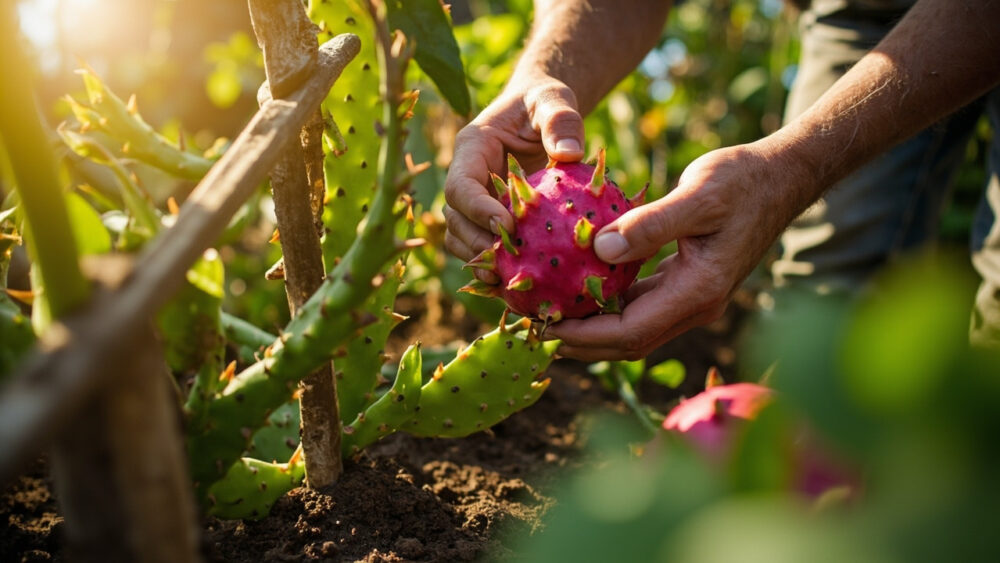
Once a flower is pollinated, fruit ripens in 30 to 50 days. You will know it is ready when the skin turns from green to deep pink or yellow, depending on variety, and the bracts (those pointy scale-like edges) begin to dry slightly and turn from bright green toward a duller, papery look.
Harvest by twisting or cutting the fruit where it meets the stem, leaving a short stub rather than tearing at the plant. Ripe fruit gives slightly to gentle pressure, similar to a ripe avocado, and comes free with almost no resistance.
Fruit that is picked too early never sweetens properly off the plant, so when in doubt, wait one more day and check the color again.
Dragon Fruit at a Glance
- When to plant: once nights stay above 50°F, usually 2 to 4 weeks after your last frost date, or year-round indoors in a container.
- Spacing and depth: plant cuttings 2 to 3 inches deep, 3 to 4 feet apart per support post.
- Soil needs: fast-draining, sandy or cactus mix, never soil that stays wet for days.
- Sun and support: 6 to 8 hours of sun, with a sturdy 6 to 8 foot post or trellis in place before planting.
- Watering: deep soak, then dry completely for 7 to 10 days before watering again.
- Pollination: hand-pollinate between two different varieties for reliable fruit set.
- Time to harvest: 12 to 18 months to first fruit, then 30 to 50 days from flower to ripe fruit.
Drainage and a real support post solve most of what goes wrong with this plant. Everything else is just patience, and dragon fruit rewards patience with fruit nothing else in your garden looks or tastes like.