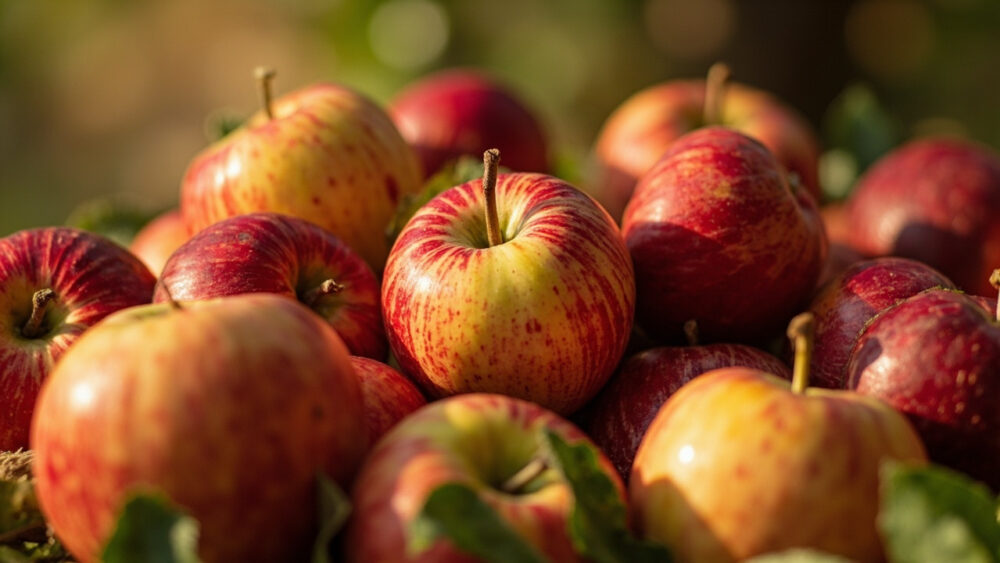
The fastest way to narrow 7,000-plus apple varieties down to one tree is deciding what you actually want to do with the fruit, because eating fresh, baking, and cider each point to different apples. Pick by flavor alone and you end up with a beautiful tree full of apples that turn to mush in a pie or a cider batch that tastes like watered-down juice. This roundup of apple varieties is organized by what the apple is actually good for, not just how it tastes off the tree.
A lot of people grab Red Delicious because the name sounds like a promise, and it is probably the most disappointing apple you can plant in a home orchard. There is a mealy-texture problem nobody tells you about until the tree is five years old and fruiting. Meanwhile experienced growers keep quietly planting a homely little variety most catalogs bury on page three, and it outperforms everything flashier in the same row.
Number 13 on this list is the one most people get completely wrong, usually by planting it alone and wondering for three years why it never fruits. Stick around for that, plus the last few entries and the exact method for choosing between all of them, because that part is at the very bottom and it is the part worth saving.
Classic Eating Apples
These are the varieties bred and selected for eating straight off the tree, where crunch and balance matter more than shelf life.
1. Honeycrisp
The defining trait is that explosive, cell-rupturing crunch that made it famous, backed by a sweet-tart balance most people find addictive. It is a genuinely fussy tree though: susceptible to fire blight and bitter pit, and it wants cold winters (zone 3 to 6) to develop that texture properly. Plant it if you are willing to thin fruit and watch calcium levels; skip it in hot-summer, mild-winter climates where it sulks.
2. Gala
Mild, floral sweetness with almost no tartness makes Gala the apple kids actually finish eating. The tree is vigorous, precocious (it fruits young, often by year three), and tolerates a wider range of climates than Honeycrisp, doing well in zones 5 through 9. It is a forgiving first apple tree for a beginner.
3. Fuji
Dense, almost crystalline sweetness and a long storage life set Fuji apart. It needs a long, warm growing season to fully ripen, so it is a better fit for zones 6 through 9 than short-summer northern gardens. Growers who want an apple that still tastes good in March after months in a cool basement lean on Fuji.
4. Cosmic Crisp
A modern cross of Honeycrisp and Enterprise, bred specifically to keep Honeycrisp’s crunch while fixing its storage weaknesses and disease susceptibility. It holds firm and juicy in cold storage for months, which is rare for a home-orchard tree. Give it full sun and zone 5 to 8 conditions and it rewards patience with one of the longest-keeping fresh eating apples available.
Eating apples get the attention, but the ones built for the oven are a different game entirely.
Baking and Cooking Apples
These hold their shape and concentrate flavor under heat instead of collapsing into applesauce.
5. Granny Smith
Sharp, bracing tartness and firm flesh mean Granny Smith holds its structure through a long bake, which is exactly why it shows up in most pie recipes. It needs a long warm season to ripen fully, so it suits zones 6 through 9 better than short-season climates. If your pie apples keep turning to mush, this is usually the fix.
6. Northern Spy
The connoisseur’s pie appleprized for a complex tart-sweet flavor that holds up beautifully to heat and a texture that stays firm without going tough. The tree is slow to bear, often taking six to eight years for a first real crop, which is why it has fallen out of commercial favor even though the fruit is excellent. Zones 4 through 7 suit it, and patient growers are rewarded with pie filling that tastes like something, not just sugar and cinnamon.
7. Rome Beauty
Built specifically for baking wholeRome Beauty holds a round, sturdy shape in the oven better than almost any other apple, which made it the classic baked-apple variety before newer hybrids showed up. The flesh is mild and firm rather than sweet, so it is a poor choice for fresh eating but a reliable one for the oven. It grows well in zones 5 through 8 and stores respectably through winter.
8. Winesap
Wine-toned, spicy-tart flavor gives Winesap its name and its versatility: good fresh, better cooked, and genuinely good pressed for cider too. It is an old, tough variety that tolerates heat better than most heirlooms, doing well in zones 5 through 8. Growers who want one tree that covers eating, baking, and a little cider pressing often land here.
If cider is the actual goal, the calculus changes again, and this is where most beginners waste a growing season.
Cider Apples
Good dessert apples usually make thin, boring cider, because cider wants tannin and acid, not just sugar.
9. Kingston Black
A true single-variety cider applemeaning it has enough sugar, acid, and tannin balance to make a complete cider on its own without blending. It is a shy, biennial bearer and genuinely tricky to grow well, wanting zones 5 through 7 and good pollination partners nearby. Serious cidermakers plant it anyway because nothing else quite matches its balance.
10. Dabinett
High tannin, low fuss describes Dabinett well: it is one of the more forgiving classic English cider apples, cropping reliably and resisting scab better than many bittersweet types. It suits zones 5 through 8 and is often the first cider-specific tree recommended to beginners because it is hard to fail with it. The apples themselves are unpleasant to eat fresh, astringent and dry, which is exactly the point.
11. Yarlington Mill
A classic bittersweet cider apple valued for the soft, rounded tannin it contributes to a blend rather than for drinking on its own. It is vigorous, spreads wide, and does best given room and zones 5 through 8. Most cidermakers use it as one component in a blend rather than a standalone press.
Not every apple on this list is really one variety, and that distinction changes what you can grow where.
Heirloom and Regional Standouts
These are older varieties kept alive by flavor, history, or a specific regional fit that modern commercial apples never replaced.
12. Arkansas Black
Nearly black-purple skin at full ripeness and a dense, almost hard flesh that mellows and sweetens dramatically after a few months in storage make this a patience apple. Pick it too early and it tastes harsh; let it sit and it turns rich and wine-like. It handles heat better than most heirlooms, doing well in zones 6 through 9.
13. Golden Delicious
The one most people get wrong by planting it as a lone tree and assuming any apple nearby will pollinate it. Golden Delicious is actually a useful, versatile apple, honey-sweet, good fresh, good baked, and it doubles as a reliable pollinator for many other varieties because it blooms over a long window. The mistake is skipping a second compatible variety nearby. Without one, fruit set is sparse and inconsistent even though the tree itself grows easily in zones 5 through 8.
14. Esopus Spitzenburg
Reportedly Thomas Jefferson’s favorite appleand still one of the most intensely flavored heirlooms around, rich, spicy, and complex in a way modern grocery apples rarely achieve. It is a genuinely difficult tree, prone to disease and slow to establish, best left to growers in zones 5 through 7 who do not mind babying a tree for the payoff. This is not a beginner’s first apple tree.
15. Newtown Pippin
One of the few American heirlooms still grown commercially, valued for a sharp, complex flavor that works fresh, baked, and pressed into cider equally well. It is slow to bear and wants a long growing season, favoring zones 6 through 9, but it is one of the rare triple-purpose apples that does not compromise much in any single use.
How to Choose the Right One
Run any shortlist through this before you buy a tree, because the tree is a decade-plus commitment and a wrong purchase is expensive to undo.
- Check your space: standard trees need 20 to 30 feet between them, semi-dwarf need 12 to 15 feet, and dwarf need 6 to 10 feet, so measure before falling for a variety that needs more room than you have.
- Match your climate: confirm the variety’s hardiness zone range against your winter lows and, just as important, whether your summers run long and hot enough to ripen it fully.
- Decide the primary purpose first: fresh eating, baking, or cider, since the best apples for each job rarely overlap.
- Confirm pollination needs: almost no apple is fully self-fertile, so plan for a second compatible variety blooming at the same time within about 50 feet.
- Be honest about your care appetite: some varieties like Gala and Dabinett forgive neglect, while Honeycrisp, Kingston Black, and Esopus Spitzenburg demand real attention to disease and thinning.
- Think about storage life if you want winter apples: Fuji, Cosmic Crisp, and Arkansas Black hold for months, while most eating apples are best used within weeks of picking.
Pick the purpose first, match the climate second, and the right apple on this list gets a lot easier to spot.