Growing a snake plant successfully comes down to three things: a pot with real drainage, soil that dries out between waterings, and restraint with the watering can. Learning how to grow snake plant is less about giving it what it needs and more about not giving it what kills it, because this is one of the few houseplants that suffers far more from too much care than too little.
Here is what trips people up. Most snake plants die from a watering habit that would keep a fern alive, not from neglect. There is also a leaf sign almost everyone misreads as a watering problem when it is actually a light problem, and a repotting instinct that backfires more often than it helps.
Stick with me through the sections below and you will know exactly when to water, how to spot trouble before it spreads, and what a snake plant looks like right before it blooms, which happens more often than most people realize. There is a save-able Snake Plant at a Glance card waiting at the bottom once you have the full picture.
When to Plant (and Why Timing Barely Matters Indoors)
Snake plants are grown indoors year-round in most of the country, so frost dates are mostly irrelevant unless you are moving one outside for the summer. If you do that, wait until nighttime temperatures stay reliably above 50°F, which usually lands two to three weeks after your last frost date.
Indoors, the best time to pot up a new plant or divide an old one is spring through midsummer, while the plant is actively growing and can recover from root disturbance quickly. Repotting in late fall or winter is possible but the plant sits there longer before rooting in.
Zone note: snake plant is only reliably winter-hardy outdoors in USDA zones 10 to 12. Everywhere else, it is a houseplant that can vacation outside in warm weather.
Get the timing right and the next decision, where it actually lives, matters even more.
Choosing the Spot and Preparing the Soil
Snake plants tolerate low light better than almost any houseplant sold, which is exactly why people put them in dark corners and then wonder why growth stalls. They tolerate low light, they do not thrive in it. For real growth and the tall, upright leaf color you see in photos, give it bright indirect light, a spot near an east or west window, or a few feet back from a south-facing one.
Direct hot afternoon sun through unfiltered glass can bleach or scorch the leaves, so filter it with a sheer curtain if that is your only option.
Soil is where most of the real risk lives. Use a fast-draining mix, a cactus or succulent blend, or regular potting soil cut with perlite or coarse sand at roughly one part grit to two parts soil. Regular potting soil straight from the bag holds too much water around the roots for too long.
The pot needs a drainage hole, no exceptions, because a snake plant sitting in a sealed decorative pot is a rot problem waiting on a schedule.
With the site and soil sorted, planting itself is the easy part.
Planting Step by Step
1. Pick the right pot size
Choose a pot only 1 to 2 inches wider in diameter than the current root ball. Snake plants actually prefer being a little snug and bloom more reliably when slightly potbound.
2. Layer the soil
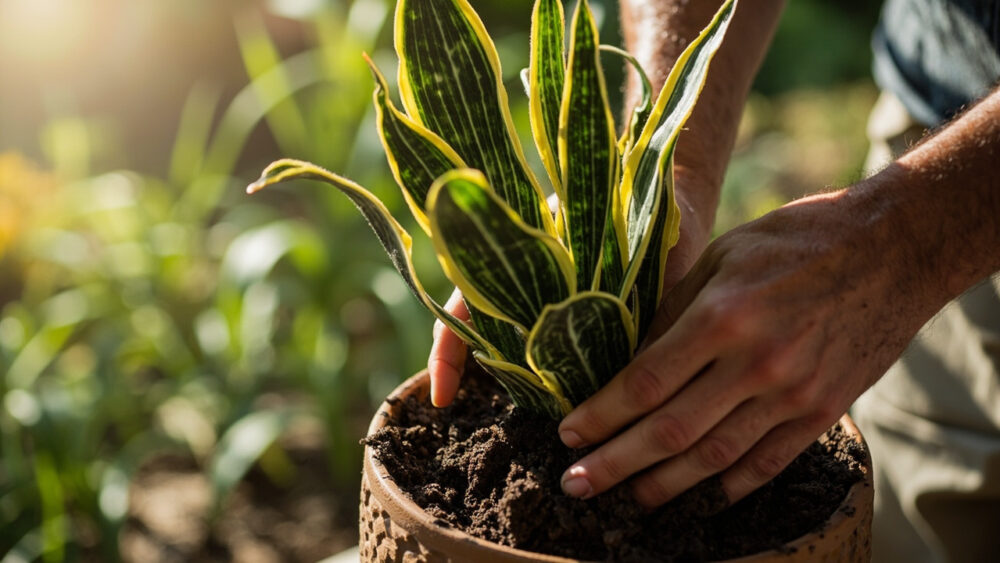
Add enough fast-draining mix to the bottom of the new pot so the plant will sit at the same depth it was growing before, with the base of the leaves at or just above the soil line.
3. Set the plant and backfill
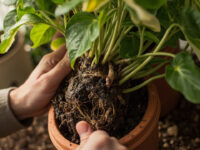
Loosen the roots gently if they are tightly circling the pot, set the plant centered, and fill in around it. Firm the soil lightly, no heavy tamping.
4. Water once, then wait
Give it a thorough watering right after planting so the soil settles around the roots, then let it dry out before watering again, which usually takes one to two weeks depending on light and pot size.
Spacing only matters if you are planting multiple divisions or pups in one wide, shallow container: give each start about 4 to 6 inches of room so the rhizomes have space to spread.
Planting is a five-minute job, but what you do with the watering can for the next year decides everything.
Watering and Feeding Through the Season
If you assumed a plant this tough wants a set weekly watering schedule, that assumption is exactly what kills most of them. Water only when the soil is fully dry at least 2 inches down, which for most homes means every two to three weeks in spring and summer and closer to once a month or less in fall and winter when growth slows.
Check with a finger, not a calendar. Dry, crumbly soil an inch or two down means water. Any lingering coolness or dampness means wait.
When you do water, soak it thoroughly until water runs from the drainage hole, then dump the saucer. Never let the pot sit in standing water.
Feed lightly, a balanced houseplant fertilizer diluted to about half strength, once a month during spring and summer only. Skip feeding entirely in fall and winter, snake plants are not hungry plants and overfeeding shows up as brown leaf tips before it shows up as growth.
Get the water and feeding right and most of the problems below never show up at all.
The Problems Most Likely to Strike
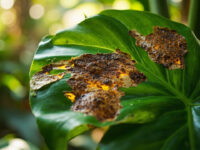
Mushy, collapsing leaves at the base are root or crown rot, almost always from overwatering or a pot without drainage. There is no fixing a fully mushy plant, but if you catch it early, pull the plant, cut away any soft brown roots, let the healthy remainder dry for a day, and repot in fresh dry mix.
Curling or wrinkled leaves usually mean underwatering, but check the soil before assuming that. Sometimes it is the opposite: a plant that has been overwatered so long its roots can no longer take up water at all, which looks identical to drought stress on the leaf but has the opposite cure.
Pale, yellowing, or bleached patches are a light problem, not a water problem, specifically too much direct sun. Move the plant back from the window and the new growth will come in normal color again, though existing damage stays.
Mealybugs and spider mites show up occasionally, usually as small white cottony spots or fine webbing between leaves. Wipe leaves down with a damp cloth regularly and treat any infestation with insecticidal soap or a horticultural oil, following the product label exactly.
Snake plant is toxic to cats and dogs if chewed or eaten, causing mouth irritation, drooling, or vomiting. If you suspect a pet has eaten any part of the plant, call your veterinarian rather than waiting to see what happens.
Head off overwatering and bad light and you have already dodged the two problems that end most snake plants.
When and How to “Harvest”: Division, Pups, and Blooms
Snake plants do not have a harvest in the vegetable-garden sense, but there are two real payoffs worth watching for. The first is new pups, baby shoots that emerge from the soil beside the main plant once it is established and slightly potbound, usually within a year or two of planting.
You can leave pups attached to grow the plant fuller, or divide them off once they have a few leaves of their own. To divide, unpot the whole plant, find where a pup’s rhizome connects to the parent, and cut it free with a clean knife, keeping some roots attached to the pup. Pot the division in its own fast-draining soil and treat it like a new plant.
The second payoff is the bloom, and here is the honest answer most people never get: mature, somewhat stressed, slightly potbound snake plants do occasionally flower, sending up a tall stalk of small, pale, tubular flowers that are intensely fragrant at night. It is not common on a young plant and it is not guaranteed ever, but it is real and it is not a sign of distress.
If your plant blooms, enjoy it and let the stalk fade naturally before cutting it back at the base.
Snake Plant at a Glance
- When to plant or repot: spring through midsummer, indoors any time light and warmth are adequate.
- Light: bright indirect light for best growth, tolerates low light but grows slowly there.
- Soil: fast-draining cactus or succulent mix, or potting soil cut with perlite, in a pot with a drainage hole.
- Watering: only when the soil is dry 2 inches down, roughly every two to three weeks in growing season, monthly or less in winter.
- Feeding: balanced fertilizer at half strength, once a month, spring and summer only.
- Common problems: root rot from overwatering, leaf bleaching from direct sun, occasional mealybugs.
- Pet safety: toxic to cats and dogs if ingested, contact a veterinarian for any suspected ingestion.
If you remember one thing, let it be this: put the watering can down more often than feels responsible.
A dry, slightly neglected snake plant is a happy one.