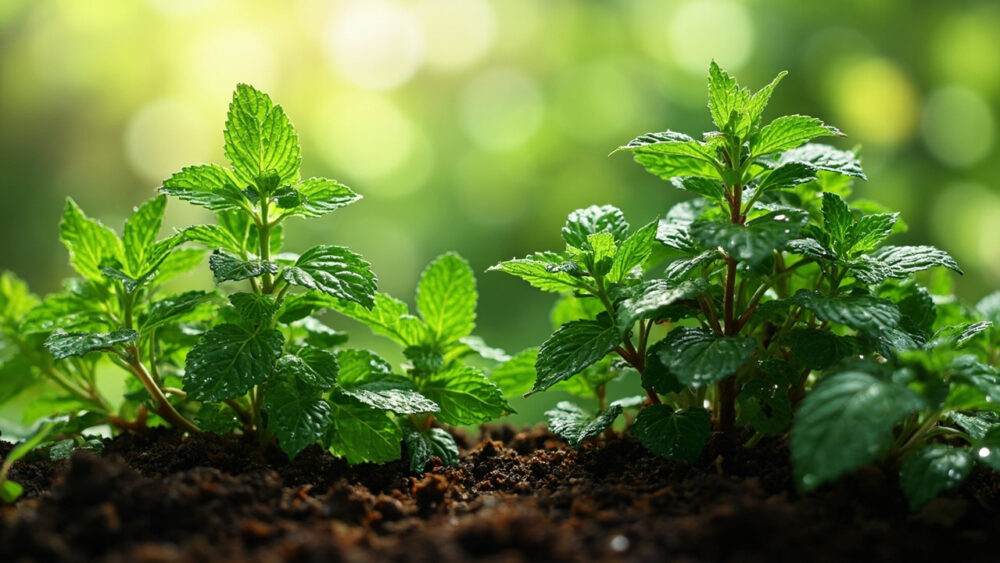
Here is the honest spearmint vs peppermint answer: if you cook, especially anything Mediterranean, tea, or fruit salad, grow spearmint. If you want the sharpest possible flavor for actual mint tea, cocktails, or you are dealing with mice or ants and want a strong-smelling barrier plant, peppermint wins. Both will spread aggressively and both are easy to kill with too much sun and too little water, so the differences that actually decide this are narrower than people think.
Most of what gardeners argue about with these two does not matter. Leaf shape, stem color, the “peppermint has purple stems” rule of thumb, none of that changes how the plant performs in your yard. What actually decides it is menthol content, growth habit in containers versus ground, and what you plan to put it in.
There is also a situation where the usual advice flips completely, and it has to do with cold climates and which one survives a rough winter better. Stick around, because the side-by-side card at the bottom is the one worth screenshotting before you buy either plant.
The Key Differences
Flavor and Aroma
Spearmint tastes sweet, mild, and a little grassy, with almost no bite. Peppermint is sharper, cooler, and more medicinal because it carries roughly twice the menthol. If you have ever bitten into a candy cane and felt your sinuses open, that is peppermint’s menthol talking, not spearmint’s.
Lean: peppermint for intensity, spearmint for anything you want to actually taste food through.
Growth Habit
Both spread by runners, both are borderline thuggish, but peppermint tends to grow slightly taller (up to 3 feet versus spearmint’s 1 to 2 feet) and its runners root even more readily at every leaf node they touch. Spearmint stays a bit more compact and manageable in a bed, though “manageable” for either one still means a container or a buried barrier if you do not want it in your lawn by next summer.
Neither belongs in open ground next to anything you love.
Climate and Hardiness
Spearmint is reliably hardy in USDA zones 4 through 9. Peppermint is usually rated zones 3 through 8 and, in truth, tolerates a harder frost and comes back stronger after a brutal winter in cold climates. This is the flip: if you gardened in the north and assumed spearmint was the tougher, more “normal” mint, that guess is backwards. Peppermint is the hybrid (spearmint crossed with water mint) and it inherited real cold resilience from that parentage.
That resilience is exactly why peppermint escapes gardens and colonizes ditches so often.
Care Needs
Both want consistent moisture, partial to full sun, and soil that drains but never fully dries out. Peppermint sulks and drops lower leaves faster in dry heat; spearmint tolerates a missed watering slightly better. Neither needs rich soil, and feeding either one heavily just produces more leaf you have to keep cutting back.
Care is close enough between them that it should not be your deciding factor.
Culinary and Practical Use
Spearmint is the workhorse of tabbouleh, mojitos, lamb dishes, and fruit salads because its sweetness does not fight the other ingredients. Peppermint dominates tea, chocolate pairings, and anything meant to taste distinctly “minty.” Both are used as a natural deterrent people plant near entry points against ants and mice, and peppermint’s stronger scent generally does that job better.
Which one you reach for in the kitchen tells you almost everything about which one you should be growing.
When Spearmint Is the Right Call
Pick spearmint if you cook more than you sip tea. It is the better choice for savory dishes, fruit, and anything Middle Eastern or Mediterranean, where a sweet, mild mint note is the goal rather than a menthol punch. It is also the friendlier starter mint for a first-time herb grower because its growth, while still spreading, is a notch easier to keep inside a pot.
Gardeners with kids or pets who like to nibble leaves also tend to prefer spearmint’s gentler flavor over peppermint’s more intense bite.
If your kitchen use is mostly savory, spearmint has already won this for you.
When Peppermint Is the Right Call
Choose peppermint if tea is the main reason you are growing mint at all, or if you want mint for its cooling, medicinal-tasting quality in things like homemade chocolate mint treats or after-dinner infusions. It is also the stronger pick for pest deterrent plantings around a patio, doorway, or garden edge, since the more concentrated oil does more work per leaf.
Cold-climate gardeners who lost a mint patch to a hard winter and want a tougher comeback plant should lean peppermint over spearmint too.
If your climate is genuinely harsh or your goal is maximum menthol, peppermint earns the spot.
Can You Use (or Grow) Both?
You absolutely can, and a lot of experienced cooks do, but grow them in separate containers. Plant spearmint and peppermint in the same bed and their runners will tangle within a season, and you will eventually end up with a muddled mint that tastes like neither one distinctly.
In the kitchen, substituting one for the other works in a pinch, just expect a milder result swapping peppermint for spearmint, or a sharper, almost toothpaste-like result swapping spearmint for peppermint in a recipe built around it.
Two pots, a few feet apart, each with its own saucer for overflow watering, is the setup that keeps both usable and separate.
Growing both is smart as long as you never let their roots actually meet.
The Verdict
If you are only planting one and you are not sure yet how you will use it, plant spearmint. It is the more versatile kitchen herb, the gentler grower, and the one that fits more recipes without overpowering them. But if tea, candy-level mint flavor, or beating back a rough winter and unwanted rodents is the actual job, peppermint is the correct tool and spearmint would only disappoint you there. This is a genuine either-or decision based on what ends up on your plate, not a coin flip.
Spearmint vs. Peppermint at a Glance
- Flavor: Spearmint is sweet and mild, Peppermint is sharp and cooling with roughly double the menthol.
- Growth habit: Spearmint stays 1 to 2 feet and slightly more contained, Peppermint reaches up to 3 feet and roots more aggressively.
- Hardiness: Spearmint suits zones 4 to 9, Peppermint suits zones 3 to 8 and handles harder frosts.
- Care: Both want moist, well-drained soil and part sun, Peppermint wilts faster in dry heat.
- Best use: Spearmint for savory cooking and fruit, Peppermint for tea, chocolate, and pest deterrent plantings.
- Containment: Both need pots or barriers, Peppermint spreads and roots at leaf nodes even more readily.
Either mint will take over if you let it, so a container is not optional for either one.
Pick based on your plate, not the plant tag.