The honest verdict: if you’re building soil for the long haul and don’t mind feeding a little in advance, go organic. If you have a plant in visible trouble right now, or you’re growing in containers where soil biology barely exists, synthetic wins. Most gardens actually do best on a mix of both, and I’ll get to exactly how at the bottom.
The debate over organic vs synthetic fertilizer gets loud on both sides, but most of what people argue about doesn’t actually decide anything. The nitrogen a plant absorbs is nitrogen, full stop, regardless of whether it came from fish emulsion or a bag of pellets. What actually decides it is speed, soil health, and how much patience you have.
There’s also a situation where the usual advice completely flips, and it’s the one most fertilizer articles skip. Stick around, because the side-by-side card at the very bottom is the one worth screenshotting before you buy either one.
The Key Differences
Speed of results
Synthetic fertilizer is water-soluble and plant-ready within days, sometimes hours. You’ll see greener leaves or a growth push in under a week. Organic fertilizer has to be broken down by soil microbes first, which takes anywhere from two to eight weeks depending on soil temperature and moisture. Lean synthetic if you need a visible fix fast.
Feeding soil vs. feeding the plant
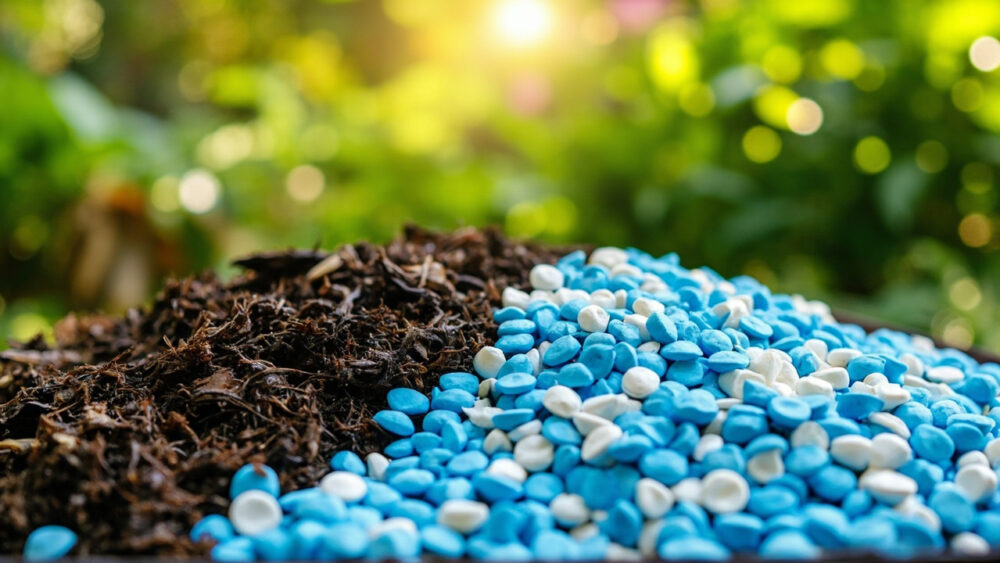
Synthetic feeds the plant directly and does nothing for the soil itself, no organic matter, no microbial boost. Organic fertilizer feeds the soil biology, which in turn feeds the plant, and it improves structure and water retention over seasons. This is the difference that actually matters most long term.
Risk of burning plants
Synthetic fertilizers are concentrated salts. Over-apply by even a little and you’ll scorch leaf edges or kill roots outright, especially in hot weather. Organic fertilizer is far more forgiving; it’s nearly impossible to burn a plant with compost or a balanced organic granule at normal rates.
Cost per feeding
Synthetic is cheaper up front, often a fraction of the cost per pound of actual nutrient. Organic costs more per bag and per feeding, but you need it less often once soil health builds. Buy on price alone and you’re comparing apples to a much heavier orange.
Climate and timing
Organic fertilizer relies on soil microbes, which slow down dramatically below about 55°F soil temperature. Feed heavily in cold soil and much of it just sits there until spring. Synthetic doesn’t care about soil temperature nearly as much, since it’s already in plant-available form.
None of these differences tell you which one to buy today, only which one solves your actual problem.
When Organic Is the Right Call
Organic is the right call if you’re gardening the same ground year after year and want it to keep improving instead of slowly depleting. It’s also the better choice for edible gardens where you want to build flavor and root depth rather than just push top growth.
Raised beds and in-ground vegetable gardens respond especially well, since you’re feeding the whole system, not just this season’s crop. If you tend to forget to fertilize on schedule, organic’s slow release forgives that far better than synthetic does.
It’s also the safer default around kids, pets, and anyone nervous about handling concentrated chemical granules.
When Synthetic Fertilizer Is the Right Call
Synthetic earns its place when a plant is showing a clear deficiency right now, like pale, yellowing lower leaves on a tomato that needs nitrogen this week, not in a month. Containers are the other big case. Potting mix has almost no living soil biology to break organic fertilizer down, so synthetic (or a liquid organic feed, more on that below) is what actually works there.
Lawns are usually synthetic territory too, since most people want a fast, even green-up on a tight schedule, not a slow biology build.
If you’re growing annual flowers for one big seasonal show and don’t care what the soil looks like next year, synthetic gets you there faster and cheaper.
The situation everyone guesses wrong: a struggling houseplant. People reach for organic because it feels gentler, but a weak liquid synthetic feed at quarter strength is usually the better fix indoors, since there’s no soil ecosystem in a pot to make organic fertilizer work efficiently.
Can You Use (or Grow) Both?
Yes, and honestly, most experienced gardeners do exactly this without thinking of it as a compromise. A common and genuinely effective approach is organic as your base feeding, applied once or twice a season to build soil, with a light synthetic feed used as a rescue tool when a specific plant shows a specific deficiency.
They don’t cancel each other out and there’s no chemical conflict in the soil from combining them.
The one real caution: don’t stack full-strength doses of both at the same time, since you can still push a plant into nutrient burn or excess salt buildup even if half the fertilizer was organic.
Space feedings a couple weeks apart and you get the soil-building benefit of one and the fast correction of the other.
The Verdict
If you’re building a garden you plan to keep for years, organic is the smarter long game and the one I’d tell a new vegetable gardener to start with. If you need a fast, precise fix for a struggling plant or you’re feeding containers and lawns, synthetic does that job better and cheaper. Don’t pick a side out of loyalty; pick based on whether you’re solving this week’s problem or building next decade’s soil.
Organic vs. Synthetic Fertilizer at a Glance
- Speed: Organic takes two to eight weeks to act as microbes break it down, Synthetic works within days since it’s already plant-ready.
- Soil health: Organic builds organic matter and microbial life over seasons, Synthetic feeds the plant only and does nothing for soil structure.
- Burn risk: Organic is very forgiving of over-application, Synthetic can scorch leaves or roots if overdosed, especially in heat.
- Cost: Organic costs more per bag but is needed less often long term, Synthetic is cheaper per feeding but needed more frequently.
- Best for containers: Organic underperforms in potting mix with little soil biology, Synthetic (or liquid organic) works reliably there.
- Best for lawns: Organic gives slower, gentler greening, Synthetic gives faster, more even results on a schedule.
- Cold soil: Organic stalls below about 55°F soil temperature, Synthetic keeps working regardless of soil temperature.
- Safety around kids and pets: Organic is generally lower risk to handle, Synthetic requires more care with storage and application.
Neither one is the villain the internet makes it out to be. Match the feed to the actual problem, and both will do their job.