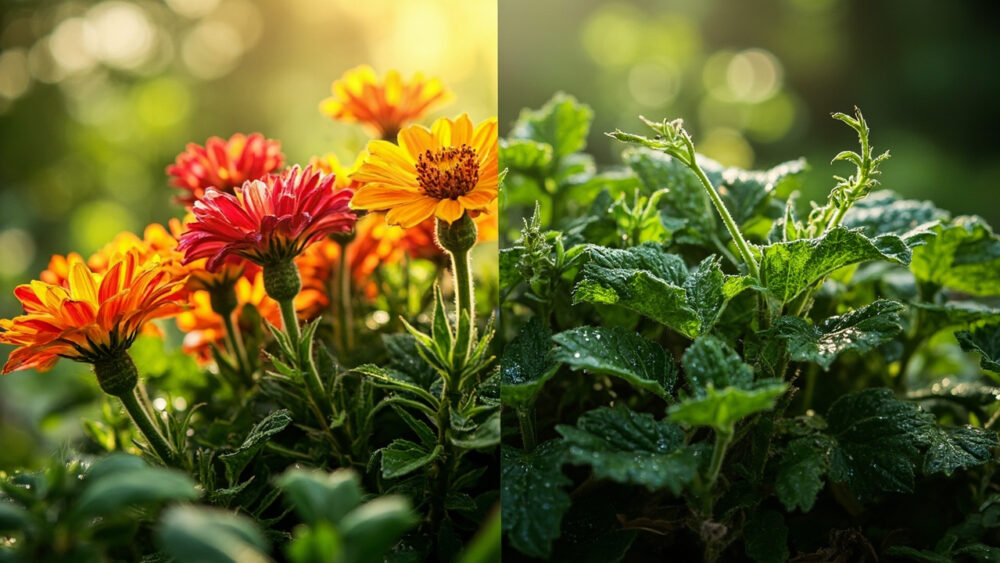
Here’s the honest call on annuals vs perennials: if you want maximum color for the least commitment, plant annuals. If you want a garden that gets better every year with less work over time, plant perennials. Most gardeners end up needing both, but if you can only pick one camp to build around, perennials win for anyone planning to stay put more than two years.
The difference everyone thinks decides this is bloom time, annuals bloom longer and harder, perennials bloom in shorter bursts. That’s true, but it’s not the difference that actually matters for your decision. The real fork in the road is how you feel about redoing work every spring, and there’s a situation later in this piece where the usual advice flips completely and perennials become the wrong choice even for someone settling in long term.
Stick with me through the differences that matter, the cases where each one clearly wins, whether you can mix them in the same bed, and the final verdict. There’s a save-able side-by-side card at the very bottom once you’ve got the full picture.
The Key Differences
Growth Habit and Lifespan
Annuals live one season and die, full stop. They germinate, bloom, set seed, and finish within a single year, which is exactly why they put so much energy into flowering nonstop instead of building roots for next year. Perennials die back or slow down each year and return from the same root system for three, five, sometimes twenty or more years depending on the species. Lean: perennials for a permanent structure, annuals for a temporary show.
That lifespan gap is also why perennials take a year or two to hit their stride.
Care and Maintenance
Annuals need consistent deadheading, regular feeding since they’re blooming so hard, and replanting every year, that’s real recurring labor and recurring cost. Perennials need far less fussing once established, mainly an annual cutback, occasional dividing every three to five years, and mulch, but that first year in the ground they need attention just like anything newly planted. The workload doesn’t disappear with perennials, it just moves from every spring to every few years.
If you travel a lot in summer, that maintenance gap alone should decide this for you.
Climate and Hardiness
Annuals don’t care about your USDA zone because they’re not trying to survive winter, they just need to get through one growing season, which is why the same petunia gets grown from zone 3 to zone 10. Perennials absolutely care, a plant hardy to zone 7 will not survive a zone 4 winter outdoors, so you have to match the plant to your actual cold hardiness zone or treat it as a very expensive annual. Lean: annuals for flexibility, perennials for zone-specific commitment.
Get the zone match wrong on a perennial and you’ll be replanting it next spring anyway, which erases the whole advantage.
Bloom Impact
If you assumed perennials give you a fuller garden, that guess is backwards for the first couple of years. Annuals deliver an immediate wall of color the first summer you plant them, dense and continuous from late spring to frost. Perennials typically bloom for two to six weeks depending on the species, then go quiet, so a perennial bed needs several different species layered to have color all season. Lean: annuals for instant, sustained impact, perennials for a garden that matures and diversifies over time.
That instant gratification is exactly why annuals dominate containers and short-term projects.
Cost Over Time
Annuals are cheap per plant but you’re buying them every single year, so the cost compounds. Perennials cost more upfront, often two to four times the price of an annual six-pack, but that’s a one-time cost that pays off starting year two. Lean: perennials win on cost within about two to three years for most gardeners.
Now the question is which of these strengths actually fits your situation.
When Annuals Is the Right Call
Reach for annuals if you’re renting, staging a house to sell, or otherwise not planting for the long haul. They’re also the right call for containers, window boxes, and porch pots where you want dense continuous color and don’t mind swapping plants out each year. Anyone testing a new bed’s sun exposure before committing to permanent plants should use annuals as a low-stakes trial run.
They’re also the answer if you want guaranteed bloom the same year you plant, filling gaps between young perennials, or covering a spot where you genuinely can’t decide on a permanent plan yet.
But there’s a real budget on the other side of this too.
When Perennials Is the Right Call
Perennials are the right call if you’re planting a forever home, want a garden that requires less work every year instead of more, or you’re building borders, hedgerows, or pollinator beds meant to mature over a decade. They’re also better for anyone on a tight annual budget who can absorb one bigger upfront cost instead of a recurring one.
Here’s the flip: if you live somewhere with brutal, unpredictable winters right at the edge of a perennial’s hardiness zone, or you’re in a rental where you might move before the plant even establishes, perennials stop being the safe long-term bet and become a gamble. In that specific case, the usual advice reverses and annuals are actually the lower-risk, lower-regret choice even for someone who wants a permanent-feeling garden this year.
So does that mean you have to pick a side for the whole yard?
Can You Use (or Grow) Both?
Yes, and most experienced gardeners do exactly that. Perennials form the bones of the bed, the shrubs, the returning clumps of coneflower or hosta or daylily that give it structure year after year. Annuals get tucked into the gaps between them, especially while young perennials are still filling in, and in the empty stretches where a perennial has finished its bloom window and gone quiet.
This combination also solves the bloom-gap problem directly, since you can plant fast annuals around slower perennials to keep color going from the first hard frost date in spring right through the last one in fall. The only real risk is overcrowding, since perennials expand their footprint every year and annuals planted too close get shaded out or root-crowded by midsummer.
Which brings us to the actual decision you came here to make.
The Verdict
If you’re planting a garden you intend to keep for more than two years, build it around perennials and use annuals as filler, not the other way around. Perennials pay you back in lower long-term cost and less recurring labor, and that’s the trade nearly every gardener eventually wants once the novelty of yearly replanting wears off. Annuals still earn a permanent spot in your plan for containers, color gaps, and any bed you’re not ready to commit to yet, but they should be the accent, not the foundation.
Annuals vs. Perennials at a Glance
- Lifespan: Annuals complete their life cycle in one season, Perennials return for three to twenty or more years depending on species.
- Care: Annuals need regular deadheading, feeding, and yearly replanting, Perennials need an annual cutback and dividing every three to five years once established.
- Climate: Annuals grow in any zone since they only need one season, Perennials must match your USDA hardiness zone to survive winter.
- Bloom: Annuals bloom continuously from late spring to frost, Perennials bloom in two to six week windows and need layering for season-long color.
- Cost: Annuals are cheap per plant but bought every year, Perennials cost more upfront but pay off within two to three years.
- Best use: Annuals for containers, gap-filling, and short-term plantings, Perennials for permanent structure, borders, and low-maintenance beds.
- Risk: Annuals carry no winter risk since they die anyway, Perennials risk winter loss if planted outside their hardy zone.
Build the bones with perennials, fill the gaps with annuals, and you’ll get the best of both without pretending this was ever a close call.
Match the plant to your zone and your patience level, and the rest of this decision takes care of itself.