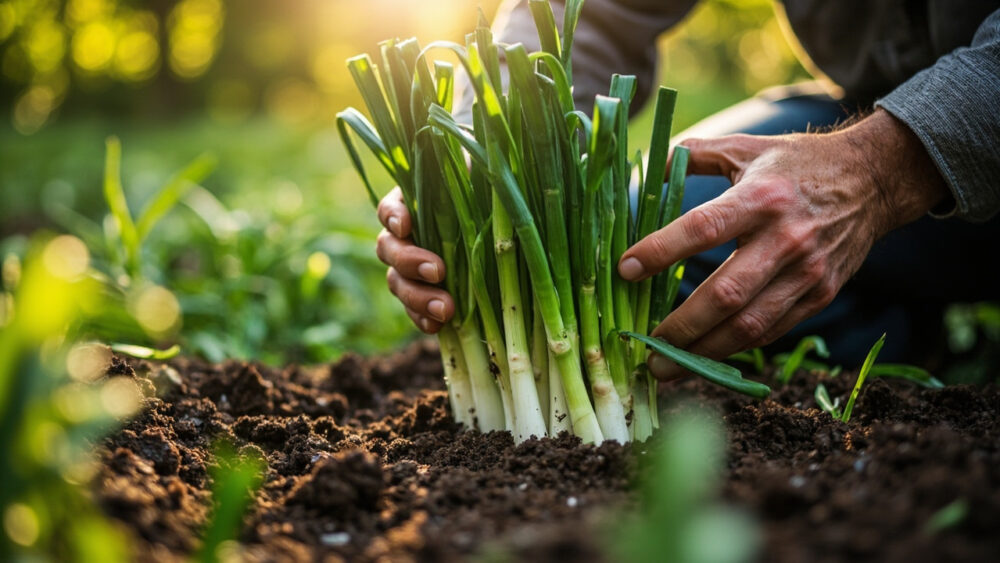
Green onions are one of the fastest, most forgiving crops you can put in the ground: plant sets or seed in loose, fertile soil once it hits about 50°F, keep them evenly moist, and you will be harvesting scallions in as little as three to four weeks from sets, or eight to ten weeks from seed. That is the whole job in one sentence. Growing green onions well over a full season is where most people trip up.
The mistake that wrecks the most plantings has nothing to do with soil or fertilizer. It is planting depth, and it goes wrong in two opposite directions depending on whether you start from seed, sets, or nursery transplants.
There is also a sign most gardeners misread completely, a green onion that starts pushing up a thick, hollow flower stalk from the center. Most people assume that means the plant is thriving. It actually means your harvest window just slammed shut on that plant. We will get to what to do about it, and how to head it off, along with the pests that actually bother alliums and the honest answer to “can I just keep cutting the same plant forever.” Save-able specifics, including exact spacing and depth, are waiting in the Green Onions at a Glance card at the very bottom once you have read through the how and why.
When to Plant Green Onions
Green onions tolerate cold far better than tomatoes or peppers, so you plant them early. Get seed or sets in the ground two to four weeks before your average last frost date, as soon as soil can be worked and has warmed to at least 45 to 50°F a couple inches down. A handful of soil that is no longer sticky or waterlogged, and doesn’t feel icy to the touch, is ready.
In zones 7 and warmer, you can plant in early spring and again in late summer for a fall crop, and in zones 9 to 10 green onions often overwinter and grow nearly year round. In zones 3 to 6, stick to a spring planting once the ground thaws, with a second sowing in mid to late summer for fall harvest.
Succession planting is the real trick professional growers use. Put in a new short row every two to three weeks through the cooler months, and you never run out.
Timing solves the first half of the problem, but the ground you put them into decides the rest.
Choosing the Spot and Prepping the Soil
Green onions want full sun, six or more hours a day, though they will limp along on four in a pinch. Loose, well-drained soil matters more than sun for this crop, because alliums grown in heavy clay come out stubby, distorted, and prone to rot.
Work the bed to a depth of 8 to 10 inches, breaking up clumps and removing rocks, since even scallions push down a modest root system and hate compaction. Mix in an inch or two of compost or aged manure before planting.
Aim for a soil pH between 6.0 and 7.0. Green onions are light feeders compared to bulbing onions, but they still sulk in starved, sandy soil that has had nothing added to it in years.
Good soil prep is half the battle, and the other half is how you actually get them in the ground.
Planting Green Onions Step by Step
You have three starting options: seed, sets (small dormant bulbs), or nursery-grown transplants pulled as bunches. Sets are fastest to harvest, seed is cheapest and gives you the most control over variety, transplants split the difference.
From Seed
- Sow seed 1/4 to 1/2 inch deep, no deeper. This is the depth mistake: buried too deep, allium seed simply rots before it sprouts.
- Space rows 12 to 18 inches apart, and thin seedlings to about 1 inch apart once they are 2 to 3 inches tall.
- Expect germination in 7 to 14 days in warm soil, slower in cool ground.
From Sets or Transplants
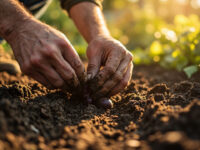
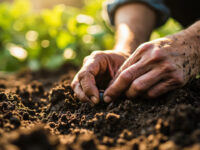
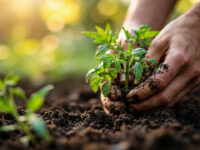
- Push each set or transplant into loosened soil so the white base sits about 1 inch deep, roots down, green tip up.
- Space them 1 to 2 inches apart in rows 4 to 6 inches apart if you want a dense scallion bed, or wider if you plan to let some bulb up.
- Water in immediately after planting to settle soil around the roots and knock out air pockets.
Planted at the right depth and spacing, green onions basically take care of themselves from here, provided you get water and feeding right.
Watering and Feeding Through the Season
Green onions have shallow, fibrous roots that dry out fast, so consistent moisture matters more than volume. Water enough to keep the top 2 inches of soil damp but not soggy, typically once or twice a week, more often in sandy soil or hot weather.
Let the soil dry out repeatedly between waterings and you get thin, fibrous, bitter-tasting stalks. Keep it waterlogged and you invite rot at the base, the single fastest way to lose an entire row overnight.
A light mulch of straw or shredded leaves, an inch or so thick, holds moisture and keeps weeds down, which matters because green onions do not compete well with weeds for their shallow root zone.
Feed with a balanced or nitrogen-leaning fertilizer every three to four weeks, since steady nitrogen is what pushes lush green tops. Ease off nitrogen once you are two to three weeks from harvest, or the tops get soft and floppy.
Water and food keep the tops growing, but there are still a few things that can take the whole planting down if you are not watching for them.
Problems to Watch For
Green onions are genuinely low-trouble compared to most vegetables, but three issues show up often enough to name.
Onion maggots and thrips are the main insect pests. Maggots cause wilting and yellowing that looks like drought stress at first; thrips leave silvery streaks on the leaves. Floating row cover over young plantings keeps adult flies from laying eggs in the first place, which is the most reliable fix. For established infestations, an insecticidal soap or a labeled insecticide applied exactly per the product label is the next step.
Fungal issues, mainly downy mildew and rot at the base, come from soil that stays wet too long or air that never moves through the foliage. Space plants for airflow and water at the soil line instead of overhead to cut this risk sharply.
Now the sign everyone misreads: a thick, hollow flower stalk rising from the center of the plant, called bolting. It happens when the plant gets stressed by a cold snap followed by a warm stretch, or when it simply matures past its window. Once a green onion bolts, the stalk toughens and the flavor turns sharp and unpleasant. It will not un-bolt. Harvest it now rather than waiting, and plant your next succession sowing to keep ahead of it.
Head off pests and bolting, and the only decision left is when to actually cut.
When and How to Harvest
Green onions are ready any time the tops reach 6 to 8 inches tall and the white base is at least pencil-width, which is typically 3 to 4 weeks after planting sets or transplants, 8 to 10 weeks from seed. There is no single ripeness moment to hit exactly, which is the honest good news: you are choosing thickness, not racing a deadline.
To harvest, either pull the whole plant, roots and all, or snip the tops an inch or two above the soil line and let the base resprout for a second, sometimes third, cutting. Cut-and-regrow works reliably for scallions two or three times before the plant runs out of energy and should be pulled.
If you want fatter, more leek-like stalks, thin your rows so remaining plants have 3 to 4 inches of space and let them grow another two to three weeks past the scallion stage.
That flexibility is exactly why green onions are worth succession planting all season instead of sowing once and hoping.
Green Onions at a Glance
- When to plant: two to four weeks before last frost, once soil is at least 45 to 50°F, with succession sowings every two to three weeks.
- Planting depth: seed 1/4 to 1/2 inch deep, sets and transplants about 1 inch deep with the white base buried and green tip exposed.
- Spacing: 1 to 2 inches apart for scallions, rows 4 to 6 inches apart, wider if letting plants bulb up.
- Sun and soil: full sun, loose well-drained soil enriched with compost, pH 6.0 to 7.0.
- Watering: keep the top 2 inches of soil consistently damp, roughly once or twice a week.
- Time to harvest: 3 to 4 weeks from sets or transplants, 8 to 10 weeks from seed.
- Watch for: onion maggots, thrips, base rot from overwatering, and bolting after temperature swings.
Get the depth and moisture right and green onions basically grow themselves. Keep a new row coming every few weeks and you will never buy a bunch at the store again.