The right time to prune spirea depends entirely on which kind you have. Spring-blooming spireas (like bridal wreath) get cut right after they finish flowering. Summer-blooming spireas (like the popular pink Japanese types) get cut in late winter or early spring, before new growth starts.
Get that backwards and you will not kill the plant, but you will lose a season of flowers waiting for you to figure out why. This mix-up is the single most common spirea mistake, and it is an easy one to walk into if you prune on a fixed date instead of watching the plant.
There is also a question nobody asks until they are standing there with shears in hand: how much is too much. Spirea tolerates harder cuts than most shrubs get, and the plant that looks half-massacred in March is usually the one blooming best by June. Stick around for the mistakes that cost people their flowers entirely, and the save-able Spirea at a Glance card at the bottom, with the exact numbers for timing, cuts, and regrowth.
How to Tell Which Type You Have (and Why It Changes Everything)
Before you touch a blade, identify the bloom type. Spring bloomers flower on old wood, the growth made last year, and they bloom in April or May in most climates, usually white, in arching sprays. Bridal wreath spirea (Spiraea prunifolia) and Vanhoutte spirea are the classic examples.
Summer bloomers flower on new wood, the growth they push out this spring, and they bloom from early summer into fall, usually pink, red, or white, in flat clusters. Japanese spirea (Spiraea japonica) varieties like Anthony Waterer, Goldflame, and Little Princess fall here.
If you are not sure which one you have, look at when it bloomed last year. Bloomed early and white before most other shrubs leafed out fully? Spring type. Bloomed pink or red through the heat of summer? Summer type.
Once you know the type, the timing question answers itself.
When to Prune Each Type (and When to Leave It Alone)
For spring-blooming spirea, prune within two to three weeks after the flowers fade, typically late spring. Wait longer than that and you start cutting off the buds it is already setting for next year.
For summer-blooming spirea, prune in late winter to very early spring, while the plant is still dormant and before you see new leaf buds swelling. In most regions that is anywhere from four to eight weeks before your last expected frost.
Do not prune either type in fall. A fall cut on a spring bloomer removes next year’s flowers outright. A fall cut on a summer bloomer encourages tender new growth right before winter, growth that often dies back in the cold anyway, wasting the plant’s energy for nothing.
The tools you reach for next matter almost as much as the calendar.
Tools and the One Prep Step That Actually Matters
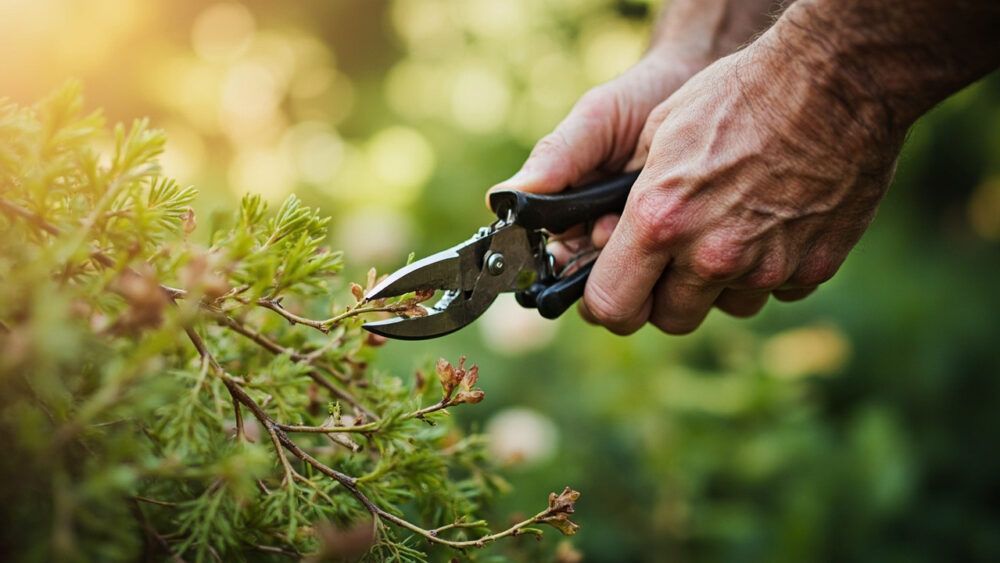
You need bypass pruners for stems under about half an inch, loppers for anything up to an inch, and a pruning saw for old, thick crowns on neglected plants. Hand shears are fine for the whole-shrub rejuvenation cut described below.
The prep step people skip: wipe your blades with rubbing alcohol before you start, especially if you pruned a diseased plant recently. Spirea is generally tough and disease-resistant, but a dirty blade can spread fungal problems from one shrub to the next in your yard for no reason.
Beyond that, just clear the area around the base so you can see the crown and the oldest stems clearly. You cannot make good cuts you cannot see.
Now for the part everyone gets nervous about, actually making the cuts.
Step 1: Remove the Dead, Damaged, and Crossing Wood First
Always start here regardless of type or season. Cut out anything dead, broken, or rubbing against another branch, back to healthy wood or to the ground. This alone often opens up the shrub enough that you barely need to do more.
Step 2: Shape With Thinning Cuts, Not Just a Haircut
Reach into the shrub and cut about one-third of the oldest, thickest stems back to the base, at ground level or an inch or two above it. This is called renewal pruning, and it keeps the whole shrub from turning into a woody, hollow-centered mass over the years.
For spring bloomers, also shorten the flowering branches by about a third right after bloom, cutting just above a healthy bud or side shoot.
Step 3: For Overgrown Summer Bloomers, Consider the Hard Cut
If a summer-blooming spirea has gotten leggy, sparse, or floppy, you can cut the entire shrub back to 4 to 6 inches above the ground in late winter. This looks brutal. It is also exactly what commercial growers do to keep these plants compact and heavy-blooming, and the shrub will rebuild its whole canopy by early summer.
This hard-cut option is the answer to the follow-up question most readers have right after learning the timing: yes, you really can cut it back that far, and no, it will not stunt the plant.
What happens next depends on how much you took and how the weather cooperates.
What to Expect After You Cut
Within two to four weeks of a spring-bloomer’s post-bloom trim, you will see fresh green growth pushing from the cut points, and that growth is what will carry next year’s flower buds. Nothing more to do here except normal watering.
For a summer bloomer pruned hard in late winter, expect the shrub to look like a cluster of stubs for several weeks. That is normal, not a sign of trouble.
New shoots typically appear within three to five weeks once soil temperatures climb into the 50s Fahrenheit, and by six to eight weeks you should have a full new mound of foliage. Flower buds follow on that new growth, so a hard-cut summer spirea often blooms slightly later than an untouched one that same year, but it blooms fuller.
If you see nothing at all after six weeks and soil is warming normally, check the base for rot or borer damage rather than assuming the cut itself was the problem.
Most disappointing seasons trace back to one of a short list of avoidable mistakes.
The Mistakes That Actually Cost You Flowers
If you assumed harder pruning always means fewer flowers, that guess is backwards for spirea; the real risk is pruning at the wrong moment, not pruning too hard.
- Pruning a spring bloomer in late winter: you cut off the buds that were about to open, and you get a bare, flowerless spring for that shrub.
- Pruning a summer bloomer too late in spring: once new growth is several inches long, cutting it back delays bloom by weeks and can knock off developing buds.
- Shearing into a tight ball every year without thinning: this creates a dense shell of outer twigs with a dead, woody, flowerless interior. Spirea needs the renewal cuts described above, not just a trim on the surface.
- Never cutting old wood out at all: a spirea left alone for five or more years gets leggy, sparse at the base, and bloom shifts to the very tips, out of reach and out of sight.
- Fertilizing heavily right after a hard cut: this pushes soft, weak growth that flops over or burns in summer heat. Let the plant regrow on its own energy first.
Every one of those is fixable next season, which is more forgiving than most flowering shrubs offer.
Spirea at a Glance
- When to prune spring bloomers: right after flowering finishes, within two to three weeks, typically late spring.
- When to prune summer bloomers: late winter to early spring, while still dormant, before new buds swell.
- How much to remove: about one-third of old stems for routine shaping, or cut the whole summer-blooming shrub to 4 to 6 inches for a hard rejuvenation.
- Where to cut: just above a healthy bud or side shoot for shaping cuts, at or near ground level for renewal cuts.
- Never prune in fall: it removes next year’s buds on spring types and invites weak growth before winter on summer types.
- Regrowth timeline: new shoots in three to five weeks, full canopy in six to eight weeks after a hard late-winter cut.
- Tool prep: clean bypass pruners or loppers with rubbing alcohol before starting.
Get the timing right for your bloom type and spirea forgives almost everything else you do to it.
When in doubt, cut right after flowering stops and you will rarely go wrong.