The best time to plant a peach tree is late winter to early spring, right after the ground thaws and while the tree is still dormant, roughly two to four weeks before your last frost date. In mild-winter areas, fall planting works just as well, sometimes better. What actually matters more than the calendar is dormancy timing and soil condition, and that’s where most people get it wrong.
Here’s what trips people up: the mistake that kills more peach trees isn’t planting too late, it’s planting into a tree that’s already broken dormancy before it’s even in the ground. There’s also a sign nurseries put right on the tag that almost nobody reads correctly, and an honest answer to the question you’re probably about to ask, which is whether you can still plant one this month.
Stick with me through the details and I’ll give you a save-able Peach Trees at a Glance card at the bottom with every number in one place.
The Real Planting Window, Anchored to Frost and Soil
Peach trees go in while dormant, meaning before buds swell and leaf out. That window opens as soon as the soil is workable, not frozen or waterlogged, and closes once the tree starts actively growing.
In cold-winter climates (roughly zones 5 and 6), that’s typically a stretch from late February through April, depending on your winter. You want soil temperature at planting depth above about 40°F and no longer saturated from snowmelt.
In warmer zones (7 through 9, where most commercial peach country sits), you have two real options: plant in late fall after leaf drop, or in January through February while still dormant. Fall planting in these zones lets roots establish all winter, which often produces a stronger first growing season than a spring-planted tree.
Bare-root trees, which is how most peaches are sold, need this dormant window. Container-grown trees are more forgiving but still do best planted before hot weather arrives.
Knowing the calendar window is one thing, reading your own yard is another.
How to Tell Your Actual Window, Not the Almanac’s
Forget the exact date on a seed catalog. Your window depends on what’s happening under your boots right now.
Squeeze a handful of soil from where you’ll plant. If it forms a muddy ball that won’t crumble, it’s too wet, and roots planted now will sit in oxygen-starved mud. Wait one to two weeks and test again.
Check the tree itself if you already have it in hand. Bare-root peach trees should still show tight, closed buds with no green tips showing. Once you see even a hint of green or swelling, that tree needs to go in the ground within days, not weeks, regardless of what the forecast says.
Look at your ten-day forecast for any stretch of hard freeze below the mid-20s right after planting. A light frost won’t hurt a dormant tree, but a hard freeze on freshly disturbed roots is harder on the tree than the same freeze on established roots.
That timing pressure is exactly why so many people either jump the gun or wait too long, and both mistakes cost you.
What Happens If You Plant Too Early or Too Late
If you assumed “earlier is safer,” that guess is exactly backwards for peaches. Planting into cold, wet, waterlogged soil is worse than waiting.
Too early, meaning into saturated or still-frozen ground, causes root rot before the tree ever leafs out. You won’t see the damage until May or June, when a tree that looked fine in April suddenly won’t push new growth. By then it’s usually too late to save.
Too late means planting a bare-root tree after it’s already broken dormancy, or planting into early summer heat. The tree has to leaf out and establish roots simultaneously, which stresses it hard. It may survive, but you’ll often lose a full year of growth, and a stressed young peach tree is more vulnerable to borers and canker for a season or two afterward.
The honest answer for the reader wondering “can I still plant this month”: if the tree is dormant and the soil is workable, yes. If leaves are already out, hold the tree in a large pot in a cool spot and plant in fall instead, don’t force it into ground in July.
Getting the timing right only pays off if the hole and the site are ready before the tree ever arrives.
Prep to Finish Before the Window Opens
Do this work now, not the day the tree shows up, because rushed planting is where spacing and depth mistakes happen.
- Pick full sun. Peaches need six to eight hours of direct sun and good air movement to keep fungal disease down.
- Space trees 15 to 20 feet apart for standard varieties, 10 to 12 feet for dwarf types, measured trunk to trunk.
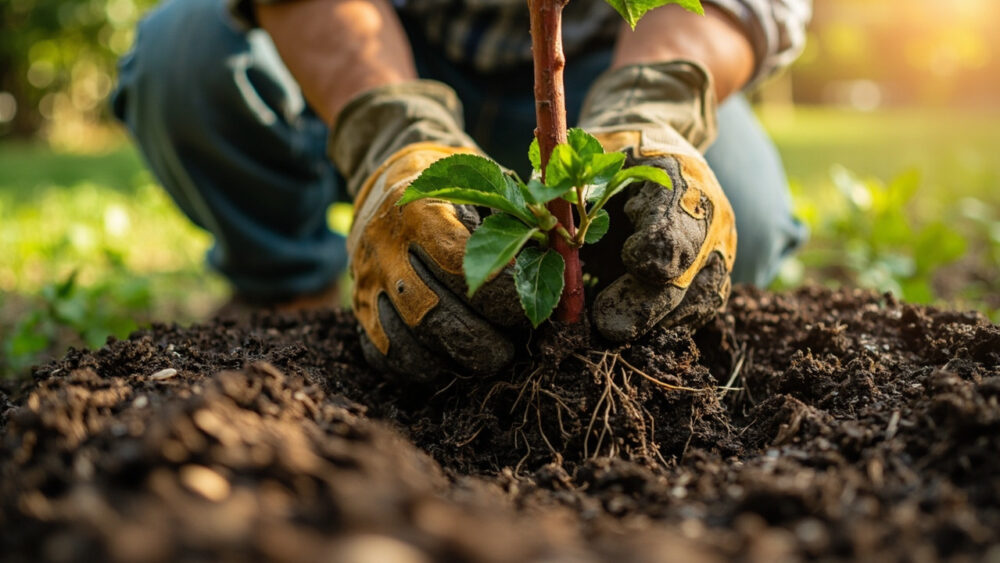
- Dig the hole wide, not deep. Twice the width of the root ball, same depth as the roots naturally sit, no deeper.
- Find the graft union before you dig, that swollen bump low on the trunk, and keep it 2 to 3 inches above final soil level once planted.
- Avoid low spots where frost pools or water collects after rain, both will undo good timing fast.
With the site and hole ready, the only thing left is matching your region’s quirks to the general rule.
Region Notes Worth Knowing
Peaches need winter chill hours (roughly 600 to 900 hours below 45°F, depending on variety) to fruit properly, which is why they struggle both in the deep South without a low-chill variety and in zones colder than about 5, where winter kill becomes a real risk.
Zones 5 to 6: spring planting only, wait for the thaw, protect young trunks from winter sunscald for the first year or two.
Zones 7 to 8: fall or late winter both work well, fall often gives the stronger tree by summer.
Zone 9 and warmer: stick to low-chill varieties, plant in the coolest part of winter, and watch for insufficient chill causing erratic bloom.
Get the region and the window right together, and everything else about growing a peach tree gets easier from here.
Peach Trees at a Glance
- When to plant: dormant season, late winter to early spring in cold climates, fall or midwinter in mild climates.
- Soil signal: workable, crumbly, not muddy, above about 40°F at root depth.
- Spacing: 15 to 20 feet for standard trees, 10 to 12 feet for dwarf varieties.
- Planting depth: same depth roots grew at, graft union 2 to 3 inches above soil.
- Sun needs: six to eight hours direct sun, good airflow, no low frost pockets.
- Chill hours: 600 to 900 hours below 45°F depending on variety, choose low-chill types below zone 8.
- Biggest mistake: planting bare-root trees after buds have already broken dormancy.
Get the dormancy and soil timing right and the tree does most of the rest of the work itself.
Everything else, pruning, feeding, thinning fruit, only matters once that first season’s roots take hold.