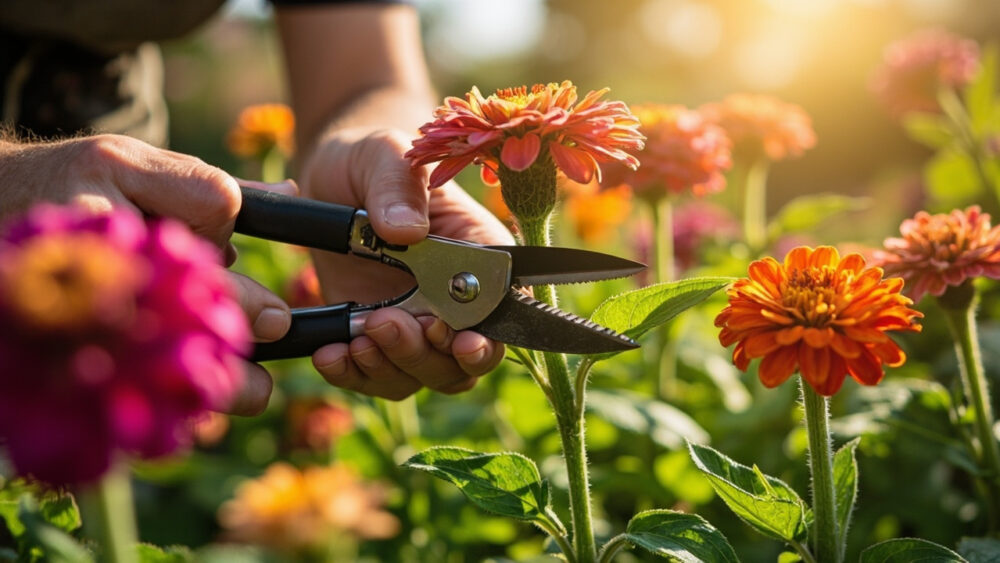
You prune zinnias by pinching the main stem just above a leaf set when the plant is 8 to 12 inches tall, and then all season long by deadheading spent blooms right below the flower head, cutting into a fork of leaves rather than snipping the bare stem above them. That first pinch is what turns one gawky stalk into a bushy plant with six or eight flowering stems instead of one. Skip it and you get a zinnia that looks fine in June and disappointing by August.
There is a specific mistake that stalls more zinnia patches than any pest or disease: cutting flowers too high, leaving long bare stems that never branch again. There is also a sign almost everyone misreads on the stem itself, and it tells you exactly where to cut. Stick around and I will give you the save-able Zinnias at a Glance card at the bottom with every number in one place.
When to Prune, and When to Leave Them Alone
The first pinch happens once seedlings hit 8 to 12 inches tall and have at least four to six sets of true leaves, whether you started them indoors or direct sowed after your last frost. That is usually 3 to 5 weeks after seeds go in the ground, once soil has warmed past 60°F. Pinch too early on a 4 inch seedling and you set the plant back hard with almost nothing to regrow from.
Deadheading starts the moment the first flowers begin fading, and it never really stops until frost ends the season. Do not deadhead a bud that has not opened yet, that mistake costs you a flower for nothing.
Also leave pruning alone during the first week after transplanting. A stressed, unestablished plant needs its leaves to recover, not a fresh wound to heal.
Next up: the two tools that matter and the one prep step people skip.
Tools and the One Prep Step That Matters
For the early pinch, your fingers work fine. Zinnia stems at that stage are soft enough to pinch cleanly between thumb and forefinger. For deadheading mature stems later in the season, switch to bypass pruners or sharp scissors, since older zinnia stems get fibrous and tear instead of snapping clean if you just yank them.
The prep step people skip is wiping the blades with rubbing alcohol before you start, especially if you were just in another part of the garden. Zinnias are prone to powdery mildew and bacterial leaf spot, and dirty blades move both from a sick plant to a healthy one in seconds.
One more thing worth doing before you cut anything: water the day before, not the day of. Turgid, hydrated stems snap and cut cleaner than stressed, wilted ones.
Now the actual cuts, because where you place them decides how many flowers you get.
How to Prune Zinnias Step by Step
This is the part where the misread sign matters. Most people think the goal is to cut close to the ground to force a bushier plant. That is backwards, and cutting too low wastes stem the plant already built.
The real sign to look for is a leaf node, the slightly swollen point on the stem where a pair of leaves attaches. That is where new growth buds are already waiting, dormant and ready.
Step 1: The First Pinch
When the seedling is 8 to 12 inches tall, find the top set of leaves and pinch or snip the stem about 1/4 inch above that leaf node. You are removing the growing tip, which is the plant’s signal to keep growing as one stalk.
Step 2: Let It Branch
Within 7 to 10 days you will see two new shoots emerging from the leaf axils just below your cut. That is the branching you were after.
Step 3: Deadheading All Season
Once a flower fades, follow its stem down to the first full set of leaves or the next side branch, and cut there, not just below the flower head. This is the step most people get wrong, leaving 6 inch bare stubs that just sit there doing nothing.
Step 4: Cut for Bouquets the Same Way
If you are cutting zinnias to bring inside, cut long, down to a leaf node several inches below the flower. Longer stems make better bouquets and force the same branching response as deadheading.
Here is what actually happens to the plant once you start this rhythm.
What to Expect After You Prune
After the first pinch, expect the plant to look a little worse before it looks better. For about a week it sits there, seemingly doing nothing, while it redirects energy into those side buds.
By week two you should see two or more new stems pushing out from below the cut, each one a future flower stalk. A well-pinched zinnia by midsummer can carry 6 to 10 blooming stems instead of one.
With ongoing deadheading, expect a rebloom cycle of roughly 10 to 14 days: cut a spent flower correctly, and a replacement bud is usually visible within that window.
If you stop deadheading for a couple of weeks during vacation season, you have not ruined anything, the plant just slows down and starts putting energy into seed instead of new flowers.
That slowdown is exactly where the costliest mistakes creep in.
The Mistakes That Cost You Flowers
Here is the honest answer to the question you were probably about to ask: no, letting spent blooms sit on the plant will not kill it, but it will quietly shut down flower production for the rest of the season.
- Skipping the first pinch entirely: you get one tall stem, one big flower, and a plant that is done blooming heavily by midsummer.
- Cutting flowers with long bare stubs left behind: those stubs do not rebranch, they just sit there brown and ugly.
- Deadheading with dirty tools: this is how powdery mildew and leaf spot spread down a whole row in a week.
- Letting flowers go to seed unchecked: a zinnia that forms seed heads shifts its energy there and stops pushing new blooms.
- Pruning wet plants: cutting foliage while it is damp from dew or rain is one of the easiest ways to spread fungal disease.
- Over-pinching mature plants: the pinch is a young-plant technique, doing it repeatedly on an already-branched adult zinnia just delays bloom for no benefit.
Fix those six habits and the rest of zinnia care mostly takes care of itself.
Zinnias at a Glance
- When to pinch: once seedlings reach 8 to 12 inches tall with four to six leaf sets, about 3 to 5 weeks after sowing.
- Where to cut: 1/4 inch above a leaf node, never mid-stem and never flush with the ground.
- Deadheading rhythm: check every 3 to 5 days once blooms start, cutting down to the next leaf set or side branch.
- Rebloom timing: new buds typically appear within 10 to 14 days of a correct deadheading cut.
- Tools: fingers for young seedlings, sharp bypass pruners for mature stems, wiped with rubbing alcohol between plants.
- Best timing to avoid disease: prune in the morning once dew has dried, never on wet foliage.
- Skip pruning: during the first week after transplant shock and on buds that have not opened yet.
Get the first pinch right and cut every faded bloom down to a leaf node, and a zinnia will reward you with flowers from early summer straight through the first hard frost.
Everything else with this plant is just watering and sunlight.