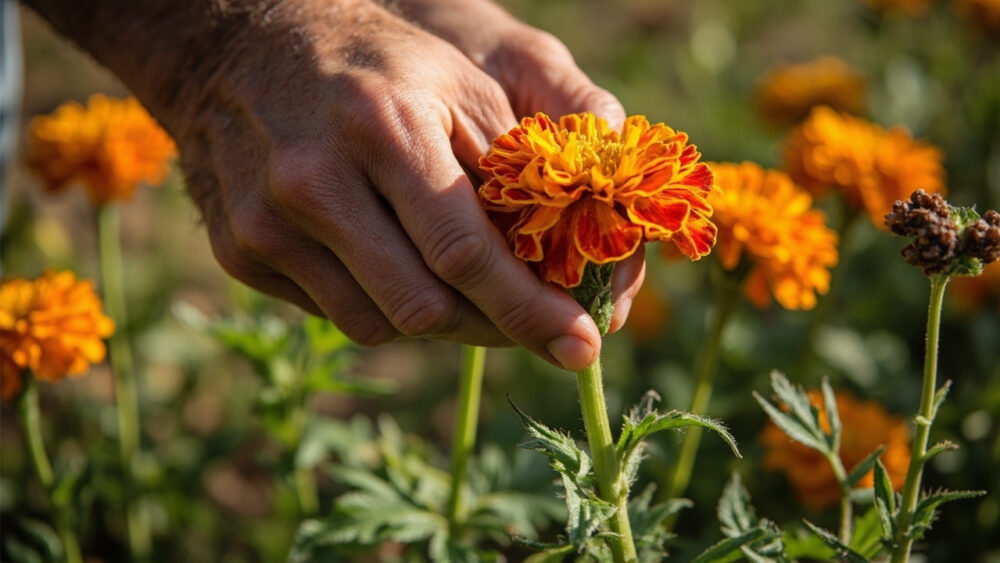
You harvest calendula by pinching or snipping the flower heads just below the base, right where the petals meet the stem, once the blooms are fully open and the centers are showing but before the petals start curling papery and dry. Do this every two to three days through the whole bloom season, morning to early afternoon after the dew dries. That is the entire job in one sentence, but the details decide whether you get six weeks of flowers or your plants quit on you in July.
Most people ruin their calendula harvest with one habit: letting blooms go to seed before picking. It looks harmless. It is the single fastest way to shut a calendula plant down for the season.
There is also a sign almost everyone misreads on the flower head itself, and a genuine judgment call about drying versus using fresh that nobody explains well. Stick around for all of it, including the Calendula at a Glance card at the very bottom you can screenshot before you walk back out to the garden.
The Ready Signs: What a Pickable Bloom Actually Looks Like
A calendula flower is ready when it has opened flat or slightly domed, the petals are firm and glossy rather than limp, and the central disk florets are visible and starting to show a little texture instead of a tight green button.
Color alone will fool you. A bloom can look perfectly orange or yellow while still being a day away from full opening, and picking too early gets you a flower that never quite finishes and just shrivels in the basket.
Press two fingers lightly against the back of the flower head, right where it meets the stem. If it feels plump and slightly springy, it is ready. If it feels thin or the petals fold under light pressure, give it another day.
Once you know what ready feels like, timing the whole season gets a lot easier.
The Timing Window: Early, Late, and the Sweet Spot
Calendula starts blooming roughly 6 to 8 weeks after direct-sowing or 4 to 6 weeks after transplanting, once nights are reliably above freezing, and it will keep producing new flowers for 8 to 12 weeks after that if you stay on top of picking.
Harvest too early, while the petals are still cupped tight around the center, and you get less pigment, less scent, and a flower that does not open further once cut. It just sits there half-formed.
Harvest too late is the more expensive mistake. Once a flower starts setting the curved, spiny seeds calendula is known for, the plant reads that as mission accomplished and slows down new bud production. Leave a dozen blooms to go to seed and you can watch flowering taper off within a week or two.
The honest answer to the follow-up question, does deadheading spent blooms count as harvesting, is yes. Snapping off a faded flower even when you have no use for the petals still buys you more blooms later, so do it anyway on your pass through the bed.
That single habit, pick or deadhead every bloom before it seeds, is most of what separates a calendula patch that produces for three months from one that quits after three weeks.
How to Harvest Without Setting the Plant Back
Use your fingers or a small pair of snips and cut or pinch the stem an inch or two below the flower head, taking a bit of stem along with the bloom.
Support the stem with your other hand as you cut. Calendula stems are hollow-ish and a little brittle, and a sharp tug without support can crack the stem down into the main crown, which is a real setback since that crown is what pushes out all your future flower stalks.
Work the whole plant each time you go out, not just the biggest or showiest bloom. Small, slightly-past-bud flowers you skip today are the ones that go to seed while you are focused elsewhere.
- Harvest in the morning after dew dries, when petal oils and color are at their best and the flowers are less wilted from midday heat.
- Pinch or snip an inch or two of stem with each flower, never strip petals straight off the living plant.
- Check every plant every two to three days once bloom starts, calendula moves fast in warm weather.
- Remove any fully spent, browning blooms at the same time even if you are not keeping them.
Once the blooms are in your basket, what you do in the next hour matters almost as much as the cut itself.
Right After You Cut: Don’t Let the Harvest Wilt on You
Calendula flowers wilt fast once cut, faster than most people expect from a plant that looks so tough in the garden.
Get them out of direct sun immediately and into a shallow basket or bowl, not stacked deep in a bucket where the bottom layer gets crushed and bruised.
If you are using them fresh, for salads, tea, or infused oil the same day, a light rinse and a spread on a towel to dry is enough. If you plan to dry and store them, do not rinse at all, since trapped moisture is what causes mold in storage later.
Spread whole flower heads face-up on a screen, drying rack, or paper-lined tray in a spot with good airflow, out of direct sun, and leave them alone for 5 to 10 days depending on humidity.
They are fully dry when the petals feel crisp and papery and the center disk snaps rather than bends.
Getting the drying right is only half the job, though, because how you keep picking is what determines whether you have anything left to dry by August.
Keeping the Harvest Coming All Season
If you assumed calendula slows down naturally in the heat of summer and there is nothing to do about it, that guess is only half right. Calendula does bloom less in the hottest stretch of summer in warmer zones, but the bigger driver of slowdown is almost always missed harvests, not temperature.
Keep picking every bloom, including the ones you do not need, and feed lightly every 4 to 6 weeks with a balanced fertilizer if your soil is average, since calendula in rich soil will actually push more leaf than flower.
Water at the base, about an inch a week, and let the soil surface dry slightly between waterings. Calendula tolerates dry spells far better than soggy roots, and overwatering invites powdery mildew on the foliage, which shows up as a gray-white dusting on the leaves and is best managed by improving airflow and spacing rather than reaching for a spray first.
In mild climates, zones 8 and warmer especially, calendula can reseed itself and rebloom into fall or even overwinter as a short-lived perennial, so a plant that looks finished in September is often not actually done.
That brings you to the one page worth saving before you set the phone down and go outside.
Calendula at a Glance
- When to harvest: once blooms are fully open with visible centers, petals firm and glossy, checked every 2 to 3 days through the bloom season.
- How to cut: pinch or snip an inch or two of stem below the flower head, supporting the stem so it does not crack down into the crown.
- Best time of day: morning, after dew has dried, before afternoon heat wilts the petals.
- Biggest mistake to avoid: letting spent blooms go to seed, which signals the plant to slow down flowering.
- Right after cutting: keep out of direct sun, do not rinse if drying for storage, spread in a single layer for airflow.
- Drying time: 5 to 10 days on a screen or rack out of direct sun, done when petals are crisp and the center snaps.
- To keep blooms coming: harvest or deadhead every flower, water about an inch a week, feed lightly every 4 to 6 weeks in average soil.
Pick often and deadhead everything you do not use, that one habit is worth more than any fertilizer schedule.
Do that consistently and a single calendula planting will keep handing you flowers for months.