Zoysia grass gets planted as plugs, sprigs, or sod between late spring and mid summer, once soil temperatures sit reliably above 65 F, and it needs a full growing season of heat to fill in before it goes dormant and brown at the first cool nights. That is the honest timeline: if you’re learning how to grow zoysia grass because you want a lawn by next weekend, this is not that grass. It is the grass for someone who wants the toughest, thickest turf on the block two summers from now and doesn’t mind the wait.
Most people who try zoysia blow it in one of three ways: they plant too early into cold soil and watch the plugs sit there doing nothing, they space plugs too far apart and give up before it ever knits together, or they panic every autumn when it turns straw brown and assume it died. None of those are guesses you’d necessarily make on your own, and all three are fixable before you start.
Stick with me through planting, feeding, and the disease that actually threatens zoysia (it’s not what most lawn forums tell you), and you’ll hit the Zoysia Grass at a Glance card at the bottom, worth saving to your phone before you touch a shovel.
When to Plant Zoysia Grass
Zoysia is a warm-season grass, and it will not root into cold ground. Wait until soil temperature at a 2 inch depth holds above 65 F for several consecutive days, which usually lands anywhere from late spring into early summer depending on your region. In USDA zones 6 and 7, that often means late May into June. Further south, in zones 8 and 9, you can start a few weeks earlier and even push into July with irrigation.
The mistake almost everyone makes is planting on the same weekend they plant tomatoes. Air temperature warms up faster than soil does. Push a soil thermometer or even a meat thermometer 2 inches down before you commit, don’t trust the calendar or how warm the afternoon feels.
Planting later than early summer is riskier too, since zoysia needs 60 to 90 days of solid warmth to establish roots before it goes dormant for winter.
Get the timing right and everything downstream gets easier.
Choosing the Spot and Prepping the Soil
Zoysia wants full sun, at least 6 hours a day, though it tolerates partial shade better than Bermuda grass does. It will thin out in deep shade no matter what you feed it.
Test your drainage before you plant anything. Dig a hole 6 inches deep, fill it with water, and if it hasn’t drained within a couple hours you’ve got a compaction or drainage problem to fix first, not a grass problem to blame later.
Kill existing weeds and old turf, then till or aerate the top 4 to 6 inches. Zoysia forms a dense root system and thatch layer over time, so loose, workable soil now pays off for years.
A soil test is worth the ten dollars. Zoysia prefers a pH between 6.0 and 6.5, and if you’re off by much, amend with lime or sulfur before planting rather than fighting it after.
Once the ground is ready, the actual planting is the easy part.
Planting Zoysia Step by Step
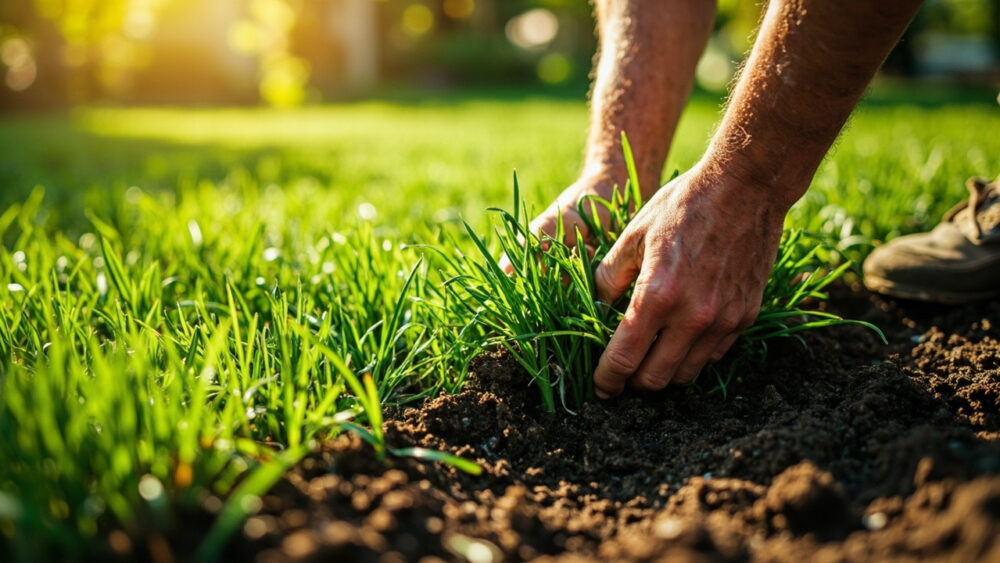
- Plugs: cut or buy 2 inch plugs and set them 6 to 12 inches apart in a grid. Closer spacing (6 to 8 inches) fills in within one growing season; wider spacing (10 to 12 inches) saves money but can take two full seasons to knit together.
- Sprigs: broadcast or plant in rows about 6 inches apart, then roll or tamp so at least half of each sprig is in contact with soil.
- Sod: lay strips tight against each other in a brick-like offset pattern, no gaps, and roll the whole area to press out air pockets.
- Depth: plugs and sprigs should sit with their crown at or just above soil level, never buried deep. Sod should be laid directly on prepared soil, not on top of old dead grass.
- Water immediately after planting, enough to soak the top 4 to 6 inches, and keep that soil consistently damp for the first 2 to 3 weeks.
That spacing decision at planting is the single biggest lever you have over how long this takes.
Watering and Feeding Through the Season
For the first two to three weeks after planting, water daily or every other day, just enough to keep the top few inches moist without standing water. Once you see new runners spreading outward from plugs or sprigs, that’s your sign roots have taken hold and you can taper back.
After establishment, zoysia is genuinely drought tolerant. Mature lawns need about 1 inch of water a week during active summer growth, less if you get regular rain, and can survive extended dry spells by going dormant rather than dying.
Feed lightly. Zoysia is a slow grower compared to Bermuda, and heavy nitrogen actually invites thatch buildup and disease rather than helping it. One to two feedings a year, in late spring and again in mid summer, using a balanced lawn fertilizer, is usually plenty. Skip feeding within six weeks of your expected first fall frost, since pushing new growth right before dormancy weakens the lawn going into winter.
If you’ve heard zoysia is a hungry, thirsty grass that needs constant babying, that reputation is backwards.
The Problems That Actually Threaten Zoysia
Every autumn, zoysia turns tan or straw colored at the first cool nights, well before frost. New owners assume it’s dying and start dumping water and fertilizer on it. Don’t. That color change is normal dormancy, not a symptom, and it will green back up on its own once soil warms in spring.
The real threats are different. Large patch disease, a fungal problem, shows up as roughly circular brown or yellow patches, usually in cool, wet weather during spring or fall, and spreads through thatch that’s too thick or soil that stays too wet. Improve drainage and dethatch when the layer exceeds half an inch, and avoid watering in the evening when grass stays wet overnight.
If a fungicide is genuinely warranted, choose one labeled for large patch on zoysia and follow the product label exactly for timing and rate.
Chinch bugs and billbugs can also thin zoysia in hot, dry patches; if you see irregular dead patches that don’t respond to watering, check for these pests before assuming it’s disease.
Get drainage and thatch under control and you’ve headed off most of what actually kills zoysia lawns.
When Zoysia Matures and Fills In
There’s no harvest here in the vegetable-garden sense, but zoysia does have a real maturity timeline worth knowing. Plugs spaced 6 to 8 inches apart typically knit into a solid lawn within one full growing season, roughly 60 to 90 days of warm weather after planting.
Wider spacing, or a cooler climate with a shorter warm season, can stretch that to a full second summer before the lawn looks complete. That’s normal, not failure.
You’ll know it’s fully established when you can no longer see soil between plugs and the grass resists a firm tug at the roots.
Once it’s filled in, mow at 1 to 2 inches for a fine-bladed cultivar or up to 2.5 inches for coarser types, and never remove more than a third of the blade height in one cut.
That first full, uniform green summer is the payoff for the patience zoysia demands.
Zoysia Grass at a Glance
- When to plant: late spring through mid summer, once soil at 2 inches stays above 65 F for several days.
- Best location: full sun for 6 or more hours daily, tolerates light shade better than most warm-season grasses.
- Planting method: plugs or sprigs spaced 6 to 12 inches apart, crown at soil level, or sod laid tight with no gaps.
- Watering: daily light watering for the first 2 to 3 weeks, then about 1 inch weekly once established.
- Feeding: one to two light feedings per year, late spring and mid summer, stop six weeks before first expected frost.
- Main risks: large patch fungal disease in wet, thatchy soil, and chinch bugs or billbugs in hot dry spots.
- Time to fill in: 60 to 90 days at tight spacing, up to two seasons at wider spacing or shorter climates.
Zoysia rewards patience more than effort. Get the timing and spacing right at planting, then leave it alone through winter dormancy, and it will outlast almost any other lawn grass you could have chosen.