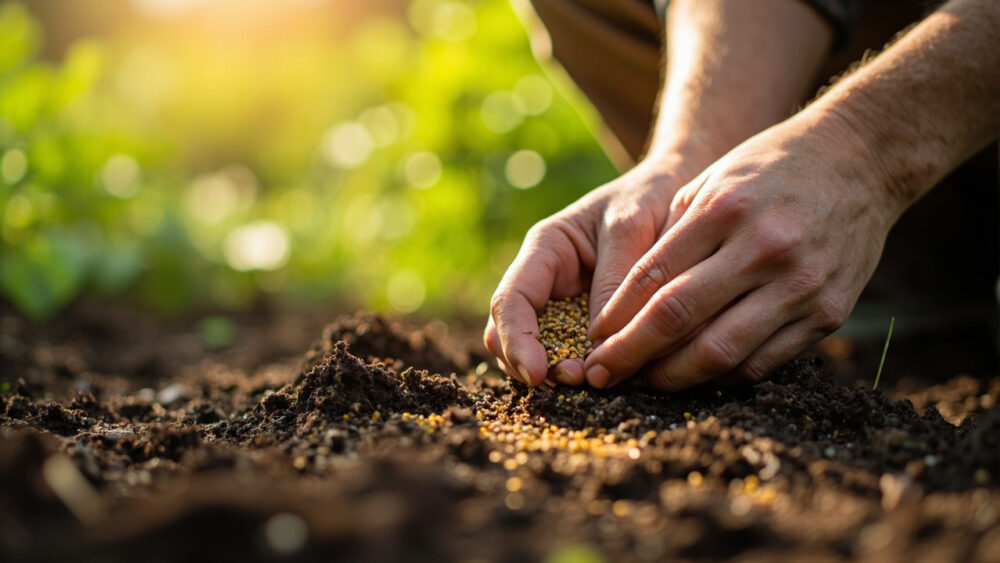
Here is the short version: loosen the top 2 to 3 inches of soil, spread seed at the rate listed on the bag for your grass type, rake it in just enough to make contact with soil, cover lightly with straw, and keep the top half inch of soil consistently moist until you see green. Do this when soil temperature sits in the right range for your grass, not by the calendar. That single detail decides whether you get a lawn or a patchy mess.
Most people who try how to plant grass from seed get burned by one of three things. They seed at the wrong time of year for their grass type, they water once a day instead of the several light waterings germination actually needs, or they walk on the new lawn too soon and undo three weeks of patience in one afternoon.
There is also a timing question almost nobody asks until it is too late: cool season and warm season grasses do not get planted on the same schedule, and guessing wrong here wastes an entire season. Stick around for that, plus the exact watering rhythm that gets seed up fast, and the mistake with fertilizer that burns seedlings right after they sprout. The full save-able rundown is waiting at the bottom.
When to Plant, and Why the Grass Type Changes Everything
Cool season grasses like tall fescue, perennial ryegrass, and Kentucky bluegrass go in during late summer to early fall, when soil temperatures run 55 to 65 F, or in early spring as a second-best option. Fall wins because seedlings get cool nights, warm soil, and less weed competition heading into their best growth season.
Warm season grasses like Bermuda, zoysia, and centipede want late spring to early summer, once soil has warmed to 65 to 70 F and nighttime temperatures stay reliably above 60 F. Seed them too early and cold soil just sits on the seed and rots it.
If you do not know which type you have, look at what is already growing nearby or ask what your neighbors planted, because the two calendars do not overlap.
Getting the season right matters more than anything you do with a rake, and the next section is where the rake actually earns its keep.
Sowing Grass Seed Step by Step
1. Prep the soil
Clear debris, mow existing grass short, and rake or till the top 2 to 3 inches until it is loose, not compacted. Seed that sits on top of hard, crusted soil mostly ends up as bird food.
2. Test and amend if needed
A basic soil test tells you if pH or nutrients need correcting before you seed, since it is far easier to fix soil now than after grass is established. Most turf grasses want a pH near 6.0 to 7.0.
3. Spread the seed
Use a broadcast or drop spreader and follow the seeding rate printed on the bag for your specific grass, typically somewhere in the range of 2 to 6 pounds per 1,000 square feet depending on species. Go over the area twice in crossing directions for even coverage.
4. Rake and cover
Lightly rake to work seed into the top eighth to quarter inch of soil, then spread a thin straw mulch or seeding mat over the top. This holds moisture and keeps seed from washing away in the next hard rain.
Getting seed into the ground correctly is half the job, keeping it alive for the next two to three weeks is the other half.
Germination: What to Expect and When to Actually Worry
Germination timing depends entirely on species. Ryegrass can show green in 5 to 10 days, tall fescue and bluegrass take 10 to 21 days, and Bermuda or zoysia often takes 14 to 28 days. Slow does not mean dead, especially for the warm season grasses.
If you assumed one deep watering a day is enough, that habit is the top reason seed fails. Germinating seed needs the top half inch of soil kept consistently damp, which usually means light watering once or twice a day, sometimes more in hot, dry, or windy weather. Let that top layer dry out completely for even a day during the first week and you can lose the whole batch.
Watch for uneven color rather than uniform failure. Patchy green with bare strips usually means uneven seed distribution or a spreader that skipped rows, not a doomed lawn, and it can often be overseeded into those bare spots once initial growth is established.
Once you see a consistent haze of green across the bed, the job shifts from babysitting seed to protecting seedlings.
The “Hardening Off” Equivalent: Easing New Grass Into Real Life
Grass seedlings do not get hardened off in trays like vegetable starts, but they go through their own vulnerable transition, and this is the step almost everyone skips. Once grass reaches about 1 to 1.5 inches tall, you can begin easing back on watering frequency while increasing the amount per session, training roots to grow deeper instead of staying shallow near the surface.
Do not mow yet. Wait until grass reaches roughly a third taller than your normal mowing height, generally 3 to 3.5 inches for most lawns, then cut no more than the top third off in that first mow. Scalping young grass early stresses roots that have not anchored yet.
Keep foot traffic, pets, and equipment off the new lawn entirely during this stage. A single afternoon of kids or a dog running laps can tear out shallow-rooted seedlings that took three weeks to grow.
Once mowing starts safely, the lawn moves into its first real growing season, and that is where feeding and watering habits either build a thick lawn or a thin one.
Care Through the First Season
Hold off on fertilizer for the first 6 to 8 weeks unless the product is specifically labeled as a starter fertilizer safe for new seedlings, since standard high-nitrogen lawn feed can burn tender new grass. Follow the product label exactly on any fertilizer or weed control you use near new seed.
Water deeply but less frequently as roots establish, aiming for about 1 inch of total water per week including rainfall, delivered in two or three sessions rather than daily sprinkles. This trains roots downward, which is what gets a lawn through summer heat without collapsing.
Mow regularly at the correct height for your grass type and never remove more than a third of the blade length at once, which keeps the plant from going into stress after every cut.
Skip broadleaf weed killers for at least the first two to three mowings unless the label specifically clears it for new seedlings, because timing here is exactly where a lot of new lawns get accidentally damaged.
By the time you are mowing on a normal schedule, the real question becomes when this new lawn is actually finished growing in.
When Does New Grass Actually “Finish”
There is no single harvest day with grass, but there is a real finish line: most cool season lawns look reasonably filled in within 6 to 8 weeks, while warm season lawns often take a full growing season, sometimes into the following spring, to thicken completely. If you expected a solid lawn in three weeks, that expectation is the honest thing to let go of early.
The real sign of a finished lawn is not just green color but density: when you can no longer see bare soil between blades and the grass springs back after you walk across it, it has truly established. Root depth matters more than blade height, and roots keep developing for months after the surface looks done.
Give it a full season before judging thickness, since a lawn seeded in fall often looks its best the following spring.
Everything above compresses into the card below, worth saving before you head outside.
Grass From Seed at a Glance
- When to plant: cool season grasses in late summer to early fall when soil is 55 to 65 F, warm season grasses in late spring to early summer when soil is 65 to 70 F.
- Seeding depth: rake seed into the top eighth to quarter inch of soil, then cover with a thin layer of straw mulch.
- Seeding rate: follow the bag for your species, generally 2 to 6 pounds per 1,000 square feet.
- Watering during germination: keep the top half inch of soil consistently damp with light waterings once or twice daily.
- Germination time: 5 to 10 days for ryegrass, 10 to 21 days for fescue and bluegrass, 14 to 28 days for Bermuda and zoysia.
- First mow: once grass is a third taller than normal mowing height, cutting off no more than the top third of the blade.
- Full establishment: 6 to 8 weeks for cool season lawns, a full season or more for warm season lawns.
Get the timing right for your grass type and keep that top layer of soil damp during germination, and almost everything else forgives you.
Patience with foot traffic and fertilizer in those first weeks is what turns a decent seeding job into a genuinely thick lawn.