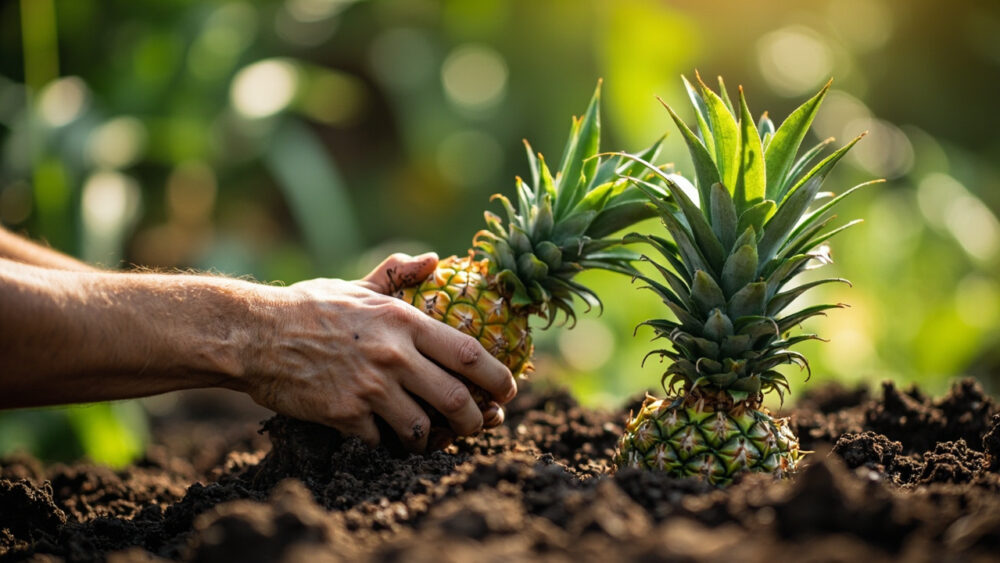
The fastest way to grow pineapples is to root the leafy top of a store-bought pineapple in water or soil, grow it as a houseplant or warm-climate outdoor plant for 18 to 24 months, and wait for a small cone-shaped flower stalk to rise from the center before it swells into fruit. If you’re learning how to grow pineapples for the first time, the plant itself is forgiving. The timeline is what trips people up.
Here’s the part almost nobody expects: a pineapple plant needs one to two full years just to mature enough to flowerand then another five to six months for the fruit to ripen after that flower shows up. Most people give up around month eight assuming they killed it, when it was actually right on schedule.
There’s also a twisting mistake that rots more pineapple crowns than any pest ever will, a watering habit that looks caring but is actually slow drowning, and an honest answer to the question you’re about to ask, which is whether you can really grow one of these in a pot in Ohio. Stick around for all of it, and save the Pineapples at a Glance card at the bottom before you go.
When to Start a Pineapple Plant
Pineapples are tropical, so there’s no seed-packet date on this one. Start your crown indoors any time of yearsince it will live inside or in a greenhouse for most of its life anyway unless you’re in USDA zone 10 or 11.
If you want to move it outdoors for the summer, wait until nighttime temperatures are reliably staying above 50°F, usually two to three weeks after your last frost date. Pineapples stall out below 50°F and can suffer real damage below 32°F.
In zones 9 and colder, this is a container plant, full stop, one that summers outside and winters on a bright windowsill or in a heated greenhouse.
Getting the timing right matters less than getting the next part right: how you actually start the crown.
Choosing the Spot and Prepping the Soil
Pineapples want the brightest light you can give them, six or more hours of direct sun outdoors, or the sunniest window you own indoors. Weak light is the number one reason a healthy-looking plant never flowers.
Soil needs to drain fast. Pineapples are bromeliads, cousins to Spanish moss and air plants, and their roots rot quickly in anything heavy or soggy. A cactus or succulent mix, or a homemade blend of potting soil, coarse sand, and perlite in roughly equal parts, works well.
Aim for a slightly acidic pH, around 4.5 to 6.5. If you’re planting in ground in a warm coastal or tropical climate, raised beds or mounded rows solve most drainage problems before they start.
A container 10 to 14 inches wide and at least 12 inches deep suits a single plant for its whole life, so you rarely need to size up more than once.
Good drainage set up now saves you from the rot problem that ends most pineapple attempts.
Planting a Pineapple Top Step by Step
This is where most guides gloss over the details that actually determine whether your crown roots or quietly rots. Here’s the sequence that works.
1. Cut and clean the crown
Twist or cut the leafy top off a ripe pineapple, leaving very little fruit flesh attached. Any fruit sugar left on the stem is what invites rot, so trim it back until you see the pale, fibrous stem base.
2. Strip and dry it
Peel off the bottom 2 inches of leaves to expose the stem and the tiny root nubs already forming there. Set the crown somewhere dry and shaded for 3 to 7 days so the cut end calluses over.
3. Root it
Suspend the stem in a jar of water so only the base touches, changing the water every few days, or plant it directly into your fast-draining mix. Water rooting lets you watch progress; soil rooting is faster to establish long-term. Roots typically show in 3 to 8 weeks either way.
4. Plant at the right depth
Bury the stem 1 to 2 inches deep, just enough to anchor it and cover the root nubs, with the lowest leaves sitting right at the soil surface. Planted too deep, the stem rots before it can root.
5. Space for growth
Give each plant 18 to 24 inches from its neighbors if you’re growing more than one. A mature pineapple plant’s leaf spread is bigger than beginners expect.
Once it’s in the ground or the pot, the real waiting game, and the real risk of overwatering, begins.
Watering and Feeding Without Rotting the Plant
If you assumed more water speeds things along, that guess is exactly what kills most pineapple crowns. These plants store water in their thick leaves and pull moisture from the air through leaf scales, so they need far less watering than instinct tells you.
Let the top 1 to 2 inches of soil dry out completely between waterings. Outdoors in summer heat that might mean every 7 to 10 days; indoors in lower light, stretch to every 2 to 3 weeks. Soggy, dark soil at the base is the single biggest warning sign of stem rot.
Feed lightly. A balanced liquid fertilizer diluted to half strength, applied every 4 to 6 weeks during the growing season, is plenty. Pineapples are light feeders by nature, and pushing heavy nitrogen just builds soft, leggy leaves instead of a strong root system.
Humidity helps a lot indoors. Misting the leaves or running a small humidifier nearby mimics the tropical air these plants evolved for.
Get the watering rhythm right and you’ve solved most of what goes wrong for the next year, but a few problems still slip through.
The Problems That Actually Show Up
Pineapples are relatively trouble-free compared to most fruit, but a handful of issues are common enough to name.
- Mealybugs and scale: small waxy or cottony pests that hide in leaf joints. Wipe them off with a damp cloth or treat with insecticidal soap, following the label exactly.
- Root and stem rot: caused almost entirely by overwatering or poor drainage. There’s no cure once the stem is mushy and brown. The honest move is to start a new crown from a healthy fruit.
- Sunscald: pale, bleached patches on leaves that were moved from indoor light to full outdoor sun too fast. Harden plants off over 7 to 10 days when transitioning them outside.
- No flowering after two years: almost always a light problem. Pineapples need strong, consistent brightness to trigger blooming.
Once your plant clears these hurdles, the only thing left is the part everyone’s been waiting for.
When and How to Harvest
A pineapple is ready to pick when its color has shifted from green to a mix of green-gold to fully golden, roughly a third to half the fruit turning yellow-orange from the bottom up, and when it gives off a sweet smell at the base. This usually happens 5 to 6 months after the flower stalk first appeared.
Everyone assumes the fruit needs to turn fully golden before picking, but that guess costs you flavor. Pineapples don’t ripen much further once cut, so pulling it a little early leaves it noticeably tart. Wait for real color change, not just a blush.
Twist or cut the fruit off just below its base. A ripe one usually pulls a leaf out cleanly from the crown with a gentle tug, which is the classic test experienced growers still rely on.
After harvest, the mother plant is done producing that fruit, but don’t pull it out. It will often send up one or two side shoots, called suckers or slips, that you can grow into new fruiting plants over the following one to two years.
That’s the full cycle, and here’s the whole thing distilled onto one card you can save.
Pineapples at a Glance
- When to plant: start a crown indoors any time, move outdoors once nights stay above 50°F, two to three weeks past your last frost.
- Light and soil: six or more hours of direct sun, fast-draining acidic mix around pH 4.5 to 6.5.
- Depth and spacing: bury the stem 1 to 2 inches deep, space plants 18 to 24 inches apart.
- Watering: let the top 1 to 2 inches of soil dry out fully between waterings, roughly every 7 to 10 days outdoors in summer.
- Feeding: half-strength balanced liquid fertilizer every 4 to 6 weeks during active growth.
- Time to fruit: 18 to 24 months to flower, then 5 to 6 months more for the fruit to ripen.
- Harvest sign: a third to half the fruit turned golden from the base up, sweet smell, and a leaf that pulls free with a gentle tug.
Pineapples reward patience more than skill. Get the drainage and light right, then let the calendar do the rest of the work.