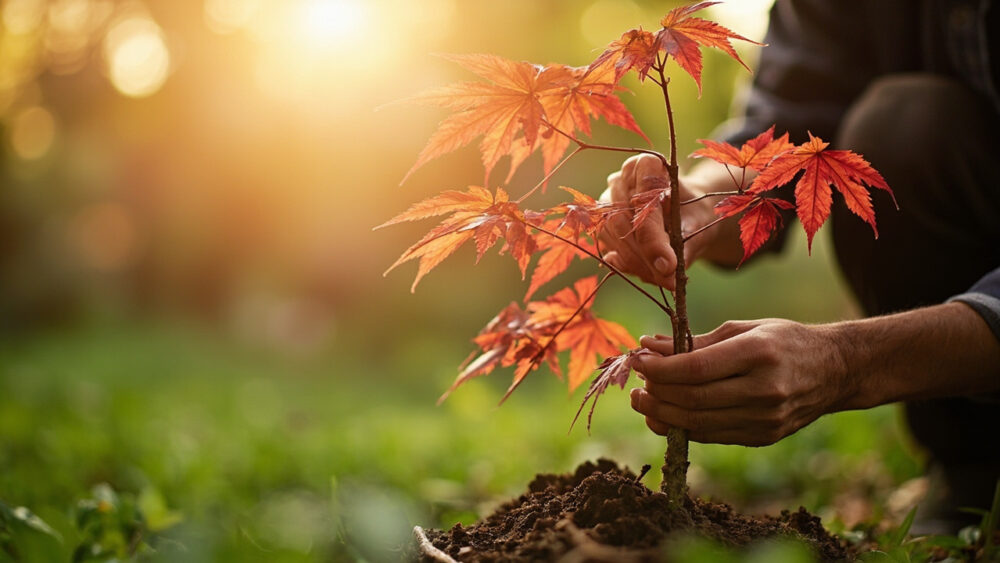
Most Japanese maples grow about 12 to 24 inches a year once established, which means a young tree typically needs 10 to 15 years to reach a mature height of 15 to 25 feet. Dwarf and weeping varieties move much slower, sometimes adding just 6 to 12 inches a year and topping out at 6 to 10 feet over decades. That is the honest answer, but the number you actually get depends on which of dozens of cultivars you planted and what kind of first two years you give it.
There is a specific mistake that stalls growth for years without killing the tree outright, and it is not what most people assume. There is also a way to look at your own tree right now and tell whether it is behind schedule or right on track. And there is one thing that genuinely speeds up growth, plus a few popular tricks that just waste money.
Stick around for the stage-by-stage breakdown, and save the quick-reference card at the bottom for when you need the numbers again without rereading all of this.
The Realistic Growth Timeline
Year one and two are mostly about root establishment, not height. Expect very little visible growth up top, sometimes none at all, even though the tree is doing real work underground.
By year three to five, a healthy upright variety usually settles into 12 to 24 inches of new growth annually. Dwarf and cascading types stay in the 6 to 12 inch range the whole time, that is simply their genetics, not a sign of stress.
From there growth holds fairly steady until the tree approaches its mature size, then it naturally slows as it fills out its canopy shape rather than gaining height.
Next up is the part that actually explains why your neighbor’s maple is twice the size of yours.
What Actually Controls the Speed
Variety matters more than anything else you do. Upright species types like Acer palmatum grow noticeably faster and taller than named dwarf cultivars and weeping laceleaf forms, which are bred for a small, sculptural shape, not speed.
Climate and site come next. Japanese maples grow best in USDA zones 5 through 8, in soil that drains well but never fully dries out, with some afternoon shade in hotter zones and more sun tolerance in cooler ones.
A tree fighting compacted clay, reflected heat off pavement, or full afternoon sun in zone 8 will grow at half the pace of the same cultivar in ideal conditions. Container-grown trees also grow slower than ones in the ground, since roots are more limited no matter how often you water.
Here is the mistake that quietly stalls more maples than any pest or disease ever does.
The Mistake That Stalls Growth for Years
Planting too deep is the single biggest growth-killer, and it looks completely fine for the first year or two. If the root flare, the point where trunk meets roots, ends up buried an inch or more under soil or mulch, the tree survives but barely grows, sometimes for three or four years before anyone figures out why.
The fix is to check right now: pull back mulch at the base and make sure that flare is visible, not buried in a mound.
Overwatering clay soil causes a similar slow-motion stall, since maple roots need oxygen almost as much as they need moisture.
If your tree has been sitting at the same size for a few years, this is where to look before you assume something worse is wrong.
How to Speed It Up, Honestly
Consistent moisture beats fertilizer for the first three years. A Japanese maple with even soil moisture and a 2 to 3 inch mulch ring (kept off the trunk) will outgrow a fertilized tree that dries out between waterings.
Light, balanced feeding in spring helps once the tree is established, but heavy nitrogen fertilizer on a young maple often pushes weak, leggy growth that burns in summer heat rather than solid structure.
Wind and sun protection in the first year or two, especially for a tree moved from a nursery pot into full sun, prevents the setback of scorched leaves that forces the tree to spend energy recovering instead of growing.
What does not work: pruning to “encourage growth” (it does the opposite while the tree is young), and root stimulant products that promise dramatic results, since none legitimately outperform steady water and correct planting depth.
Now the part that actually matters most if your tree feels slow: is that normal, or a real problem.
Slow Growth: Normal or a Real Problem?
No visible growth for one full season, on an otherwise healthy-looking tree, is usually normal and often just transplant adjustment. Leaves that are full-sized, green or true to the cultivar’s color, and not scorched at the edges are the sign the tree is fine, just quietly building roots.
It becomes a real problem when you see thin, sparse leaves several years running, dieback on branch tips, or a trunk that has not thickened at all since planting. Those point to a site or drainage issue worth digging into, literally, by checking soil an inch or two down for constant wetness or a rock-hard, root-bound planting hole.
A tree that is merely slow just needs time and the right conditions.
Here is the card worth saving so you have every number in one place.
Japanese Maple: Quick Reference
- Average growth rate: 12 to 24 inches per year for upright varieties once established, 6 to 12 inches per year for dwarf and weeping types.
- Time to maturity: roughly 10 to 15 years to reach full mature size, which ranges from 6 to 10 feet for dwarf forms up to 15 to 25 feet for larger upright cultivars.
- Establishment period: years one and two often show little to no visible top growth while roots develop, this is normal.
- Ideal zones: USDA hardiness zones 5 through 8, with afternoon shade recommended in the warmer end of that range.
- Biggest growth killer: planting too deep so the root flare is buried, check mulch and soil level at the trunk base.
- What actually helps: consistent soil moisture, correct planting depth, and light shade from harsh afternoon sun in the first year or two.
- What to skip: heavy nitrogen fertilizer on young trees and root stimulant products, neither beats good water and correct depth.
Japanese maples reward patience more than intervention.
Give yours the right depth and steady water, then let the calendar do the rest.