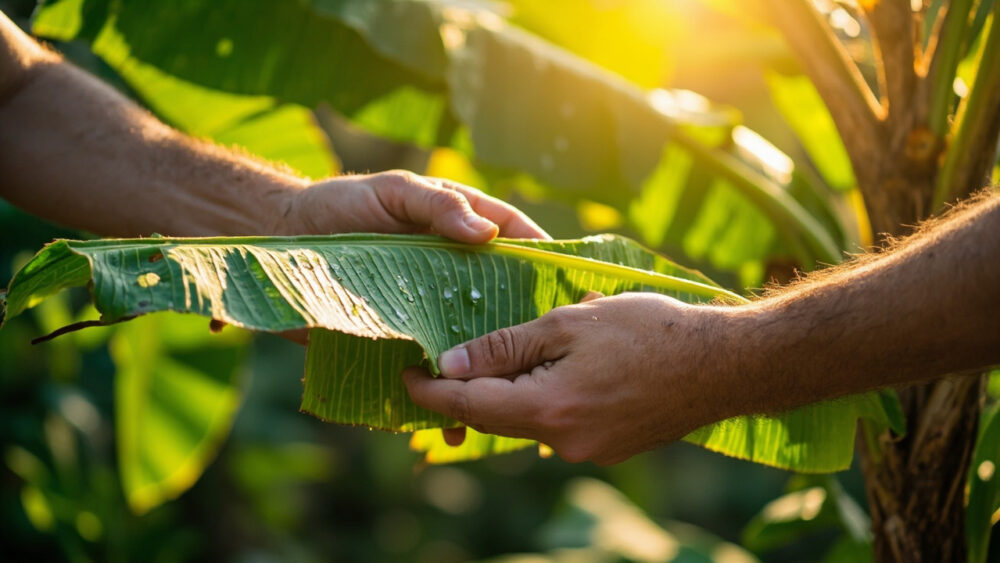
Banana trees want three things and they want them consistently: bright light, steady warmth above 60°F, and soil that stays moist but never swampy. Give them that and a monthly feed through the growing season, and most varieties will push out a new leaf every week or two. Skip any one of those three, and the plant stalls, even if you did everything else right.
Here is where most people lose the plant before they ever get a banana. It is not the watering and it is not the cold, it is putting a banana tree somewhere that looks bright to a human but is actually dim to a plant that evolved under tropical sun. There is also a sign of stress almost everyone misreads as overwatering when it is usually the opposite, and a pruning habit that feels tidy but quietly starves the plant of the very thing that makes new leaves.
I will pay off all of that below, section by section, and if you just want the numbers, the Banana Trees at a Glance card at the very bottom has everything worth saving to your phone before you walk back outside.
Light, Placement, and Temperature
Banana trees need direct or very bright light, six or more hours a day. A spot that is bright but shadowless all afternoon, like an unobstructed south or west window indoors, or full sun outdoors, is what keeps growth thick and fast. Indoors, a plant that only gets bright indirect light will survive but grow thin, pale, and stretched, with leaves smaller than the ones before them.
That is the placement mistake that ruins most attempts. People treat a banana like a houseplant that tolerates shade because the leaves are broad and tropical-looking, but broad leaves are exactly what a light-starved plant cannot afford to keep producing.
Temperature matters just as much. Growth slows hard below 60°F and stops below 50°F. Move container plants outside once nights are reliably above 60°F, and bring them in well before your first fall frost since a hard freeze will kill the above-ground growth outright.
Get the light right first, because no amount of watering or feeding will fix a banana growing in shade.
Watering: How Much, How Often, and How to Tell
Water when the top 1 to 2 inches of soil are dry to the touch, which in warm weather is often every 2 to 4 days for potted plants, less often for ones in the ground. Soak until water runs from the drainage holes, then let the pot drain fully. Bananas are thirsty in heat and light but they hate sitting in stagnant water at the roots.
Here is the sign almost everyone misreads. Brown, crispy leaf edges get blamed on too little water nine times out of ten, but on a banana tree that symptom is just as often overwatering combined with poor drainage, where the roots are suffocating and can no longer move water up to the leaf tips. Check the soil before you assume; if it is still damp two inches down and the edges are browning anyway, ease off, not up.
Cut back watering frequency by roughly half once temperatures drop in fall and the plant’s growth visibly slows.
Soil, Potting Mix, and Feeding
Bananas want soil that is rich, drains fast, and holds some moisture without going soggy. A potting mix built from regular potting soil cut with perlite or coarse sand, roughly three parts soil to one part perlite, gets you there. In the ground, work compost into the top 8 to 12 inches before planting.
These are heavy feeders. During active growth, feed every 3 to 4 weeks with a balanced fertilizer, or one labeled for tropical foliage plants, following the label rate exactly. A high-nitrogen feed pushes bigger leaves faster if that is your goal, but back off feeding entirely once growth slows for the season, since fertilizer applied to a dormant or near-dormant plant just sits in the soil and can burn roots.
Feed generously while the plant is actively pushing new leaves, and hold off the moment that pace slows down.
Pruning, Repotting, and Routine Cleanup
Remove a leaf only once it has gone fully brown or yellow at the base, not while it is still partly green. This is the tidy-looking mistake that costs people growth: cutting a leaf that is half yellow feels like good housekeeping, but that leaf is still feeding the plant and photosynthesizing right up until it fully browns.
Wipe dust off remaining leaves every few weeks with a damp cloth so they can actually use the light you have given them. Repot every 1 to 2 years, or sooner if roots are circling the pot’s edge or emerging from the drainage holes, moving up one pot size at a time in spring as new growth starts.
If you are growing a cold-hardy type outdoors in a marginal zone, cut the stalk back to 6 to 12 inches after the first hard frost blackens the leaves, then mulch heavily over the base.
Once the plant is clean, fed, and correctly potted, most of what strikes next comes down to pests and rot, not neglect.
Problems Most Likely to Strike
Spider mites and aphids show up most often on indoor or stressed plants, visible as fine webbing or small clusters on leaf undersides along with stippled, dulling leaf color. Treat with insecticidal soap or a horticultural oil, following the product label exactly, and repeat as the label directs since one application rarely finishes the job.
Yellowing lower leaves that stay soft and mushy at the base, not crisp, usually mean root rot from waterlogged soil. The fix is drier soil and better drainage going forward; a plant caught early recovers, one with a fully collapsed, mushy base often will not.
Cool drafts and sudden temperature drops cause leaves to brown and curl fast, which gets mistaken for disease when it is really just cold shock.
Most banana tree problems trace back to one of three things: bad drainage, low light, or cold, so ruling those out first saves you from chasing a pest that is not actually there.
How to Tell It Is Genuinely Thriving
A thriving banana tree puts out a new leaf roughly every 1 to 2 weeks in the growing season, and each new leaf is noticeably larger than the last. That growth pattern, more than color alone, is the real tell.
Deep green, upright, glossy leaves with no ragged edges beyond normal minor wear are what healthy growth looks like day to day. A stalk thickening at the base year over year signals the plant is building toward maturity and, outdoors in a warm enough climate, eventually flowering and fruiting.
Indoors, most banana trees are grown for their foliage since fruiting reliably takes tropical warmth, high humidity, and often more space than a house offers.
Keep that growth rhythm going and the rest of the care routine mostly takes care of itself.
Banana Trees at a Glance
- Light: six or more hours of direct or very bright light daily, the single biggest factor in growth speed.
- Temperature: keep above 60°F for active growth, move containers outdoors once nights stay above that, bring in before first frost.
- Watering: water when the top 1 to 2 inches of soil are dry, roughly every 2 to 4 days in warm weather, then let it drain fully.
- Soil: rich, fast draining mix, potting soil cut with perlite or sand at about three to one.
- Feeding: balanced or foliage fertilizer every 3 to 4 weeks during active growth, none once growth slows.
- Pruning: remove leaves only once fully brown or yellow, never while still partly green.
- Warning sign: mushy yellow lower leaves mean overwatering or root rot, not thirst.
Get the light and drainage right and a banana tree forgives almost everything else. When something looks wrong, check the soil with your finger before you reach for water or fertilizer.