Growing beets from seed comes down to this: sow them direct in the garden about 3 to 4 weeks before your last frost, a half inch deep, in soil that’s been raked free of clumps and rocks, then thin ruthlessly once they sprout. Skip the thinning and you’ll get a tangle of skinny roots instead of the fat, sweet beets you pictured. That’s the mistake that quietly ruins more beet crops than bad soil or bad luck ever does.
There’s also a germination quirk almost nobody warns you about, each “seed” is actually a little cluster that can sprout three or four seedlings from one spot, and a soil-temperature window that decides whether you get a crop at all or a stand of bolted, woody stalks. I’ll walk through exactly where those traps sit and how to sidestep them.
Stick around to the end and you’ll find a save-able Beets at a Glance card with every number, depth, and timing on this page in one place, so you don’t have to scroll back through to find it while you’ve got dirt on your hands.
When to Start Beet Seeds
Beets go in the ground, not in a seed tray. They’re root crops with a long taproot that resents disturbance, so direct sowing beats starting indoors almost every time. Sow outdoors 3 to 4 weeks before your average last frost date, once soil temperature is at least 40 F, though they germinate faster and more evenly once soil hits 50 to 65 F.
Beets tolerate real cold, mature plants shrug off light frost, and you can keep sowing every 2 to 3 weeks through early summer for a steady supply. In hot climates, add a second window in late summer for a fall crop, since beets sulk and turn woody once soil temps push past 75 to 80 F for long stretches.
Get the timing right and the next question is how deep and how far apart to actually put the seed.
Sowing Beet Seed, Step by Step
This is where most of the season gets decided. Beet seed is forgiving about soil type but not about depth, spacing, or crowding, so get these details right the first time.
Depth and Spacing
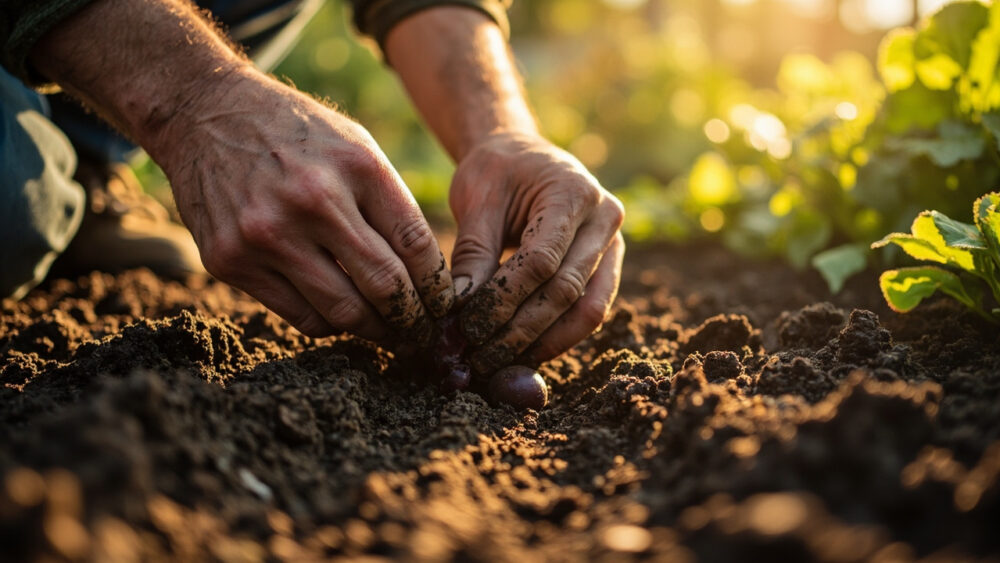
- Sow seeds 1/2 inch deep, no deeper, in loose soil free of clumps and stones.
- Space seeds 1 inch apart within the row, rows 12 to 18 inches apart.
- Work soil to a fine texture first, compacted or crusty soil blocks germination badly.
Medium and Moisture
Beets want loose, well-drained soil with decent organic matter, not fresh manure, which pushes leafy growth and forked, hairy roots. Keep the seedbed evenly moist, never soggy, until seedlings are up. A dry crust on top is the single most common reason beet seed fails to sprout.
Light and Temperature
Beets need full sun, 6 hours minimum, more is better for sweetness. Soil temperature matters more than air temperature here, so if you’re not sure, press a soil thermometer 2 inches down before you sow rather than guessing from the calendar.
Once seed is in the ground, the waiting game starts, and this is where most gardeners misread what they’re looking at.
Germination: What’s Normal and What’s a Problem
Expect sprouts in 5 to 14 days, faster in warm soil, slower and patchier below 50 F. Here’s the part that trips people up: each beet “seed” is actually a small dried fruit containing multiple embryos, so a single seed spot can throw up three or four seedlings clustered together.
If you assumed that thick clump means you sowed too heavy, that’s a reasonable guess, but it’s usually just the seed doing what beet seed does. The fix isn’t sowing lighter next time, it’s thinning after the fact.
Thin seedlings to one plant every 3 to 4 inches once they have their first true leaves, snipping extras at soil level rather than pulling, which can disturb the roots you’re keeping. Skip this step and you’ll harvest a cluster of small, misshapen beets crowding each other for space, the single most common reason home-grown beets disappoint.
Beyond that early thinning, the plant mostly takes care of itself, but it still needs consistent attention through the season.
Hardening Off and Transplanting: The Honest Answer
Here’s the follow-up question most readers are already forming: what if you started beets indoors anyway, or bought transplants? You can, but you’re working against the plant, not with it.
Beet taproots do not like being moved. Transplanting damages that developing root and commonly causes forking, stunting, or premature bolting.
If you must start indoors, sow in deep cells 3 to 4 weeks before transplanting, harden off over 5 to 7 days by setting seedlings outside in filtered sun for increasing stretches each day, then transplant gently at the same depth they grew, disturbing the root as little as possible. Direct sowing remains the better plan for beets nearly every time.
Whichever way you started them, once beets are up and thinned, the real work of the season is steady, simple care.
Caring for Beets Through the Season
Water consistently, about 1 inch per week, more in hot or dry stretches. Uneven watering is the other big cause of woody, cracked, or oddly shaped roots, right alongside crowding.
Mulch lightly to hold moisture and keep soil temperature steady, since beets sulk in a heat spike. Weed by hand near the row, beet roots sit shallow and a hoe can slice right through them.
Feed lightly with a balanced fertilizer or compost at planting, then avoid heavy nitrogen later, which grows lush tops at the expense of the root you actually want. If leaves look pale with yellowing between the veins, that’s often a boron deficiency, common in beets, correctable with a light application of a boron-containing fertilizer per the product label.
Watch the tops as much as the soil, because they’re telling you when the roots underneath are close to ready.
When Beets Are Ready to Harvest
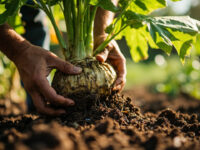
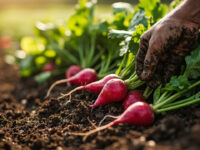
Most beets reach harvest size 50 to 70 days from sowing, depending on variety. Baby beets can come out at 5 to 6 weeks if you like them small and tender, full-size roots are ready when the shoulders poking above the soil measure 1.5 to 3 inches across.
Don’t wait for them to get much bigger than that. Beets left too long in the ground turn woody and lose sweetness, and hot weather pushes them to bolt, sending up a flower stalk instead of bulking the root.
Check by feel, brush soil back from the shoulder and judge the width rather than guessing from the leaves alone. Pull a test beet if you’re unsure, there’s no harm in an early taste check.
Once you’ve got a feel for the timing, the whole process gets easy to repeat, and that’s exactly what’s in the card below.
Beets at a Glance
- When to plant: direct sow 3 to 4 weeks before your last frost, soil at least 40 F, ideally 50 to 65 F, repeat sowings every 2 to 3 weeks into early summer.
- Depth and spacing: 1/2 inch deep, seeds 1 inch apart, rows 12 to 18 inches apart, thin to one plant every 3 to 4 inches after true leaves appear.
- Germination: 5 to 14 days, expect clusters of seedlings from single seed spots, thin rather than resow.
- Light and water: full sun, 6 hours minimum, about 1 inch of water weekly, kept consistent.
- Feeding: light balanced fertilizer or compost at planting, avoid heavy nitrogen afterward.
- Harvest window: 50 to 70 days for full-size roots, 5 to 6 weeks for baby beets, harvest at 1.5 to 3 inches across.
- Biggest mistake to avoid: skipping thinning, which crowds roots into small, misshapen beets.
Get the thinning and the moisture right and beets pretty much grow themselves.
Everything else on this page is just detail in service of that one habit.