The best way to preserve basil for actual long-term storage is freezing it as a paste with olive oil or blended into pesto, packed into small containers so you’re not thawing a whole batch for one recipe. Drying works too, but basil loses most of its flavor when air-dried, so it’s the weakest of the three main methods. Freezing keeps that bright, peppery flavor close to fresh for eight to ten months, while proper pesto or oil-packed basil in the fridge only buys you a week or two.
Here’s the loop worth opening right away: most people preserve basil the way they’d preserve other herbs, hanging it to dry or tossing whole leaves in a freezer bag, and both of those are the mistakes that ruin the batch. Basil is not rosemary. It’s mostly water and delicate oil-filled leaf tissue, and it browns, turns bitter, or goes slimy under treatment that would be perfectly fine for thyme.
There’s also a timing question nobody thinks to ask until it’s too late: when in the plant’s life should you actually harvest for preserving. Get that wrong and you’re locking in bland flavor no matter how well you freeze or dry it. Stick with me through the methods and the mistakes, and the Basil at a Glance card at the bottom will give you the whole thing in one saveable list.
Harvest Timing: The Step Everyone Skips
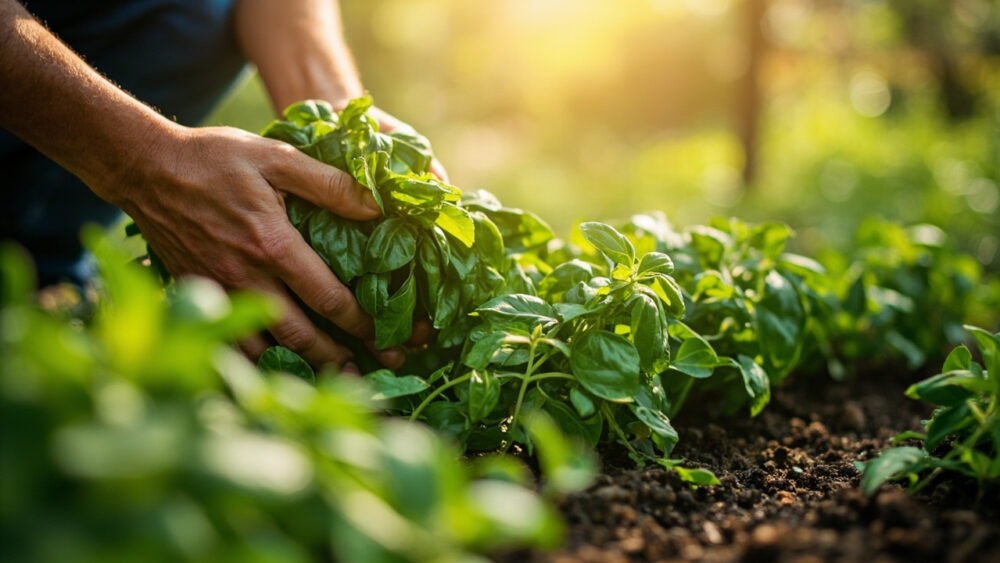
If you’re preserving basil straight from the garden, harvest in the morning after the dew dries but before the day heats up. Essential oil content is highest then, and that oil is the flavor. Afternoon-cut basil is noticeably flatter.
Pick leaves before the plant flowers if you can. Once basil bolts and sends up flower spikes, the leaves turn more bitter and the plant redirects energy into seed instead of leaf growth. Pinching flower buds as they appear keeps leaves tender longer.
Skip any leaves with dark spots, yellowing, or that papery look. Preserving doesn’t fix damaged leaves, it just locks the damage in.
Get the harvest right and the next decision, freezing versus drying, actually matters.
The Best Method: Freezing Basil in Oil or as Pesto
Strip leaves from stems and give them a quick rinse if they’re dusty, then dry them completely. Wet leaves lead to ice crystals and mushy texture later. A salad spinner or a few passes with a towel works fine.
Blend the leaves with a small amount of olive oil, just enough to make a loose paste, no salt or garlic needed yet if you want a flexible base. Pack the paste into ice cube trays or small silicone molds.
Once frozen solid, usually 12 to 24 hours, pop the cubes out and transfer them into a freezer bag or airtight container. Press the air out before sealing.
This method holds real basil flavor for eight to ten months, and you thaw only what you need, cube by cube.
That fixes long storage, but a lot of people want something that keeps for a few days on the counter or in the fridge first.
Short-Term Storage: Counter, Fridge, and the Mistake That Ruins Fresh Basil Fast
If you assumed the fridge is the safe default for fresh herbs, that guess is exactly what turns basil black within a day or two. Basil is cold-sensitive. Refrigerator temperatures below about 40°F bruise the leaf cells and you’ll open the crisper drawer to slimy, dark leaves.
Counter storage is actually correct for short-term basil. Trim the stems, stand the bunch in an inch or two of water like cut flowers, and loosely tent a plastic bag over the top. Left at room temperature out of direct sun, it holds five to seven days, and you can even see new roots start to form.
Only refrigerate basil if you’ve already made it into pesto or oil paste. That keeps for about a week in a sealed jar with a thin layer of oil on top to block air.
Once you’re past a week, freezing or drying is the only honest option left.
Drying Basil: Why It’s the Weakest Option and How to Not Waste the Batch
Air-drying basil the way you’d dry oregano or sage strips out most of the essential oils that make basil taste like basil. You end up with pale green flakes that smell more like hay than herb.
If you still want dried basil, a food dehydrator or an oven on its lowest setting with the door cracked works far better than hanging bundles. Spread leaves in a single layer and dry at around 95 to 115°F until they crumble between your fingers, usually a few hours.
Store dried basil in an airtight jar out of light. It holds usable flavor for six to twelve months, though it fades steadily the whole time.
Skip blanching before drying basil. Blanching is for vegetables you’re freezing to deactivate enzymes, and it does nothing useful for basil leaves headed for a dehydrator, it just adds moisture you then have to remove.
Whichever method you pick, the leaf itself will tell you when something’s gone wrong.
The Signs a Batch Has Turned
Fresh-frozen basil in oil should stay bright green to olive green. If a cube turns brownish-black or develops an off, almost fermented smell when thawed, the leaves oxidized before freezing or picked up moisture in storage. Toss it.
Pesto or oil paste in the fridge that grows any fuzzy spots, or smells sour instead of herbal, is done. Don’t taste-test moldy pesto to check, just discard it.
Dried basil that’s lost its color and smells like nothing when you crush it hasn’t spoiled exactly, it’s just spent. It’s safe, but it won’t do much for a dish anymore.
Most of these problems trace back to the same handful of mistakes, so let’s name them plainly.
The Mistakes That Actually Ruin a Batch
These are the repeat offenders, in order of how often they wreck a home batch:
- Freezing wet leaves: excess water forms ice crystals that turn the leaf mushy and dull the flavor on thaw.
- Refrigerating fresh, unprocessed basil: cold air blackens the leaves within a day or two.
- Harvesting after flowering: bitterness sets in once the plant bolts, and no preserving method removes it.
- Packing whole leaves loosely in a freezer bag: they oxidize and turn black long before the pesto-or-oil method would.
- Storing dried basil in a clear jar on a sunny shelf: light bleaches out both color and flavor fast.
Avoid that list and basil is genuinely one of the easier herbs to preserve well.
Basil at a Glance
- Best method: blend leaves with olive oil into a paste, freeze in cubes, then bag them airtight.
- Freezer storage life: eight to ten months with good flavor retention.
- Fridge storage life: about one week, only for finished pesto or oil paste, never raw leaves.
- Counter storage life: five to seven days, stems in water, loosely bagged, out of direct sun.
- Harvest timing: morning, after dew dries, before the plant flowers.
- Drying temperature: 95 to 115°F in a dehydrator or low oven, until leaves crumble.
- Biggest mistake to avoid: refrigerating fresh raw basil or freezing leaves without drying them first.
Basil rewards speed. Preserve it within a day or two of picking, in oil, in the freezer, and you’ll still taste summer in January.