Learning how to grow fig trees comes down to three things: plant in full sun after the soil has warmed, keep the roots slightly cramped and dry-ish, and skip the nitrogen-heavy fertilizer that everyone reaches for out of habit. Get those right and a young fig tree will hand you fruit within two to three years, sometimes the first year if you buy a larger potted specimen. Get them wrong and you will spend a decade growing a beautiful shade tree that never ripens a single fig.
Here is where most people lose the plant, or at least the harvest. There is a common mistake with feeding that actually stops fruit before it starts, and it is not the one people expect. There is also a sign on the trunk in late winter that panics new growers into pruning off the exact wood that would have given them their earliest fruit. And there is an honest answer coming about why so many fig trees drop their fruit right before it ripens, which has nothing to do with watering too little.
Stick with this to the end and you will find a saveable Fig Trees at a Glance card with the numbers on spacing, depth, watering, and timing, worth screenshotting before you head out to the nursery or the backyard.
When to Plant a Fig Tree
Plant after your last frost date has passed and the soil has warmed to at least 60°F, which usually lines up with mid to late spring in most climates. Figs can also go in the ground in fall in zones 8 and warmer, giving roots a full season to settle before summer heat hits.
In zones 6 and 7, spring planting is safer. A fall-planted fig in a marginal zone can lose its root system to a hard winter before it ever establishes.
Figs are hardy roughly to zone 6 outdoors, sometimes zone 5 with heavy winter protection, and grow as die-back perennials in colder zones where the top growth freezes but the roots survive. If you are north of zone 7, plan on a container you can move, or a spot against a south-facing wall that holds extra heat.
Timing gets the tree started right, but where you put it decides whether it ever fruits.
Choosing the Spot and Prepping the Soil
Figs want six to eight hours of direct sun and about as much heat as your climate can offer. A south or southwest-facing spot against a wall or fence is close to ideal because it reflects extra warmth back onto the tree, which figs use to ripen fruit faster.
Soil matters less than most trees care about. Figs actually prefer decent drainage over rich, deep, amended soil. Heavy clay that stays wet will rot the roots faster than poor sandy soil will starve them.
If your soil is heavy, work in some compost and consider planting on a slight mound, raising the root zone 4 to 6 inches above grade. Skip deep tilling of extra fertility into the hole itself, since overly rich soil pushes leafy growth at the expense of fruit.
Good drainage and full sun are non-negotiable, and everything else about the soil is forgiving.
Planting a Fig Tree Step by Step
1. Dig the hole to match the root ball
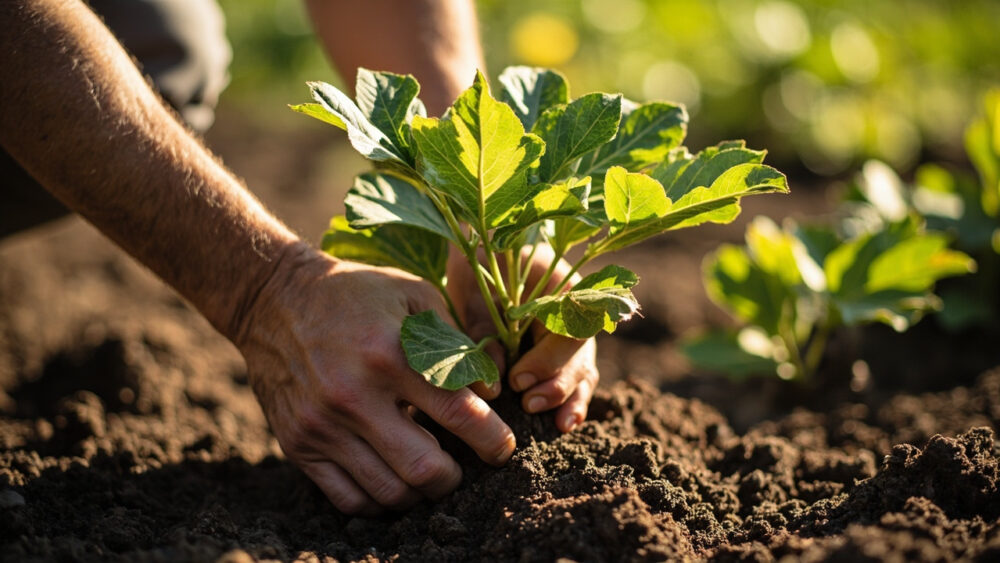
Dig a hole roughly twice as wide as the root ball but no deeper than the root ball itself. Planting too deep is one of the fastest ways to stall a young fig, since it smothers the crown and encourages rot.
2. Loosen the roots
If the tree is potbound, with roots circling the outside of the root ball, slice into them lightly in three or four spots with a clean blade. This forces new roots to grow outward instead of continuing to spiral.
3. Set the tree and backfill
Position the tree so the top of the root ball sits level with, or very slightly above, the surrounding soil. Backfill with the native soil you dug out, tamping gently to remove air pockets, and skip heavy fertilizer at planting time.
4. Space for the mature size
Give standard fig varieties 15 to 20 feet from other trees and structures, since a mature fig can spread nearly as wide as it grows tall. Dwarf or container varieties can go as close as 6 to 8 feet, or stay confined to a pot indefinitely.
5. Water in and mulch
Soak the root zone thoroughly right after planting, then lay 2 to 3 inches of mulch out to the drip line, keeping it a few inches clear of the trunk itself. That mulch layer is doing more work than people realize for a young fig’s first summer.
Get the tree in the ground correctly and the next challenge is knowing how much attention it actually wants.
Watering and Feeding Through the Season
Water new fig trees deeply once or twice a week for the first full growing season, aiming for moist soil down 8 to 10 inches rather than a quick surface splash. Check by pushing a finger or a trowel into the soil; if it’s dry past the first two inches, it’s time to water.
Established trees, three years and older, tolerate real drought once rooted in and often need watering only during extended dry spells or when fruit is actively swelling.
Here’s the mistake that trips up otherwise careful growers: heavy nitrogen fertilizer. If you assumed a hungry-looking fig needs regular feeding like a vegetable bed, that guess is exactly what produces a lush, leafy tree that refuses to fruit.
Figs are light feeders. A single application of a balanced, low-nitrogen fertilizer in early spring is usually enough, and many established trees in decent soil need none at all. If your tree is throwing huge leaves and little to no fruit, stop feeding it and see if fruiting picks up the following year.
Water and restraint on fertilizer get you a healthy tree, but pests and cold still get the deciding vote most years.
Problems That Actually Take Down Fig Trees
Winter cold damage is the most common issue outside of the warmest zones. Branch tips die back and turn dark or papery, which looks alarming in late winter but is rarely fatal to the whole tree.
Do not panic-prune the entire plant back to the ground the moment you see dieback. Wait until new growth clearly starts, usually as soil warms in spring, then cut back only to living wood, identified by green or white tissue just under the bark. Cutting too early removes wood that might have leafed out fine.
Fig rust and leaf spot show up as yellow-to-brown speckling on leaves in humid summers, usually cosmetic rather than tree-killing. Improve airflow by thinning crowded interior branches, clean up fallen leaves in autumn, and use a fungicide labeled for fig rust if it recurs badly, following the product label exactly.
Root-knot nematodes and borers are the more serious threats in warm climates and stressed trees; a fig that’s declining with no clear leaf symptom and poor vigor is worth checking at the root zone or trunk base.
Fruit drop right before ripening is the other frustration people blame on watering. It’s more often caused by uneven watering swings, cold snaps during fruit development, or simply a young tree not yet strong enough to finish what it started. Consistent moisture through summer fixes most cases.
Handle winter dieback patiently and keep watering steady, and you clear the two biggest hurdles standing between planting and a real harvest.
When and How to Harvest Figs
A ripe fig droops on its stem and softens noticeably, sometimes developing a small crack in the skin and a bead of nectar at the eye, the small opening at the fruit’s tip. Color deepens depending on variety, from green-gold to deep purple-brown, but droop and softness matter more than color alone.
Most varieties in warmer climates produce two harvests: a smaller early crop, called the breba crop, on last year’s wood in early summer, and the main crop on new growth in late summer into fall. Cooler-climate growers often see only the main crop, since breba wood is more likely to have suffered winter dieback.
Figs do not ripen further once picked, unlike tomatoes or bananas, so pick only fruit that is fully drooped and soft to the touch. Handle them gently since ripe figs bruise fast, and plan to use or refrigerate them within a few days, as fresh figs hold poorly at room temperature.
Once you’ve picked your first real crop, the only thing left is keeping the numbers straight for next year, which is exactly what’s waiting below.
Fig Trees at a Glance
- When to plant: spring after last frost once soil hits about 60°F, or fall in zones 8 and warmer.
- Sun and site: six to eight hours of direct sun, ideally against a south-facing wall for extra heat.
- Spacing: 15 to 20 feet for standard varieties, 6 to 8 feet for dwarf types or containers.
- Planting depth: root ball level with the surrounding soil, never buried deeper.
- Watering: deep watering once or twice weekly the first year, drought-tolerant once established after year three.
- Feeding: light, low-nitrogen fertilizer once in early spring, or none at all in decent soil.
- Harvest sign: fruit droops, softens, and often cracks slightly. Color varies by variety.
If you remember one thing, remember this: a fig tree fruits best when it’s a little neglected, not a little pampered.
Sun, drainage, and patience do more for your harvest than any bag of fertilizer ever will.