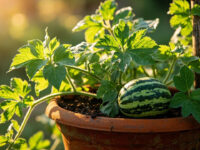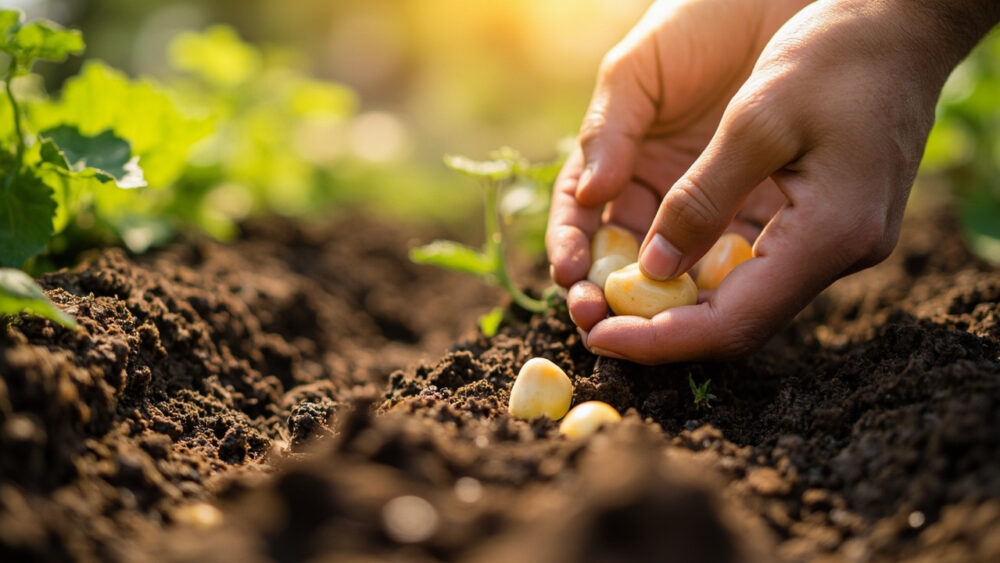
How to grow cantaloupe from seed starts with warmth, not calendar dates. Cantaloupe seeds need soil at 70 to 90 F to germinate reliably, so you either start indoors 3 to 4 weeks before your last frost or wait until soil outside has genuinely warmed before direct sowing. Skip that step and you will get rot instead of seedlings, which is the single mistake that kills more cantaloupe attempts than any pest or disease ever does.
There is a second trap almost nobody sees coming until it costs them a harvest: cantaloupe hates having its roots disturbed, so the way you start it indoors matters as much as when. And once fruit shows up, most people misread the ripeness signs completely, either pulling melons weeks too early or letting them rot waiting for a color change that was never coming.
I will walk you through the whole run, seed to slice, including the honest timeline for harvest and what actually happens if your season runs short. Stick around to the end for the Cantaloupe at a Glance card, it is built to save to your phone before you touch a seed packet.
When to Start Cantaloupe Seeds
Cantaloupe is a warm-season crop with zero frost tolerance, so timing is anchored to your last frost date, not the day on a seed packet. Start indoors 3 to 4 weeks before that date, or direct sow outside once nighttime lows are staying above 55 F and soil at 2 inches deep reads 65 F or warmer on a soil thermometer.
Gardeners in cooler zones (roughly zone 6 and colder) get a real advantage starting indoors, since cantaloupe needs 65 to 90 days of warm weather to mature and a short season won’t wait for a slow direct-sown start.
If you’re in zone 8 or warmer, direct sowing after soil has warmed is often simpler and skips the transplant stress entirely.
Either path works, but the container you start in decides how smooth the next step goes.
Sowing Step by Step
- Depth: sow seeds 0.5 to 1 inch deep, no deeper.
- Medium: use a loose, well-draining seed-starting mix, not garden soil, if starting indoors.
- Containers: use biodegradable or 3 to 4 inch pots you can transplant whole, since cantaloupe roots resent disturbance.
- Temperature: keep soil at 70 to 90 F using a heat mat if your house runs cool, this is the single biggest lever for fast, even germination.
- Light: once sprouted, give seedlings 12 to 16 hours of strong light a day, a sunny window is rarely enough, a grow light close to the leaves works better.
- Spacing if direct sowing: plant 2 to 3 seeds per hole, holes spaced 24 to 36 inches apart, thin to the strongest seedling once true leaves appear.
Get the temperature right and germination takes care of itself, which is exactly what the next section is about.
Germination: What to Expect and When to Worry
At 80 to 90 F soil temperature, cantaloupe germinates in as few as 3 to 5 days. Drop into the 70s and it stretches to 7 to 10 days.
You’ll see a bent stem push up first, dragging the seed shell, then two seed leaves unfold and flatten out.
If you assumed slow germination just means cool weather and patience will fix it, that guess is only half right. Past 10 to 12 days with no sprout, cold, waterlogged soil has usually rotted the seed outright, and no amount of extra waiting brings it back.
The fix is not patience, it’s a fresh seed, warmer soil, and a lighter hand with the watering can. Check soil moisture by feel; it should be damp like a wrung sponge, never soggy.
Once you’ve got sturdy seedlings with two or three true leaves, they’re ready for the move outside.
Hardening Off and Transplanting
This is the step everyone rushes, and it’s the second-biggest season-killer after bad timing. Cantaloupe seedlings moved straight from a warm windowsill to open sun and wind will scorch, wilt, or stall for a week even if they survive.
Harden off over 7 to 10 days: start with an hour of shade outside, add an hour or two of increasing sun and time daily, and bring them in if wind or a cold night threatens.
Transplant once nighttime lows hold above 55 F, soil has warmed, and seedlings have 2 to 3 true leaves, ideally before they’ve outgrown their starter pots.
Space plants 24 to 36 inches apart in rows 4 to 6 feet apart, or on hills spaced 3 to 4 feet apart with 2 to 3 plants per hill, since cantaloupe vines sprawl hard.
Because the roots hate disturbance, slide the whole root ball out intact, biodegradable pot and all if you used one, and set it at the same depth it was growing before.
Get them in the ground without breaking stride and the real growing season begins.
Care Through the Season
Cantaloupe wants full sun, 6 to 8 hours minimum, and rich, well-draining soil with compost worked in before planting. Water deeply and consistently, about 1 to 1.5 inches per week, more during fruit set and hot stretches, less as fruit nears ripeness.
Inconsistent watering is what causes cracked or bland fruit, not bad luck.
Mulch around the base to hold moisture and keep developing melons off bare soil, which cuts down on rot and slug damage.
Feed lightly with a balanced fertilizer at planting, then switch to something higher in phosphorus and potassium once vines start flowering, since too much nitrogen late gives you jungle vines and few melons.
Watch for powdery mildew as a whitish coating on leaves in humid weather; increase airflow, avoid wetting foliage when you water, and treat with a labeled fungicide if it spreads, following the product instructions exactly.
Cucumber beetles and aphids show up too. Row covers before bloom and knocking aphids off with a strong water spray handle most light infestations.
Once vines start throwing out yellow flowers, you’re closer to melons than you think.
Bloom, Pollination, and the Real Harvest Signs
Cantaloupe plants produce male flowers first, sometimes for a couple weeks, before female flowers (the ones with a small swollen bulge behind the petals) appear. Bees do the pollinating. If you see flowers dropping without setting fruit early on, that’s normal male-flower behavior, not a problem.
Fruit takes 35 to 45 days from pollination to ripen, landing you around 65 to 90 days total from seed depending on variety and heat.
If you’re waiting for the skin color to shift as your ripeness cue, that guess costs a lot of gardeners a good melon. The real tell is the stem: a ripe cantaloupe slips away from the vine with light thumb pressure at the point where stem meets fruit, leaving a clean dish-shaped scar.
That’s called “full slip,” and it’s the most honest signal the plant gives you. A sweet smell at the blossom end backs it up.
If frost is closing in before melons slip clean, pick them at “half slip” (coming away with gentle tugging) and let them finish ripening indoors at room temperature. They won’t get sweeter, but they will soften and finish developing texture.
Save this next part, because it’s the card worth keeping open while you’re out at the plant.
Cantaloupe at a Glance
- When to plant: start seeds indoors 3 to 4 weeks before last frost, or direct sow once soil hits 65 to 70 F and nights stay above 55 F.
- Depth and spacing: sow 0.5 to 1 inch deep, space plants 24 to 36 inches apart, or thin to 2 to 3 per hill on hills 3 to 4 feet apart.
- Ideal germination temp: 70 to 90 F, sprouting in 3 to 10 days depending on warmth.
- Sun and soil: full sun, 6 to 8 hours minimum, rich well-draining soil with compost mixed in.
- Watering: about 1 to 1.5 inches per week, consistent, tapering off as fruit nears ripeness.
- Days to harvest: roughly 65 to 90 days from seed, or 35 to 45 days from pollination.
- Ripeness sign: full slip, the fruit releases from the vine with gentle thumb pressure and smells sweet at the blossom end.
Get the soil warm before the seed goes in, and let the stem, not the calendar or the color, tell you when to pick.
Everything else about growing cantaloupe is just consistency in between.