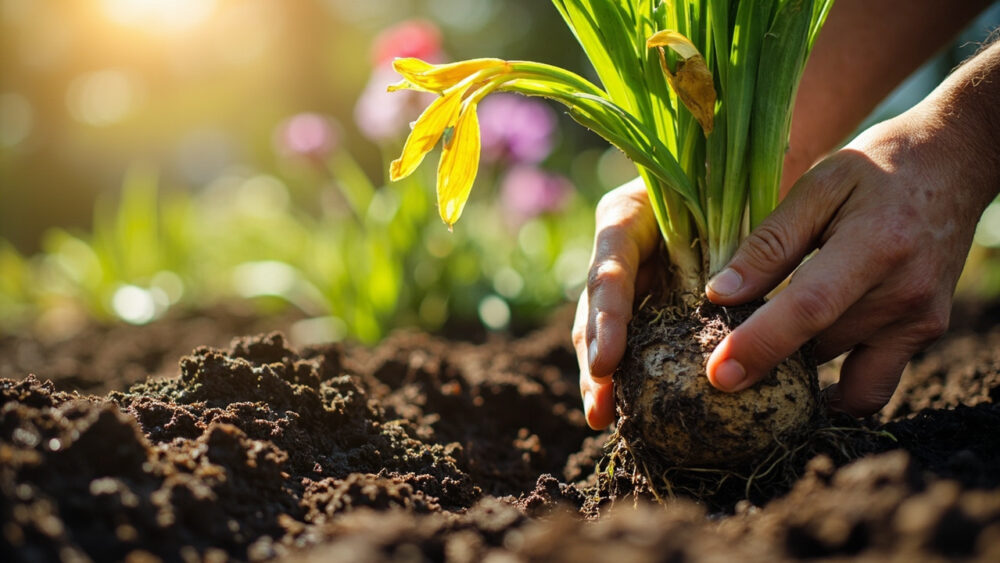
Bearded iris rhizomes want to sit right at or barely below the soil surface, with the top of the rhizome exposed or covered by no more than a half inch of soil. Bury them like a tulip bulb, several inches down, and that is the single most common reason irises sit for a year or two without blooming. Space rhizomes 12 to 18 inches apart depending on the variety, and how deep to plant irises matters more than almost any other step in getting them established.
That shallow planting depth surprises a lot of people, because everything else in the spring bed goes deeper. It is also not the only place first-time iris growers get tripped up.
There is a specific rot that shows up when rhizomes go in too deep, a spacing mistake that looks fine for two years and then quietly kills the bloom show, and an honest answer about whether that jammed-full clump you inherited from a neighbor is actually a problem or just needs one afternoon of work. All of it, plus the exact numbers worth saving to your phone, is coming, including the at-a-glance card at the very bottom of this page.
The Exact Depth, and Why Irises Break the “Bury It” Rule
Bearded iris rhizomes are not bulbs. They are thick, fleshy stems that grow horizontally along the soil surface in nature, with roots reaching down and the top of the rhizome exposed to sun and air. That is the whole reason the depth rule is so different from everything else you plant.
Set the rhizome so its top is level with the soil, or just barely under it, roughly a quarter to a half inch deep. In heavy clay soil, plant it a touch shallower or even leave the top slightly exposed. In light, sandy soil, you can go to the deeper end of that half inch range.
The roots underneath do the actual anchoring, so spread them out and down into the hole rather than balling them up.
Get the depth right and the next question is how far apart to space them, because that decision compounds for years.
Spacing: 12 to 18 Inches, and the Trap of Planting Them Closer
Standard tall bearded irises want 12 to 18 inches between rhizomes. Smaller types like dwarf or intermediate bearded iris can go as tight as 8 to 10 inches. It looks like a lot of bare dirt on planting day, and that gap is exactly what causes the most common early mistake.
New gardeners almost always plant too close, because a single rhizome looks lonely in a bed and the spacing chart feels excessive. It is not excessive. Iris rhizomes multiply outward from the original fan, sending up new growth on either side every year, and a plant that starts 6 inches from its neighbor runs out of room in two growing seasons instead of four or five.
If you are working with a mixed perennial bed rather than a dedicated iris row, treat the 12 to 18 inch number as the minimum, not a target to shrink.
Here is where the crowding actually shows up in real, visible symptoms, and it is not what most people expect.
What Overcrowding Actually Looks Like, and Why It’s Not What You’d Guess
You would assume overcrowded irises just get smaller and stop blooming as much. That happens eventually, but it is not the first sign, and by the time bloom count drops the clump has usually been struggling for a year already.
The earlier tell is foliage that stays lush and green while flower stalks get scarce or disappear entirely. Crowded rhizomes shade each other’s growing points, competing for the direct sun that bearded iris needs to set bloom, so the plant keeps making leaves because leaves do not need as much light as flowering does.
The second tell is rot. Rhizomes packed tight against each other trap moisture at the surface, and that damp, shaded contact point is exactly where soft rot and iris borer damage get started. A crowded clump is not just a bloom problem, it is a disease risk you are creating with spacing.
Too-wide spacing has its own failure mode, and it is the one nobody warns you about.
The Opposite Mistake: Planting Too Far Apart
Wide spacing will not rot your irises, but it wastes a full season or more. A rhizome planted 24 or 30 inches from its neighbors spends that extra distance just filling empty soil before the bed ever looks full.
If your goal is a solid drift of color as fast as possible, err toward the tighter end of the range, around 12 inches, and plan to divide in three to four years anyway. Every healthy iris planting needs dividing eventually regardless of starting spacing, so there is no version of this where you avoid that chore forever.
Wide spacing does have one real advantage worth knowing before you commit to tight rows.
Row and Bed Layout: Rows, Drifts, or Mixed Borders
In a dedicated cutting or show bed, plant rhizomes in single rows 18 to 24 inches apart between rows, with the fan of leaves all pointing the same direction, toward where the roots trail behind the rhizome. That orientation keeps new growth from immediately colliding with its neighbor.
For a drift look in a perennial border, cluster three to five rhizomes in a loose fan pattern, each 12 to 15 inches from the next, rather than a tight circle. A circle just means every rhizome crowds inward at the same rate.
In a mixed border, give irises the front third of the bed or full sun edge. Taller perennials planted too close on the sunny side will shade the rhizomes and cut bloom just as effectively as overcrowding will.
Layout on paper is one thing, but containers change nearly every number above.
Growing Irises in Containers: The Numbers Change
Bearded iris can absolutely go in a pot, but the depth rule gets stricter, not looser. Use a container at least 12 inches deep and equally wide for two to three rhizomes, with drainage holes that actually drain, since standing water at the surface is worse for exposed rhizomes than almost anything else.
Keep the rhizome top fully exposed above the soil line in a container, even more exposed than in the ground, because potting mix holds moisture longer than garden soil and rot risk goes up accordingly.
Space rhizomes 6 to 8 inches apart in a large container, accepting that you will divide sooner, likely every two to three years instead of four.
Whether your irises are in the ground or in a pot, eventually you will inherit or create a clump that has simply outgrown its space.
Fixing an Overcrowded Planting: When and How to Divide
The fix for a jammed, non-blooming clump is division, and the honest answer is that there is no way to fix crowding without digging the whole thing up. Thinning a few and leaving the rest does not solve shading or airflow at the center of the clump.
Divide six to eight weeks after bloom finishes, which for most bearded iris falls in mid to late summer. That timing gives cut rhizomes time to heal and root before winter without pushing tender new growth into an early frost.
- Lift the entire clump with a garden fork, keeping soil loosely attached to the roots.
- Snap or cut the rhizomes apart at natural divisions, discarding any that are soft, hollow, or foul smelling, which signals rot rather than dormancy.
- Keep divisions with at least one healthy fan of leaves and firm, white or tan interior flesh.
- Trim leaf fans down to about 4 to 6 inches to reduce moisture loss while roots reestablish.
- Replant immediately using the same shallow depth and 12 to 18 inch spacing as a fresh planting.
That six to eight week rule is the piece most people skip, replanting too early or waiting until frost is close, so it is worth marking on a calendar the day the last bloom fades.
All of that adds up to a short list worth keeping on hand every time you plant or divide.
Irises at a Glance
- Planting depth: top of the rhizome level with the soil or covered by no more than a half inch, shallower in clay, slightly deeper in sandy soil.
- Spacing: 12 to 18 inches apart for standard bearded iris, 8 to 10 inches for dwarf and intermediate types.
- When to plant or divide: six to eight weeks after bloom ends, typically mid to late summer, giving roots time to establish before frost.
- Sun needs: at least 6 hours of direct sun daily, since shade from crowding or nearby plants is a top cause of poor bloom.
- Container size: at least 12 inches deep and wide for two to three rhizomes, spaced 6 to 8 inches apart, with the rhizome top fully exposed.
- Warning signs of crowding: lush leaves with few or no flower stalks, and rhizomes visibly pushing up out of the soil or overlapping.
- Division frequency: every three to four years in ground, every two to three years in containers.
Get the depth shallow and the spacing generous, and irises mostly take care of themselves for years.
Everything else in this guide is just what to do when one of those two numbers gets ignored.