Here’s the honest split in the black eyed susan vs sunflower debate: if you want a perennial that comes back for years and fills a bed without babysitting, plant black eyed susan. If you want a big, dramatic summer showpiece or something to actually harvest seed from, plant sunflower. Most gardeners standing in front of both trays are really asking two different questions and don’t realize it yet.
The confusing part is that these two get lumped together constantly because they’re both yellow, both cheerful, both “easy.” That resemblance is exactly what causes the wrong pick. There’s one difference that actually decides this for most people, and it has nothing to do with color or bloom shape.
I’ll give you the situations where each one wins, the case for growing both together, and the honest final call. Stick around for the side-by-side card at the bottom, save it before you buy either one.
The Key Differences That Actually Matter
Growth Habit and Lifespan
Black eyed susan is a perennial (or short-lived perennial/biennial depending on variety) that returns from the same root year after year in zones 3 through 9, spreading slowly into a clump or colony. Sunflower is almost always an annual: it germinates, blooms, sets seed, and dies in one season, full stop. If you want a plant you set and forget for years, black eyed susan wins outright.
That lifespan gap is the difference nobody mentions and it changes everything else on this list.
Size and Garden Role
Black eyed susan tops out around 18 to 36 inches, working as a mid-border filler that plays nicely with other perennials. Sunflower ranges wildly, from 2-foot dwarf types to 12-foot single-stem giants, and it reads as a focal point or living screen, not a supporting player. If you need structure and height fast, sunflower is the tool.
Neither one is subtle, but only one of them can hide a chain-link fence by August.
Care and Maintenance
Black eyed susan tolerates poor soil, drought, and neglect once established, and mature clumps rarely need staking. Sunflower, especially the tall single-stem varieties, wants consistent water while establishing and often needs staking against wind, plus the seed heads draw birds and squirrels that will shred a bloom overnight. If low-maintenance is your actual priority, that guess about them being equally easy is wrong. Black eyed susan is the lower-effort plant long term.
But easy care isn’t the same as fast payoff, and that’s where sunflower earns its keep.
Bloom Timing and Impact
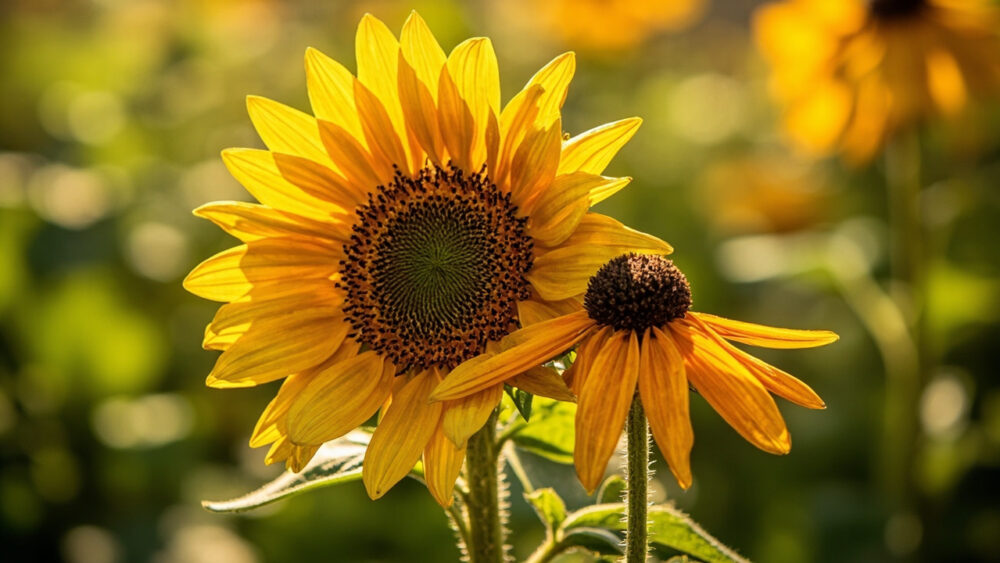
Black eyed susan blooms over a long stretch, roughly midsummer into fall, with dozens of smaller 2 to 3 inch flowers per plant. Sunflower puts on one huge event: fewer, much larger blooms (single-stem types often just one flower head) concentrated in a shorter window. If you want sustained color for months, black eyed susan delivers it. If you want a jaw-dropping single moment for a photo, a party, or a kid’s garden project, sunflower wins that specific fight.
That difference in bloom behavior is also what decides the next two questions: cost and what you can actually do with the flowers.
Cost and Propagation
A packet of black eyed susan seed or a few starter plants costs little upfront, and because it’s perennial and self-seeds, your investment multiplies for free over a few seasons. Sunflower seed is also cheap, but since you’re replanting every single year, the cost repeats annually, even if each individual packet is inexpensive. Over a five-year span, black eyed susan is the better value plant.
Cost aside, there’s a use-case question that has nothing to do with money.
Use in the Landscape
Black eyed susan is a pollinator and native-garden staple, especially valuable for bees and butterflies across a long bloom window, and it holds its own in a naturalized or meadow-style planting. Sunflower is the better cut flower and the only one of the two that gives you an actual harvest: edible seeds from the right varieties, plus a genuine bird-feeding crop if you let heads mature and dry. If you want food or cut stems, sunflower is doing a job black eyed susan simply can’t.
Which brings up the real question: who should actually plant which one?
When Black Eyed Susan Is the Right Call
Pick black eyed susan if you’re filling a perennial border, a native pollinator patch, or a low-water bed you don’t want to replant every spring. It’s the right choice for rental properties, busy schedules, and anyone who’s killed sunflowers before through inconsistent watering. It also handles part shade far better than sunflower ever will, so if your bed gets four to six hours of sun instead of full sun, black eyed susan is the realistic option, not the compromise.
It’s also the better pick for anyone who wants color that lasts from July into October rather than a single big show that fades in three weeks.
When Sunflower Is the Right Call
Pick sunflower if you want height, drama, or an actual harvest this season. It’s the right call for cut-flower gardens, kids’ first planting projects, screening an ugly fence by midsummer, or feeding birds once the heads dry. If you have full sun, decent soil, and you’re willing to water regularly for six to eight weeks while it establishes, sunflower rewards you fast: many varieties bloom in 60 to 90 days from seed.
It’s also simply the better answer if the whole point is a jaw-dropping single-season spectacle rather than a permanent fixture.
Can You Grow Both Together?
Yes, and honestly this is the setup most experienced gardeners land on eventually. Plant black eyed susan as your reliable perennial backbone, then tuck sunflowers in as seasonal exclamation points behind or among them each spring. They share the same sun requirements (both want 6-plus hours of direct light) and similar soil tolerance, so there’s no real conflict in a shared bed.
The only caution: give sunflowers enough elbow room, 12 to 24 inches depending on variety, so their shade and root competition don’t stunt the black eyed susan around their base.
Grown side by side, one covers the whole season and the other supplies the big moment, which is really the best answer to this whole comparison.
The Verdict
If you’re choosing one plant to solve one problem, here’s the commitment: pick black eyed susan for a low-maintenance, long-blooming, comes-back-every-year perennial that pollinators love and neglect won’t kill, and pick sunflower for height, drama, cut flowers, or an actual seed harvest in a single fast season. Neither is the objectively better plant, they’re doing different jobs, but if you only get to plant one thing this year and you want it to still be there next year without lifting a finger, black eyed susan is the smarter long-term bet.
Black Eyed Susan vs. Sunflower at a Glance
- Lifespan: Black Eyed Susan is a perennial that returns for years, Sunflower is an annual that completes its life in one season.
- Size: Black Eyed Susan stays 18 to 36 inches, Sunflower ranges from 2 to 12 feet depending on variety.
- Care: Black Eyed Susan tolerates drought and poor soil with little upkeep, Sunflower needs steady water and often staking while establishing.
- Bloom pattern: Black Eyed Susan blooms in smaller flowers over months, Sunflower produces fewer but much larger blooms in a shorter window.
- Cost over time: Black Eyed Susan multiplies for free once established, Sunflower requires replanting and rebuying every year.
- Sun needs: Both want full sun, though Black Eyed Susan tolerates part shade better.
- Best use: Black Eyed Susan suits pollinator beds and low-maintenance borders, Sunflower suits cut flowers, screening, and seed harvest.
- Speed to bloom: Black Eyed Susan takes a full season or two to bulk up, Sunflower can bloom in 60 to 90 days from seed.
Both are forgiving, honest plants that reward beginners as much as veterans.
Pick the one that matches the job, not just the color, and you won’t regret either choice.