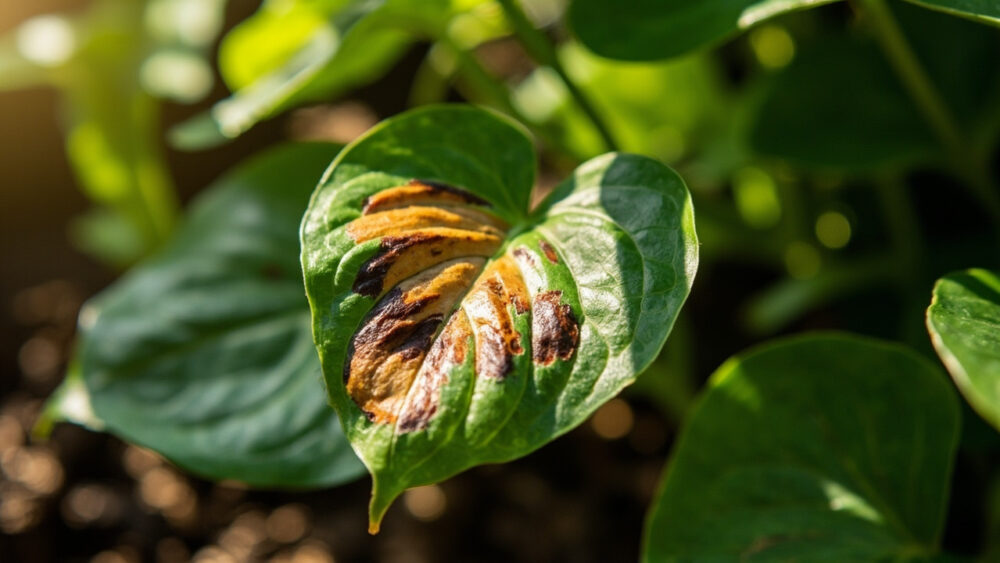
Nine times out of ten, pothos leaves turning brown means the plant has gone too dry between waterings, or is getting too much direct sun on top of that dry soil. Check the soil two inches down right now: if it’s bone dry and the browning shows up as crispy edges or tips, that’s your answer, and the fix is a deep drink and a steadier watering schedule. But that’s not the only thing that turns pothos leaves brown, and it’s not even always the right guess.
Most people blame low humidity first, since pothos gets tagged as a “humidity-loving” plant online. Usually that’s not it. The detail that actually tells you which cause you’re dealing with is exactly where on the leaf and where on the plant the brown shows up first, and we’ll walk through that leaf by leaf.
Recovery odds are genuinely good for most of these causes, but not all, and one of them means the damaged leaves are gone for good even after you fix it. Stick around to the bottom for the two-minute diagnosis checklist you can run right now, standing in front of the plant.
Causes, Most to Least Likely
1. Underwatering and Drought Stress
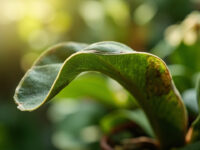
Confirm it: stick a finger two inches into the soil. Bone dry, and the pot feels light when you lift it. Brown shows up first as crispy, curled tips and edges on leaves anywhere on the vine, often the oldest leaves closest to the soil.
Fix it with a thorough soak, not a splash. Water until it runs from the drainage holes, let the pot drain fully, and don’t water again until the top inch or two is dry to the touch.
But dry soil is only half the story, because too much water causes the same brown tips.
2. Overwatering and Root Rot
Confirm it: soil stays wet for more than a week, the pot feels heavy, and you notice a sour or swampy smell at the soil line. Leaves go yellow first, then brown, often starting at the base of the vine, and they may feel mushy rather than crispy.
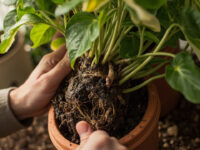
This is the one everyone underestimates. If roots have gone soft and brown or black instead of white and firm, you’re not dealing with a watering schedule problem anymore, you’re dealing with rot.
Pull the plant, trim away any mushy roots with clean scissors, and repot into fresh, fast-draining potting mix. Cut back watering hard until new growth appears.
The next cause looks similar to drought but has nothing to do with your watering can.
3. Too Much Direct Sun
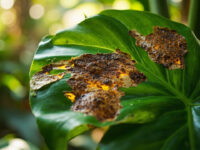
Confirm it: the browning appears as pale, bleached-looking patches or crisp spots on the leaves facing a window, usually on the side of the plant closest to the glass, and it tends to hit newer growth that unfurled directly in that light.
Move the plant a few feet back from south or west-facing windows, or filter the light with a sheer curtain. Pothos wants bright indirect light, not direct afternoon sun through glass.
Sun damage doesn’t spread once you move the plant, but the next cause keeps creeping until you deal with the actual source.
4. Low Humidity and Dry Indoor Air
Confirm it: this is usually a winter problem, when heaters run constantly. Leaf edges turn brown and papery in a fairly even, thin line around the margin, and it tends to show up plant-wide rather than on one side.
Group plants together, run a humidifier nearby, or move the pothos off the top of a heating vent. Misting helps briefly but doesn’t fix the underlying dry air.
If the water and light both check out fine, look at what’s actually in the water and the soil.
5. Fertilizer Burn or Mineral Buildup
Confirm it: you see a crust of white or yellowish mineral deposit on the soil surface or pot rim, or you’ve been feeding regularly without flushing the pot. Brown tips look scorched, almost burnt, and show up on multiple leaves at once rather than progressing gradually.
Flush the soil with plain water, running several times the pot’s volume through the drainage holes to wash out excess salts. Cut fertilizer to half strength and only during active growth.
One more cause is worth ruling out before you settle on a diagnosis, and it’s the one people notice last.
6. Pests, Especially Spider Mites
Confirm it: flip the leaves over and check the undersides and stem joints for fine webbing, tiny moving specks, or a stippled, dry-looking texture on the leaf surface before it browns. A magnifying glass or your phone camera zoomed in helps.
Isolate the plant, rinse leaves under running water, and treat with insecticidal soap or a horticultural oil, following the product label exactly on frequency and coverage.
Once you’ve matched your symptom to a cause, the next step is making sure you didn’t grab the wrong one.
How to Tell the Causes Apart
Location on the plant is the fastest tell. Drought and rot both tend to hit older, lower leaves first. Sun damage and low humidity hit whichever leaves are exposed, regardless of age.
Texture matters just as much as location. Crispy and curled means dry, dry air, or fertilizer burn. Mushy and yellowed before browning means rot.
Pattern is the tiebreaker. An even line around every leaf edge points to humidity. Patchy, one-sided damage points to sun. Random speckling with webbing points to pests.
Once you’ve narrowed it down, the real question is whether those brown leaves are ever coming back.
Will It Recover?
For drought stress, sun exposure, humidity, and fertilizer burn, the plant itself recovers well once conditions are corrected. The already-brown parts of a leaf will not turn green again, but new growth comes in healthy.
Root rot is the honest exception. If you catch it early, with just a few soft roots, a repot saves the plant. If most of the root ball is dark and mushy, cut your losses on the root system but not necessarily the plant.
Take healthy stem cuttings above the rot line and root them in water or fresh soil. Pothos roots from cuttings easily and reliably, so a rotted plant often becomes several new starts instead of a total loss.
Pest infestations recover fully with consistent treatment over two to three weeks, since you’re breaking a breeding cycle, not healing tissue.
Trim off fully brown leaves at any point, they won’t green back up and they’re just using energy the plant could put elsewhere.
How to Keep It From Happening Again
Water on a check, not a calendar. Stick a finger in the soil before every watering and only water when the top two inches are dry. That single habit prevents both drought stress and rot.
Give it bright, indirect light, a few feet from a south or west window rather than pressed against the glass. Pothos tolerates lower light fine but resents intense direct sun.
Use a pot with drainage holes, always, and a potting mix that drains fast. Flush the soil with plain water every couple of months if you fertilize regularly.
Check the undersides of leaves occasionally, especially in dry winter months when spider mites thrive.
Get those habits in place and you’ll rarely see more than the occasional old leaf browning, which is normal aging, not a problem to chase.
Diagnosis Checklist
- Check soil two inches down: bone dry means drought, wet and heavy for over a week means check for rot.
- Lift the pot: unusually light points to underwatering, unusually heavy and slow to dry points to overwatering.
- Feel the brown tissue: crispy and curled points to dry conditions, sun, or fertilizer, mushy and yellowed points to rot.
- Look at where on the plant it started: oldest lower leaves point to watering issues, exposed leaves near a window point to sun.
- Check the pattern on the leaf: an even thin brown edge all around points to low humidity, patchy one-sided damage points to direct sun.
- Flip the leaves over: webbing or tiny specks mean pests, clean undersides rule pests out.
- Look for white crust on the soil or pot rim: present means flush the soil and cut back fertilizer.
- If you suspect rot, slide the plant from the pot and check the roots: white and firm means healthy, brown and mushy means trim and repot or take cuttings.
Match your plant to one line above and you already know the fix. Most pothos bounce back within a few weeks of getting the right correction.