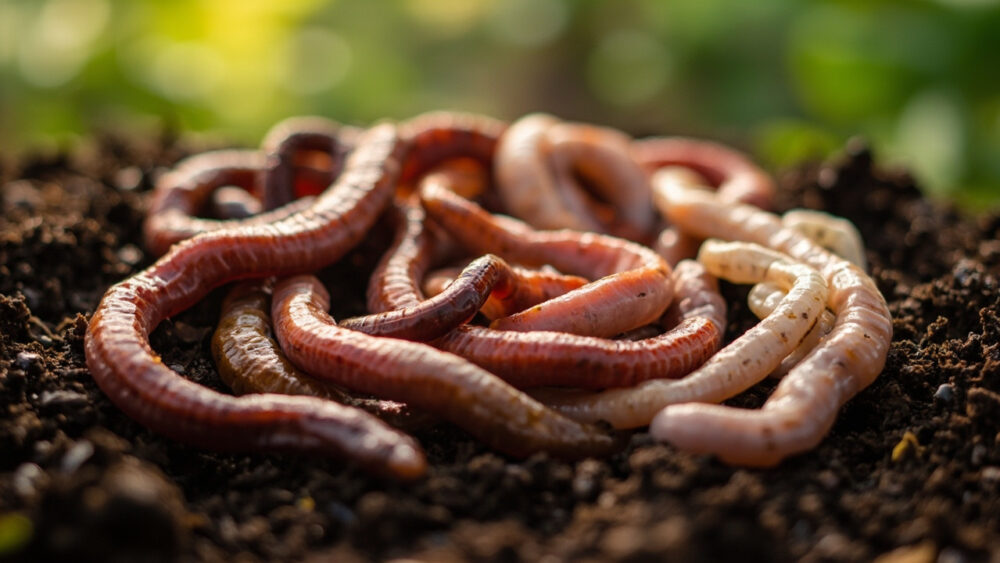
The one distinction that sorts almost every worm you dig up: does it live near the surface and eat decaying leaf litter, does it tunnel deep and drag organic matter down, or is it something that only looks like a worm and does not belong in your soil at all. Get that one call right and identifying types of worms in soil stops being a guessing game.
Most people pick up any pale, thin worm and call it a bad sign, or grab any fat pink one and assume it is a nightcrawler doing them a favor. Neither guess is reliable. There is also a worm most gardeners quietly stop worrying about once they learn what it actually does, and one that shows up after heavy rain looking alarming but is completely harmless.
Number 13 on this list is the one people misidentify constantly, usually with a shudder they did not need to have. The rest of the true earthworms, the oddballs, and the full sorting method for whatever you just dug up are waiting at the bottom.
The Deep Diggers: True Burrowing Earthworms
These are the worms most people picture when they think “earthworm,” and they work the soil vertically.
1. Nightcrawler
Large and dark-headeda nightcrawler runs 6 to 10 inches long with a reddish-brown front end fading to a paler tail. It digs permanent vertical burrows a foot or more deep, comes up at night to feed on surface litter, and leaves small mounded castings at the burrow entrance. Gardeners like them because those burrows aerate compacted soil far better than shallow-dwelling species can.
2. Common Field Earthworm
Medium-bodied and unremarkable lookingthis is the pinkish-gray worm you turn up in almost any garden bed, usually 3 to 5 inches long. It burrows moderately deep, tolerates a wide range of soils, and is the generalist most likely to be doing quiet, steady work under your lawn right now. It rarely gets identified by name because it does not need to be dramatic to be useful.
3. Green Worm
Genuinely green, not a trick of the lightthis is a real earthworm color morph found in damp, undisturbed soil and old pasture ground. It behaves like other deep burrowers but is uncommon enough that most gardeners who find one assume it is dyed or diseased. It is neither, just a normal earthworm with unusual pigment.
The deep diggers get the credit, but the surface feeders are doing the compost work that actually feeds your beds.
The Compost Workers: Surface and Litter Dwellers
These worms stay in the top few inches, which is exactly why they dominate compost bins and worm farms.
4. Red Wiggler
Small, banded, and hyperactivered wigglers run 2 to 4 inches, wriggle violently when disturbed, and never burrow deep. This is the species sold for vermicomposting bins because it eats kitchen scraps fast and reproduces quickly in a shallow container. It cannot survive frozen or waterlogged ground, so it is a bin worm first and a garden-soil worm only in mild, organic-rich conditions.
5. Redhead Worm
Similar to a red wiggler but with a more distinct dark red front thirdthis species is common in leaf litter and aged manure piles. It processes decaying plant matter quickly, stays shallow, and is often mixed into commercial worm bins alongside red wigglers without gardeners noticing the difference. Both do the same essential job.
6. Grey Worm
Pale gray to dull whitethis litter dweller is smaller and less muscular than a nightcrawler, usually found right under mulch or leaf piles rather than deep in the soil profile. It breaks down surface debris efficiently but is fragile, drying out fast if the mulch layer is disturbed and left exposed. Treat any sudden gray-worm die-off under a moved mulch pile as normal, not a pest problem.
If your compost pile smells sweet and crumbles apart, worms like these are the reason, but not every worm you see is actually an earthworm.
Look-Alikes That Are Not True Earthworms
These get mistaken for earthworms constantly, and telling them apart matters because a few are actual problems.
7. Pot Worm
Thin, white, and thread-likepot worms are barely half an inch to an inch long and show up in huge numbers in overly wet potting mix or compost. They are harmless decomposers, not parasites, but a sudden explosion of them usually means the soil is too wet and too acidic. Cutting back watering and adding a little lime-treated compost usually reduces the population without any pesticide needed.
8. Grubworm (Larval Beetle)
C-shaped, cream-colored, with a distinct brown headgrub worms are beetle larvae, not worms at all, and this is where misidentification actually costs gardeners a lawn. They feed on grass roots from below, causing patchy dead turf that peels back like carpet. If you find more than a handful per square foot while turning soil, that is a lawn grub problem, not a healthy earthworm population, and it calls for a labeled grub control product used exactly per its instructions.
9. Cutworm
Smooth, dull brown or gray, and curls into a tight C when disturbedcutworms are moth caterpillars that hide in soil by day and climb up to sever seedling stems at night. Finding a seedling toppled clean at the soil line with no worm in sight, then digging up a curled gray larva an inch below, confirms cutworm rather than any beneficial soil worm. Collars around transplants stop them cold.
10. Wireworm
Thin, hard-bodied, and shiny yellow-brownwireworms are click beetle larvae that feel almost like a piece of wire when you try to bend them, which is the fastest way to rule out a true earthworm. They tunnel into potato tubers, carrot roots, and seed corn, and they persist in soil for two to five years before pupating. Rotating out of grass-heavy cover crops for a season is the main cultural fix.
Those four are worth knowing precisely because mistaking them for beneficial worms delays the fix, but a few other look-alikes are genuinely dangerous to your soil rather than just annoying.
Invasive and Problem Worms
These are worth learning to spot on sight, because a couple of them can undo years of soil-building work.
11. Jumping Worm
Snake-like, thrashing violently, and almost metallic gray-brown when handled, jumping worms are an invasive species spreading through much of the eastern and midwestern United States. They strip soil of organic matter fast, leaving a loose, grainy, coffee-ground texture that can no longer hold plant roots well. If you find one, do not relocate it or add it to compost that will be spread elsewhere; local extension offices generally recommend bagging and disposing of them in trash rather than moving soil that might carry cocoons.
12. European Nightcrawler
Larger and lighter than a jumping worm, with a blunt smooth tailthis species was introduced deliberately as bait and bin stock and has since spread into wild soil in many regions. It behaves more like a normal deep burrower than a jumping worm and is not considered as destructive, but in forest soils it still changes leaf litter decomposition rates enough that ecologists track it. In a home garden it is generally treated as a benign, if non-native, earthworm.
13. Horsehair Worm
Long, thin, tangled like a loose knot, and pale to dark brownthis is the worm most gardeners misidentify with an actual shudder, usually after finding one in a wet pot or a puddle. It is not a parasite of humans or pets despite the alarming look, and it is not even a true soil worm at all: it is a parasite of insects like crickets and grasshoppers during its larval stage, and the adult you find writhing in water is just looking for a mate. Finding one in your garden means nothing about your soil health one way or the other.
That one alone is worth remembering, because it is the single most common “is this dangerous” question gardeners ask about soil worms.
Specialty and Regional Types
A couple of less common worms round out what you might actually dig up depending on where you garden.
14. Alabama Jumper
Muscular, fast-moving, and notorious for leaping out of a bait cupthis southern-adapted earthworm burrows aggressively and tolerates heat and clay soil better than most nightcrawlers. It is popular with fishing bait growers and is sometimes intentionally introduced to hard clay gardens to improve drainage over a season or two. In warm-climate raised beds it is one of the more effective tunnelers you can encourage.
15. Blue Worm
Small with a genuine faint blue-gray sheen under the right light, this species turns up in cool, consistently moist compost and leaf mold, most often in temperate and cooler climates. It behaves like a compost-dwelling relative of the red wiggler, staying shallow and processing decaying plant material, but it is far less commonly sold or seen than its red cousins. Finding one usually means your compost has been undisturbed and consistently damp for a long stretch, which is exactly the condition it needs.
How to Choose the Right One
Once you know what you are looking at, deciding whether to encourage it, ignore it, or remove it comes down to a short checklist.
- Space: deep diggers like nightcrawlers need open garden beds or lawn, not a shallow bin; compost workers like red wigglers need a contained shallow system, not open ground where they will not survive winter.
- Climate: cold winters kill off red wigglers left outdoors, while nightcrawlers and field earthworms burrow below the frost line and survive fine. Hot clay-soil climates favor tolerant types like the Alabama jumper.
- Purpose: decide if you want faster compost breakdown (surface feeders), better soil aeration and drainage (deep diggers), or you are just trying to identify a pest versus a helper (check body shape and behavior against the look-alike section).
- Texture check: true earthworms are soft and segmented throughout. Wireworms feel stiff and shiny. Grubworms and cutworms curl into a tight C and have a distinct head capsule.
- Behavior when disturbed: violent thrashing and a metallic sheen points to jumping worms, worth reporting or removing rather than encouraging.
- Care appetite: if you want zero maintenance, let native field earthworms and nightcrawlers do their thing undisturbed. If you want fast, manageable compost, buy red wigglers for a bin rather than hoping garden soil worms migrate in.
Dig a shovelful, check the shape, the head, and the reaction to being disturbed, and you will know within seconds which of these fifteen you are holding.
Most soil worms are quietly doing you a favor. The trick is knowing which handful are not.