Plant potatoes in New York between mid-April and mid-May across most of the state, once soil temperature holds at 45°F or warmer and you’re roughly two to three weeks before your last spring frost. Downstate and Long Island growers can often start in early April. The North Country and high elevations near the Adirondacks usually wait until late May.
That’s the honest answer. But the calendar date matters less than what’s actually happening in your soil, and that’s where most New York gardeners go wrong every single year.
Before you grab the seed potatoes, there are a few things worth knowing: the mistake that rots a whole bag of seed potatoes before they ever sprout, the soil sign almost nobody checks before planting, and what really happens if you wait too long into June. Stick around for the Potatoes at a Glance card at the bottom, it’s built to save to your phone for the exact week you’re standing in the garden.
The Real Planting Window for New York
New York spans USDA zones 4 through 7, and that range changes your timeline by a full month depending on where you garden. Zone 7 pockets around New York City and coastal Long Island can plant potatoes as early as late March to early April. Zone 5 and 6, which covers most of the Hudson Valley, Capital Region, and Finger Lakes, plant mid-April through early May. Zone 4 areas in the Adirondacks and far northern counties should hold off until mid-to-late May.
Soil temperature is the number that actually matters, not the date on the calendar. Potatoes want soil at a consistent 45°F or higher at planting depth, about 4 inches down. Below that, seed pieces sit in cold, wet ground and rot before they ever push a sprout.
Your last frost date matters too, but less than people think, since potato foliage can handle a light frost and the seed piece itself is underground and insulated.
The date on the seed packet is a starting point, not a rule.
How to Find Your Actual Window, Not the Average One
Averages lie. Your yard has its own microclimate, and that’s what decides your real planting day.
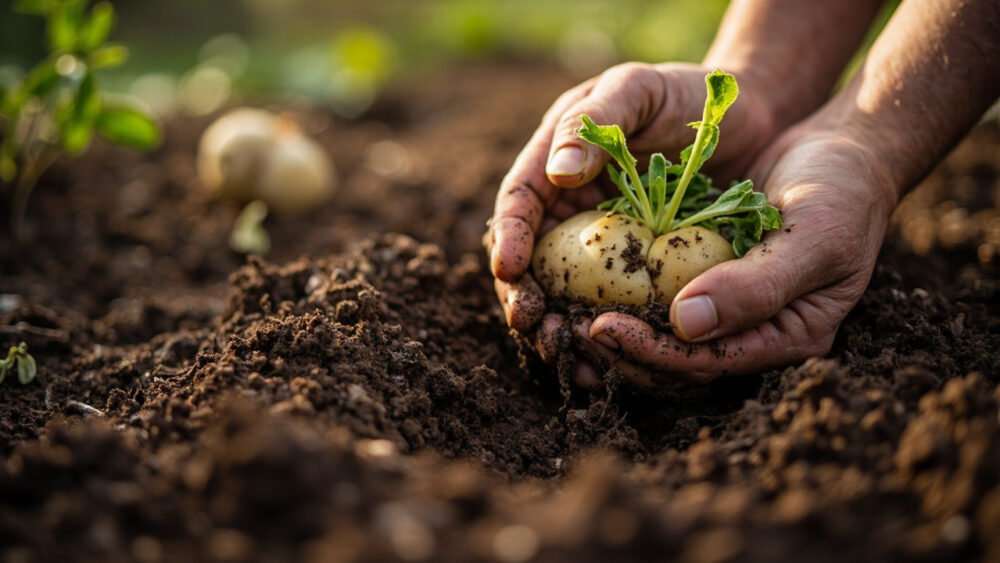
Check the soil, not the sky. Grab a handful from 4 inches down. It should crumble and feel cool, not cold, and it should not compact into a mud ball when squeezed. If water runs out when you squeeze it, wait another week or two.
A cheap soil thermometer removes all the guesswork. Push it in 4 inches, check it in the morning for a few days running. Once you see 45°F to 50°F consistently, even overnight, you’re in business.
Raised beds and south-facing slopes warm up a week or two ahead of low, shaded, or clay-heavy ground, which matters a lot in a state where soil types shift from sandy Long Island loam to heavy Hudson Valley clay within a single county.
Once your own soil tells you it’s ready, the next question is what happens if you jump the gun.
Plant Too Early and This Is What Actually Goes Wrong
Most people assume the risk of planting too early is frost killing the sprouts. That’s not really the danger, and it’s the guess that trips up a lot of first-time growers.
The real problem is rot, not frost. Seed potatoes sitting in cold, waterlogged soil below 40°F will simply decay underground before they sprout at all. You won’t see frost damage on leaves, you’ll see nothing come up, and by the time you dig to check, the seed piece is mush.
A light frost on emerged foliage is genuinely survivable. The plant usually pushes new growth from below the damaged tips within a week or two, especially if you’ve hilled soil up around the stems for insulation.
So the frost isn’t the enemy. Cold, soggy soil sitting there for weeks doing nothing is.
Plant Too Late and Here’s the Honest Cost
Planting late in New York doesn’t ruin the crop the way early planting can, but it does shrink it. Potatoes need roughly 70 to 90 days for early varieties and up to 100 to 120 days for late storage varieties, counted from planting to harvest.
Push planting into June and you’re racing the clock against New York’s shorter fall days and the first hard autumn frost, which typically lands in late September to mid-October depending on region. Late-planted potatoes also bulk up their tubers during the hottest part of summer, when heat and dry spells stress the plant and push it toward smaller yields.
You’ll still get potatoes. Just fewer of them, and smaller, especially with late-maturing varieties that need the full season to size up properly.
Timing costs you pounds per plant, not the whole harvest, but it’s a cost worth avoiding if you can.
The Prep That Makes the Window Actually Work
Seed potatoes need a head start indoors before they ever touch soil, and this is the step most people skip or rush.
Chit them first. About two weeks before your target planting date, set whole seed potatoes in a bright, cool spot, around 60°F to 70°F, so they sprout short, sturdy eyes before going in the ground.
Cut larger seed potatoes into pieces with at least one or two eyes each, then let the cut sides callus over for a day or two in open air. Planting a fresh-cut piece straight into cold spring soil is a fast way to lose it to rot.
Work compost into the bed the fall before if you can, since potatoes are heavy feeders and New York’s clay and loam soils generally benefit from the added drainage and organic matter.
Get the seed pieces right and the soil right, and the actual planting is the easy part.
Planting Depth, Spacing, and What Comes Next
Plant seed pieces 3 to 4 inches deep, cut side down, eyes facing up. Space them 10 to 12 inches apart within the row, with rows 30 to 36 inches apart to leave room for hilling.
Once shoots reach 6 to 8 inches tall, hill soil up around the base, covering about half the stem. Repeat this once or twice more through the season as the plant grows.
Hilling matters more than most people realize. Tubers form above the seed piece, and any that get exposed to sunlight turn green and develop solanine, a compound that’s toxic and makes the potato taste bitter. Keep them covered.
That covers the how. The zone-by-zone breakdown below covers the where.
Zone Notes Across New York
New York’s frost dates and planting windows shift meaningfully from the coast to the North Country, and it’s worth knowing where you actually sit.
- Long Island and NYC (Zone 7): last frost typically early to mid-April, plant late March through mid-April.
- Hudson Valley and Capital Region (Zone 5b to 6b): last frost late April to early May, plant mid-April through early May.
- Finger Lakes and Central NY (Zone 5 to 6): last frost late April to mid-May, plant late April through mid-May.
- Western NY near Buffalo and Rochester (Zone 6): lake effect delays soil warming, plant early to mid-May.
- North Country and Adirondacks (Zone 4 to 5a): last frost mid to late May, plant mid to late May.
Know your zone, check your soil, and the exact week takes care of itself.
Potatoes at a Glance
- When to plant: mid-April to mid-May across most of New York, late March to mid-April on Long Island and NYC, mid to late May in the Adirondacks and North Country.
- Soil temperature target: 45°F or warmer at 4 inches deep, checked consistently over several days.
- Frost timing: aim for roughly two to three weeks before your last spring frost, since foliage tolerates light frost but seed pieces rot in cold wet soil.
- Planting depth and spacing: 3 to 4 inches deep, 10 to 12 inches apart, rows 30 to 36 inches apart.
- Prep before planting: chit seed potatoes about two weeks ahead in a bright spot around 60°F to 70°F, and let cut pieces callus for a day or two.
- Days to harvest: 70 to 90 days for early varieties, 100 to 120 days for late storage varieties.
- Biggest mistake to avoid: planting into cold, soggy soil, which rots seed pieces before they sprout, rather than frost damage after they emerge.
Watch the soil, not the calendar, and hill your potatoes faithfully all season long.
Get those two things right anywhere in New York, and the harvest takes care of itself.