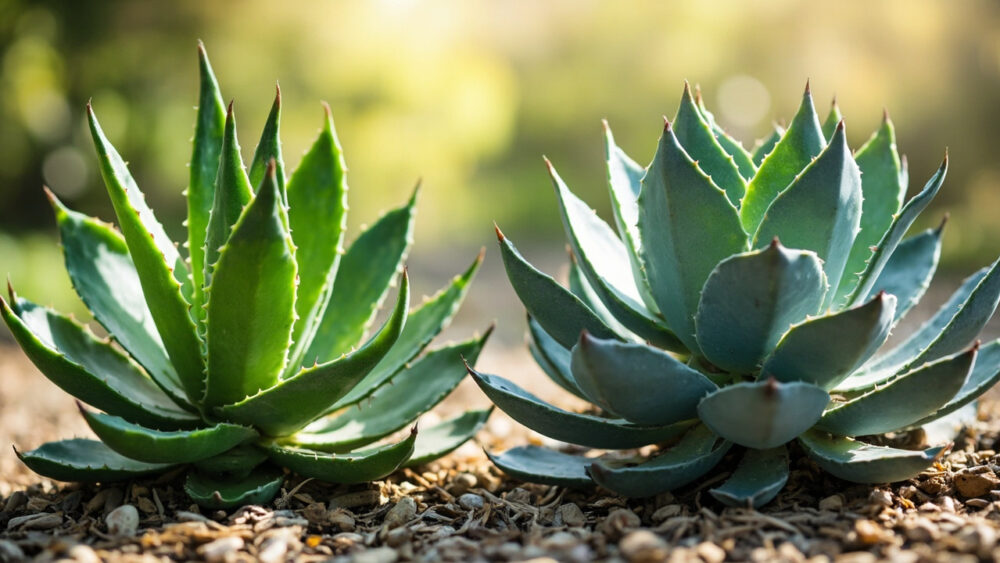
If you want a low-drama houseplant that heals a kitchen burn and forgives you when you forget it exists, get an aloe. If you want a dramatic architectural statement for a hot, dry yard and you have the space to let something get big, get an agave. That is the honest aloe vs agave answer, and almost everything else people argue about with these two plants is a smaller detail hanging off that main choice.
Most people lump them together because they look related from across the garden center: both rosette-shaped, both spiky, both tough as nails. But the differences that actually decide this for your situation are not the ones you’d guess.
One of them blooms once and dies. One of them can cut you if you brush past it wrong. And one of them is a much better idea indoors than the other, for a reason that has nothing to do with sunlight. Stick around, because the side-by-side card at the very bottom is the one worth screenshotting before you buy either plant.
The Key Differences
Growth Habit and Size
Aloe stays modest. Most common types, aloe vera included, top out around 12 to 24 inches and clump gently in a pot or garden bed for years without taking over.
Agave plays a longer, bigger game. Many species eventually reach 2 to 6 feet across, some far larger, and they mean it: an agave you buy as a 4-inch nursery pot can outgrow a room in a few years.
Size is the first fork in this decision, and most people underestimate it.
Care and Toughness
Both want fast-draining soil and hate wet feet, but aloe is more forgiving of the mistakes beginners actually make, like inconsistent watering or a north-facing windowsill.
Agave wants real, direct sun, ideally several hours of it, and sulks or stretches into a floppy, unattractive shape without enough light.
If your track record with plants is spotty, aloe is the safer bet.
Climate and Cold Hardiness
Aloe vera and most common aloes are happy outdoors year-round only in USDA zones 9 to 11, and they come inside everywhere else.
Agave species vary widely: some, like Agave parryi or Agave americana, tolerate real cold down into the teens or lower with dry roots, and gardeners in zone 7 or 8 grow them outdoors successfully.
If you garden somewhere with actual winter, agave has more cold-hardy options to offer than aloe does.
Bloom and Life Cycle
This is the difference nobody warns you about. Aloe blooms repeatedly, often once a year, sending up a tall spike of tubular orange or yellow flowers, then goes right back to normal growth.
Agave is a monocarpic plant: most species bloom exactly once in their life, often after 10 to 25 years depending on species and conditions, throw up a spectacular flower stalk that can reach 15 to 30 feet, and then the main rosette dies.
That single fact changes how you should think about an agave from the day you plant it.
Safety and Handling
Aloe leaves have soft, minor serrations along the edge that rarely draw blood. The gel inside is the plant most people know for topical use on minor burns.
Agave leaves end in genuinely sharp, rigid spines, and some species have hooked teeth down the margins that snag skin and clothing hard enough to need stitches in bad cases.
Both aloe and agave are considered toxic to cats and dogs if chewed or ingested, and agave sap can also irritate skin on contact. If a pet eats either one, call your veterinarian rather than waiting to see what happens.
Handling risk alone rules agave out for some households, and that leads straight into who each plant actually suits.
When Aloe Is the Right Call
Aloe wins for apartment dwellers, windowsill gardeners, and anyone who wants a practical plant more than a showpiece.
It stays a manageable size on a sunny sill or patio table, tolerates a missed watering or three, and rewards you with usable gel if you nick yourself on the stove.
It is also the better call around kids and pets who wander close to plants, since a brushed leaf edge is a non-event rather than an injury.
If your goal is useful and low-effort, aloe is already the answer.
When Agave Is the Right Call
Agave wins when you have real outdoor space, real sun, and you want a focal point rather than a utility plant.
Xeriscape gardens, gravel beds, and hot south-facing yards are where agave earns its reputation: plant it once, water it rarely, and let it anchor the whole bed for a decade or more.
It also wins for gardeners who genuinely want that once-in-a-lifetime bloom spike as a garden event, understanding that the parent rosette will die afterward, usually leaving offsets or “pups” behind to carry on.
Choose agave when you are planting for drama and you have the room to give it.
Can You Use (or Grow) Both?
Yes, and many desert-style gardens do exactly that on purpose. Aloe and agave share soil and water needs closely enough that they thrive planted together in the same well-drained bed.
The usual pairing puts aloe in front, where its softer edges and repeat blooms stay accessible, and agave further back or in its own dedicated space where its spread and spines have room to do their thing without catching a sleeve every time you walk by.
Indoors, keep them in separate pots even if they sit side by side, since agave’s eventual size and root spread will crowd a shared container faster than aloe’s will.
Growing both is a genuinely good idea as long as you respect how differently they will look in five years.
The Verdict
Pick aloe if you want a forgiving, useful, compact plant for indoors or a small patio, especially with kids or pets nearby. Pick agave if you have sun, space, and patience, and you want a long-term architectural centerpiece rather than a quick, cozy houseplant. For most people reading this on their phone standing in a garden center aisle, that means aloe is the safer default and agave is the deliberate upgrade you choose once you know exactly where it is going to live for the next decade.
Aloe vs. Agave at a Glance
- Size: Aloe typically stays 12 to 24 inches, Agave often reaches 2 to 6 feet or more depending on species.
- Care difficulty: Aloe forgives inconsistent watering and lower light, Agave demands strong direct sun and true drainage.
- Cold hardiness: Aloe is reliably outdoor-hardy only in zones 9 to 11, some Agave species handle zone 7 or 8 winters with dry roots.
- Bloom habit: Aloe blooms repeatedly, often yearly, Agave blooms once after many years and the main rosette then dies.
- Safety: Aloe edges are mildly serrated, Agave has sharp rigid spines and sap that can irritate skin, both are toxic to pets if ingested.
- Best use: Aloe suits pots, windowsills, and practical burn-relief growing, Agave suits sunny landscape beds as a long-term focal point.
- Growing together: Compatible in the same well-drained bed outdoors, best kept in separate containers indoors.
Both plants are tough survivors that ask very little once established.
Match the plant to your space and your patience, and either one will still be thriving long after the trendier houseplants on your shelf are gone.