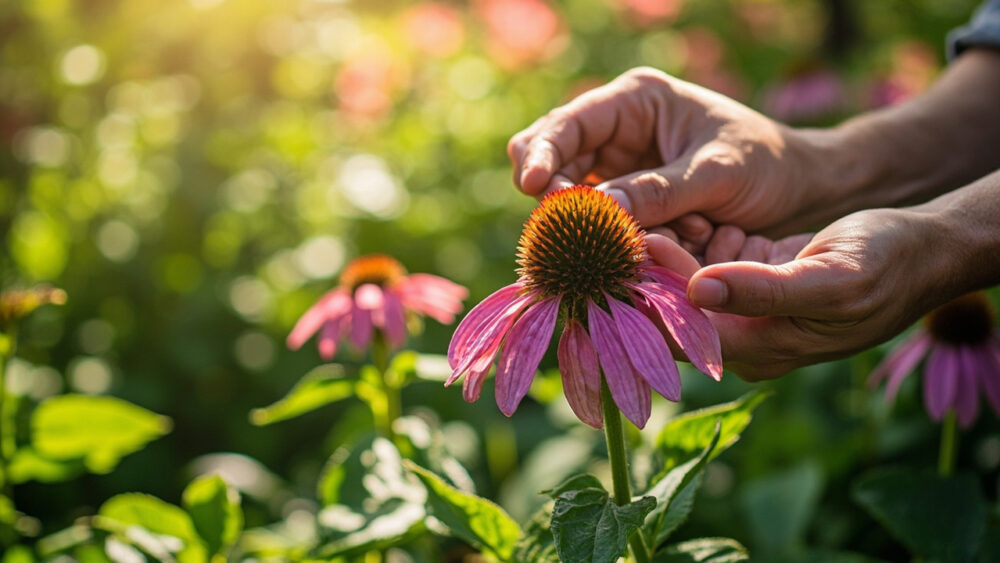
Caring for echinacea comes down to four things: full sun, well-drained soil on the leaner side, water only when the top couple inches dry out, and a fall or early spring cutback instead of babying it through winter. Get those right and this plant basically runs itself for years. Get them backwards, and you get a coneflower that flops, rots, or just quietly disappears by its second summer.
Most people kill echinacea with kindness. They plant it in rich garden soil, water it like a hosta, and wonder why it’s leggy and short-lived instead of the tough prairie plant it’s supposed to be.
There’s also a sign of “thriving” almost everyone misreads, a spent-flower question nobody warns you about until August, and a straight answer on whether to cut it back now or leave it standing. All of that is coming, and the save-able Echinacea at a Glance card is waiting at the bottom once you’ve got the reasoning behind it.
Light, Placement, and Temperature
Echinacea wants full sun, at least 6 hours a day, more if your summers run mild. This is a prairie native, bred from species that grow in open, exposed ground with no tree cover and no mercy. Part shade won’t kill it outright, but it will get floppy stems, fewer flowers, and a noticeably shorter bloom window.
It’s hardy in USDA zones 3 through 9 depending on species and cultivar, and it doesn’t need any winter protection in that range. Heat isn’t the problem either. Poor drainage and constant dampness are what actually take it out, especially in winter.
If your spot has soggy soil in spring, raise the bed a few inches or skip that location entirely.
Watering: How Much, How Often, and How to Tell
New transplants need water two to three times a week for the first three to four weeks, enough to keep the root zone from drying out while it establishes. After that, back off hard. Established echinacea wants roughly 1 inch of water a week, and in many climates rainfall alone covers it.
Check the soil 2 inches down before you water at all. If it’s still damp, walk away. This plant’s drought tolerance is real, and overwatering is far more likely to kill it than underwatering ever will.
Wilted leaves in the afternoon heat that bounce back by evening are normal, not a distress signal. Wilting that persists into the next morning means check the soil, and if it’s wet, that’s your answer.
Water tells you almost everything about how this plant is doing, but only if you check before you act.
Soil, Feeding, and Why Rich Ground Backfires
Here’s the mistake that ruins most attempts: planting echinacea like it’s a tomato, in deep, amended, fertile soil. This plant evolved in lean, gritty prairie ground, and rich soil pushes soft, fast growth that flops over and invites rot.
Aim for well-drained soil, average to lean, with a neutral to slightly alkaline pH. Sandy or loamy ground is ideal. If your soil is heavy clay, work in some coarse grit or compost mainly to improve drainage, not to enrich it.
Skip regular fertilizer. A single light topdressing of compost in spring is plenty. Heavy feeding, especially high-nitrogen fertilizer, gives you weak stems and fewer flowers, which is the opposite of what most people are chasing.
The soil question answers a bigger one too: why staking so often becomes necessary later.
Pruning, Deadheading, and the Fall Cutback Question
Deadhead spent blooms through summer if you want more flowers and a tidier look, snipping the stem back to the next leaf or bud. But here’s the honest answer to the question everyone eventually asks: should you cut echinacea all the way back in fall?
You don’t have to, and there’s a real reason not to. Leaving the seed heads standing through winter feeds finches and other birds, and the hollow stems give overwintering shelter to native pollinators. It also adds structure to a winter garden that would otherwise look bare.
If you’d rather tidy up, cut stems down to 3 to 4 inches in late fall after frost has killed the foliage, or wait and do it in early spring before new growth emerges. Either timing works. What doesn’t work is cutting it back hard in mid-summer, which just costs you the rest of the bloom season.
Every three to four years, clumps get crowded and bloom less, which is your cue for the next section.
Dividing and Routine Upkeep
Divide echinacea in early spring as new growth emerges, or in early fall at least four weeks before your first hard frost. Dig the whole clump, split it into sections with a few growth points each, and replant 18 to 24 inches apart.
Crowded clumps are the main reason established plants start blooming less even in good soil and full sun.
Spacing matters more than people expect. Cramped plants compete for water and airflow, which sets up the fungal problems in the next section. Give new divisions room even though they’ll look sparse for the first year.
Division also keeps clumps vigorous, since echinacea planted in the same tight spot for too long slows down regardless of care.
Good spacing prevents most of what’s about to go wrong.
Problems That Actually Show Up
The most common issue is powdery mildew, a gray-white coating on leaves that shows up in humid weather with poor air circulation. Thin overcrowded plantings, water at the soil line instead of overhead, and if it’s bad, a fungicide labeled for powdery mildew on ornamentals works. Follow the product label exactly.
Aster yellows is the serious one to know by sight: distorted, yellowed, stunted growth with weird green coloring in the flower centers. It’s spread by leafhoppers and has no cure. Pull and destroy affected plants so it doesn’t spread to the rest of the bed.
Japanese beetles will chew ragged holes in leaves and flowers in early to mid summer. Hand-pick into soapy water in the morning when they’re sluggish, or use a labeled product for heavy infestations.
Root rot from soggy soil looks like sudden wilting despite wet ground, and by the time you see it, the damage below the soil line is usually already done.
Most of these trace straight back to two things: crowding and wet feet, both of which you now know how to avoid.
How to Tell It’s Actually Thriving
If you assumed more flowers automatically means a healthier plant, that guess is close but incomplete. A thriving echinacea has sturdy, upright stems that don’t need staking, not just a high flower count. Floppy stems loaded with blooms usually mean the soil is richer or wetter than it should be.
Look for compact, bushy growth instead of tall, thin, reaching stems. New basal growth at the base of the plant in spring is the real tell that the root system is happy. Self-sown seedlings popping up nearby are a good sign too, though pull the ones you don’t want before they establish.
A healthy clump will also shrug off short dry spells without drama and bounce back fast after a quick afternoon wilt.
Once you’ve got that baseline, the rest is just repeating what already works.
Echinacea at a Glance
- When to plant: after your last frost in spring, or 4 to 6 weeks before your first fall frost.
- Light: full sun, 6 or more hours a day for the sturdiest stems and best bloom.
- Soil: lean to average, well-drained, neutral to slightly alkaline, never rich or soggy.
- Watering: about 1 inch a week while establishing, then only when the soil is dry 2 inches down.
- Spacing: 18 to 24 inches apart to keep airflow good and prevent mildew.
- Feeding: a light layer of compost in spring, skip regular fertilizer.
- Maintenance: deadhead through summer if wanted, cut stems back in late fall or early spring, divide every 3 to 4 years.
If you remember one thing, remember this: echinacea wants to be a little neglected. Lean soil, sparing water, and full sun will outperform a pampered spot every time.