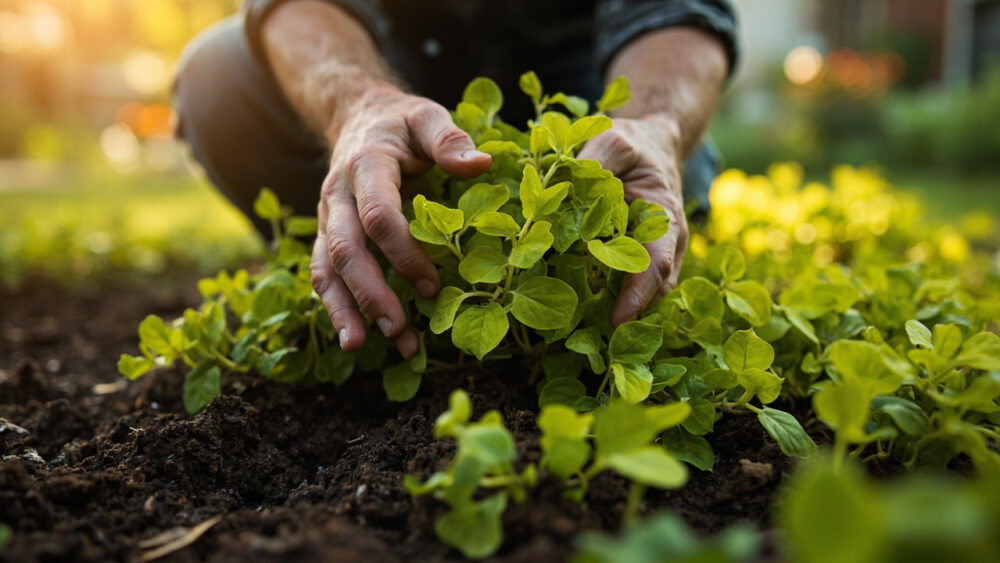
Growing creeping jenny comes down to three things: give it moist soil, part sun to full sun, and enough room to run, because this plant will fill whatever space you give it. Learning how to grow creeping jenny is mostly about deciding where you WANT it to spread before you plant, since stopping it later is the hard part. Plant it in spring or early fall, space it 12 to 18 inches apart if you want fast coverage, and keep the soil from drying out completely while it establishes.
Here is what most people get wrong before they even plant: they treat it like a delicate groundcover that needs babying. It doesn’t. The real mistake is planting it next to something it can smother, and not finding out until next season when it’s already climbed over your hostas.
There’s also a sign gardeners misread constantly, a bleached, faded look in the leaves that gets blamed on disease when it’s almost always something else entirely. And if you’re wondering whether this plant blooms or just carpets the ground, the honest answer surprises most people. Stick with me through each stage and I’ll hand you a save-able “Creeping Jenny at a Glance” card at the bottom with every number in one place.
When to Plant Creeping Jenny
Plant in spring once nighttime temperatures stay reliably above 45 to 50°F, or in early fall at least six weeks before your first hard frost. Soil temperature matters more than the calendar. You want it workable and no longer cold and soggy from winter melt, roughly 55°F a few inches down.
Creeping jenny is hardy in USDA zones 3 through 9, and in most of that range it comes back reliably from roots even where top growth dies back in winter. In zones 8 and 9, it may stay semi-evergreen all year.
Fall planting gives roots a head start before summer heat stresses new transplants, which is the quieter advantage most people never consider.
Choosing the Spot and Prepping the Soil
Creeping jenny wants part shade to full sun and consistently moist soil. It tolerates boggy spots better than almost anything else you’d plant as a groundcover, which makes it a natural pick for the low, wet corner of the yard nothing else survives in.
Full sun deepens the gold color in the popular ‘Aurea’ variety, while shade keeps it greener and slightly less dense. Either way it needs regular moisture, dry sandy soil is the one condition that genuinely struggles to support it long term.
Loosen the top 4 to 6 inches of soil and mix in an inch of compost if your soil is heavy clay or fast-draining sand. This isn’t a fussy plant, but a decent start means faster spread and fewer bare patches.
Where you put it now determines how much trimming you’re doing by August.
Planting Step by Step
- Depth: set nursery pots or divisions so the crown sits level with the soil surface, not buried.
- Spacing: 12 to 18 inches apart for full coverage within one season, or up to 24 inches if you’re patient and want to save on plants.
- Technique: dig a hole twice as wide as the root ball, loosen circling roots, backfill, and firm the soil gently around the base.
- Watering in: soak thoroughly right after planting, then keep soil evenly moist for the first two to three weeks while roots establish.
Once it roots in, this plant stops needing you and starts needing boundaries.
Watering and Feeding Through the Season
Water new plantings two to three times a week for the first month, more often in full sun or sandy soil. Once established, creeping jenny only needs supplemental water during extended dry spells, it holds moisture in its trailing stems better than most groundcovers.
Feeding is optional, not required. A light application of balanced, slow-release fertilizer in spring will speed up spread, but skip it entirely if you already struggle to keep this plant contained. Vigorous growth is rarely the problem you need help solving.
If you’re growing it in a container or hanging basket, that’s the one place it does need regular water, since pots dry out fast and creeping jenny in a pot has no reserve root system to fall back on.
That container versus ground-planted difference matters even more once problems show up.
Problems That Actually Show Up, and What Causes Them
If you assumed a bleached, washed-out yellow across the whole plant means disease, that guess is wrong most of the time. It’s almost always too much direct afternoon sun combined with dry soil, scorch, not a pathogen. Move it to part shade or increase watering and it usually greens back up within a couple weeks.
True disease pressure is low. Occasional fungal leaf spot can appear in humid, crowded conditions with poor air circulation. Thin out dense mats and avoid overhead watering late in the day, and it typically resolves without any fungicide needed.
Slugs and snails will chew ragged holes in leaves, especially in damp shade. Handpicking in the evening or using an iron phosphate bait according to the label are the standard, low-drama fixes.
The bigger issue is never a pest or disease at all.
The Spreading Problem Nobody Warns You About
Creeping jenny roots at every node that touches soil, and it will climb into neighboring beds, lawns, and even nearby containers if stems reach them. In some regions it’s considered invasive near waterways and natural areas, so check your local guidance before planting it near a pond or stream edge.
Contain it with buried edging, a large pot with no drainage into garden soil, or plant it somewhere naturally bounded by pavement or a wall. Pulling escaped runners is far easier before they root down than after.
Control, not cultivation, is the actual skill this plant demands.
When It “Matures” and Blooms
Here’s the honest answer to the question you were probably about to ask: creeping jenny does bloom, small cup-shaped yellow flowers in late spring to early summer, but almost nobody grows it for the flowers. It’s grown for the foliage, and that foliage reaches full, dense coverage roughly one full growing season after planting, sometimes faster in warm, moist conditions.
There’s no harvest in the vegetable-garden sense. “Ready” simply means the mat has filled in solid with no bare soil showing through, which most plantings reach by the following spring.
You can start dividing and moving pieces to fill other spots as soon as it’s established, usually by its second season.
All those numbers, timing, and warnings condense into one quick card, right below.
Creeping Jenny at a Glance
- When to plant: spring after nights stay above 45 to 50°F, or early fall at least six weeks before first frost.
- Where it grows: USDA zones 3 through 9, part shade to full sun, consistently moist soil.
- Spacing: 12 to 18 inches apart for fast coverage, up to 24 inches for slower fill.
- Planting depth: crown level with the soil surface, not buried.
- Watering: two to three times weekly until established, then only during dry spells, daily in containers.
- Main risk: uncontrolled spreading into lawns, beds, or waterways, contain with edging or pots.
- Full coverage timeline: about one growing season, division-ready by the second year.
Get the boundaries right before you plant, and everything after that is easy.
This is a plant that rewards a clear plan far more than it rewards extra effort.