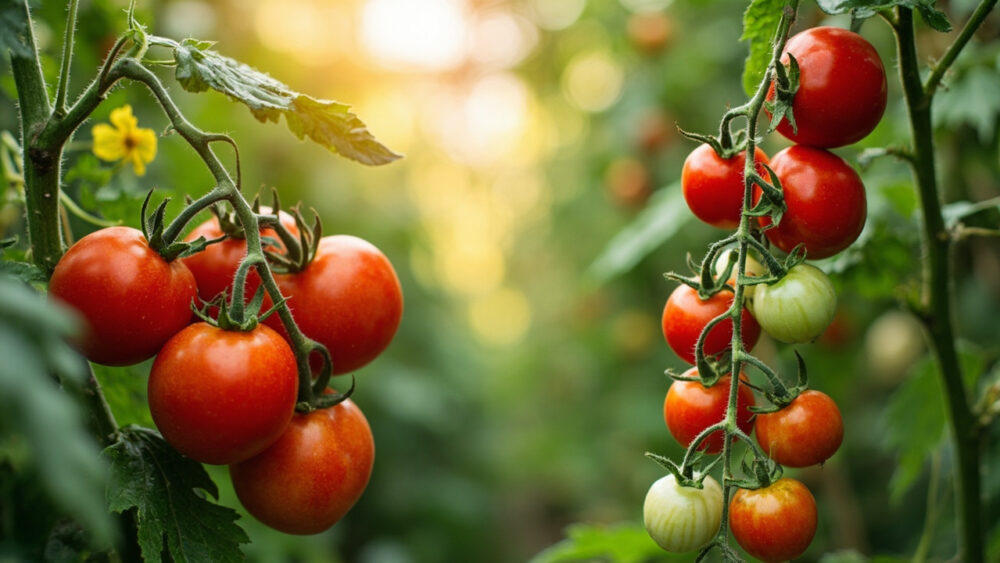
Here is the honest call before you plant one seed: if you want tomatoes to can, sauce, or freeze in one big wave, grow determinate. If you want a steady trickle of slicers from midsummer until frost, grow indeterminate. Most home gardeners with only a little space and a craving for BLTs all summer actually want indeterminate, even though determinate gets marketed harder for small gardens.
The determinate vs indeterminate tomatoes question sounds like a technical seed-catalog distinction, but it decides your trellising, your harvest schedule, and whether you’re eating tomatoes in July or October. There’s one difference that actually runs the whole show, and it isn’t the one most people fixate on. Plant height gets all the attention. It matters far less than what’s happening at the growing tip.
There’s also a situation where the usual “determinate for small spaces” advice flips completely, and a taste question people assume has a clear winner but doesn’t. Stick around, because the side-by-side card at the bottom is the one worth screenshotting before you hit the nursery.
The Key Differences
Growth Habit
Determinate plants stop growing once they set a cluster of flowers at the top of the stem, capping out around 3 to 4 feet. Indeterminate plants never stop, the vine keeps extending and flowering all season and can reach 6 to 12 feet where the season allows it. This is the difference that actually decides everything else on this list, not the final height itself.
That’s the mechanism behind every other tradeoff coming up.
Care and Staking
Determinate tomatoes are compact enough for a basic cage and light pruning, sometimes none at all. Indeterminate vines need serious support: a tall stake, a trellis, or cattle-panel fencing, plus regular suckering if you want manageable growth instead of a jungle. If you resent staking and tying every week, that chore alone should tip you toward determinate.
But staking isn’t the only place the two diverge on effort.
Harvest Timing and Volume
Determinate varieties ripen most of their fruit within a 2 to 3 week window, then the plant is largely done. Indeterminate varieties ripen a handful at a time from roughly 60 to 70 days after transplant clear through to first frost. If your goal is a single canning weekend, determinate wins outright. If your goal is fresh tomatoes on sandwiches for three straight months, indeterminate wins just as clearly.
Climate changes which of those wins matters more, and that’s where the advice actually flips.
Climate and Season Length
In short-season regions (roughly zones 3 to 5, or anywhere frost can hit by early September), determinate varieties are often the only way to guarantee ripe fruit before the season ends, since they mature fast and finish before the cold. In long, hot-summer regions, indeterminate varieties get the many months of warmth they need to actually pay off their extended vine growth with extended harvest. The “determinate is for small gardens” advice you’ve probably heard has nothing to do with why northern gardeners actually pick it. They pick it for the calendar, not the container.
Taste gets dragged into this debate too, and that one’s murkier than people admit.
Taste and Use
There is no rule that determinate tastes worse or indeterminate tastes better. Flavor comes from variety and ripening conditions, not growth habit. What genuinely differs is use: determinate types (Roma, San Marzano, many paste tomatoes) are bred meaty and low-moisture for sauce and canning, while indeterminate types include most beefsteaks and cherry tomatoes bred for fresh eating. Match the type to the job, not the vine shape to the flavor.
Cost and setup tell a similar story once you add it all up.
Cost and Container Fit
Determinate plants cost you less in hardware, a basic cage runs a few dollars and does the whole job. Indeterminate plants demand a real stake or trellis system, which costs more upfront but that support is reusable for years. For containers and small raised beds, determinate and compact “patio” varieties genuinely fit better and tip over less in wind.
Now match these differences to your actual garden, starting with when determinate is the smart pick.
When Determinate Is the Right Call
Choose determinate if you’re canning, freezing, or making sauce and want one concentrated harvest instead of dribs and drabs. It’s also the right call in containers, on a balcony, or anywhere wind and limited depth make a sprawling vine impractical. Short-season gardeners racing a early fall frost should lean determinate almost by default, since these varieties often finish in 65 to 75 days from transplant.
It’s also the forgiving choice for a first-time tomato grower. Less staking, less pruning, less to get wrong.
But if your kitchen wants tomatoes spread across the whole summer, that’s a different plant entirely.
When Indeterminate Tomatoes Is the Right Call
Choose indeterminate if you want fresh tomatoes continuously from midsummer to frost rather than a single glut. This is the right pick for anyone growing cherry tomatoes, most heirloom beefsteaks, or slicers meant for sandwiches and salads rather than jars. Long, warm-summer climates (much of zones 6 through 9 and beyond) let these vines run for months and repay the extra staking with months of fruit.
It’s also the better choice if you actually enjoy the garden task of pruning and training, since indeterminate vines reward that attention with better airflow and fewer disease problems.
If you’re now wondering why you’d ever pick just one, you don’t have to.
Can You Grow Both?
Yes, and most experienced tomato growers do exactly this. Plant determinate varieties for a reliable canning batch and grow indeterminate varieties alongside for the slow trickle of fresh eating tomatoes. They have no negative interaction planted near each other, just give indeterminate vines the extra vertical room and airflow so they don’t shade out their shorter neighbors.
The only real mixing mistake is caging an indeterminate variety in a small determinate-sized cage. The vine will outgrow it by midsummer and collapse under its own weight.
Match the support to the vine, not the other way around, and growing both is simply more tomatoes on the calendar.
The Verdict
If you had to walk away with one plant, make it indeterminate for most home gardens in a normal-to-long growing season, because a slow steady harvest of fresh tomatoes is what most people actually pictured when they decided to grow tomatoes at all. Reach for determinate specifically when you’re canning in bulk, gardening in containers, or racing a short season, because in those three situations it beats indeterminate outright, not just conveniently. This isn’t really a rivalry so much as two tools for two different jobs, and the smartest gardens I’ve seen growing tomatoes well just plant both.
Determinate vs. Indeterminate Tomatoes at a Glance
- Growth habit: Determinate stops at 3 to 4 feet after setting terminal flowers, Indeterminate keeps growing and flowering to 6 to 12 feet all season.
- Care and staking: Determinate needs a basic cage and little pruning, Indeterminate needs a tall stake or trellis plus regular suckering.
- Harvest pattern: Determinate ripens most fruit in one 2 to 3 week window, Indeterminate ripens a steady trickle from midsummer to frost.
- Climate fit: Determinate suits short growing seasons that need a fast finish, Indeterminate suits long warm summers that reward extended vine growth.
- Taste and use: Determinate leans toward meaty paste and canning varieties, Indeterminate leans toward fresh-eating beefsteaks and cherry tomatoes, flavor itself depends on variety, not habit.
- Cost and space: Determinate is cheaper and better for containers and tight spots, Indeterminate costs more upfront in support hardware but that hardware lasts for years.
- Best for: Determinate suits canners, container gardeners, and short-season climates, Indeterminate suits fresh eaters, long summers, and anyone who wants tomatoes all season.
Pick based on your kitchen and your calendar, not your ego about staking.
Either way, the tomato does not care which team you picked, only that you fed and watered it consistently.