The fastest real fix is grouping plants close together and setting pots on a tray of wet pebbles, which alone can lift the air around your leaves by 10 to 15 percent. A room humidifier does more and works faster, but if you’re learning how to increase humidity for plants without buying equipment, clustering and pebble trays are where you start today. Misting alone barely moves the needle, and that’s the first myth that trips up almost everyone.
Most people reach for a spray bottle because it feels productive, but the humidity boost from misting fades in under an hour. There’s also a sign of low humidity that gets misread constantly, brown crispy leaf tips get blamed on underwatering when the soil is actually fine. And there’s a question you’re about to ask right after this one: can you actually raise humidity too much and cause a different problem entirely.
Yes, you can, and it’s more common than people admit. Stick with this and you’ll get the honest ranking of what works, what wastes your time, and the exact humidity range most houseplants want. The save-able Increase Humidity for Plants at a Glance card is at the very bottom once you’ve got the full picture.
Why Misting Doesn’t Work the Way You Think
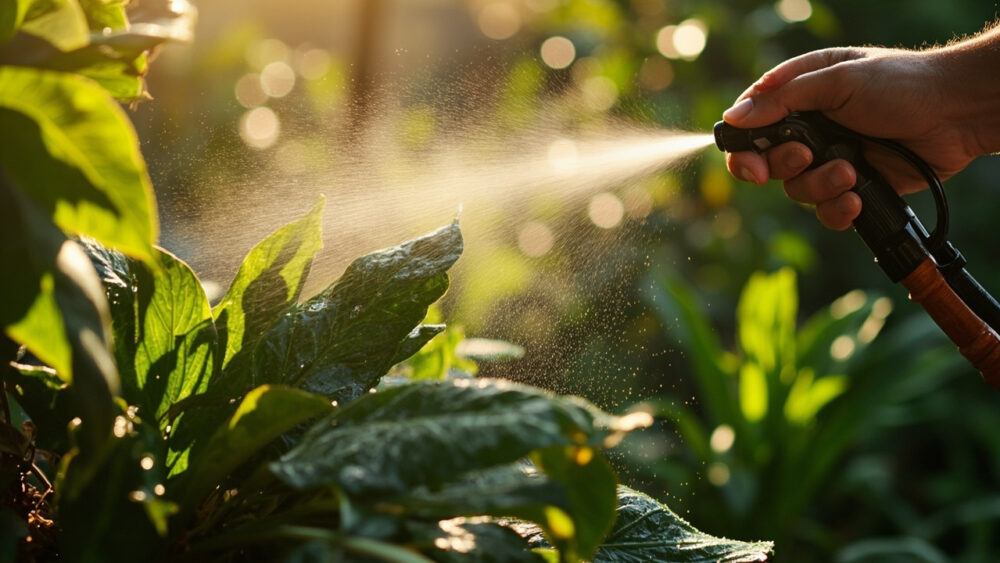
Misting feels like the obvious answer, so it’s the first thing almost everyone tries, and the first thing that quietly fails. A fine spray raises humidity in a small pocket of air for maybe 20 to 40 minutes before it evaporates or drifts away. Tropical plants need that lift held steady for hours, not minutes.
Worse, misting can backfire. Water sitting on leaves in low light or still air is exactly how fungal spots and mildew get started, especially on fuzzy-leaved plants like African violets or peace lilies. If you mist, do it in the morning so leaves dry by evening, never at night.
Misting isn’t useless, it’s just not a humidity strategy on its own.
So if spraying water in the air isn’t the fix, the real question is what actually holds humidity steady for days at a time.
The Methods That Actually Raise Humidity, Ranked
Here’s the honest order of effectiveness, from strongest to weakest:
- Room humidifier: the only method that reliably holds a specific percentage for hours, and the only real option for plants that demand 60 percent or higher, like calatheas or nerve plants.
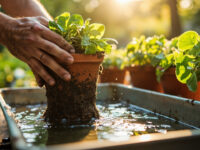
- Pebble tray: a tray of gravel or stones filled with water just below the pot’s base, so roots never sit in it. Evaporation raises the immediate air around the leaves by roughly 10 to 15 percent.
- Grouping plants: clustered pots create a shared humid pocket through their own transpiration, easy and free.
- Terrariums or cloches: near-total humidity control for small plants, but airflow becomes the tradeoff.
- Bathroom or kitchen placement: steam from showers and cooking genuinely helps, if the plant also gets enough light there.
Pebble trays and grouping cost nothing and work today, which is why most experienced growers use both before ever buying a humidifier.
But even the right method fails if you don’t know which plants actually need it.
Which Plants Actually Need Extra Humidity
Not every houseplant is asking for this. Succulents, cacti, snake plants, and ZZ plants come from dry climates and prefer humidity in the 30 to 40 percent range, the same as most homes already sit at.
The plants that genuinely struggle are tropical understory natives: calatheas, ferns, orchids, prayer plants, alocasias, and fittonia. These evolved under a rainforest canopy where humidity rarely drops below 60 percent.
Give a fern 35 percent humidity and it won’t die outright, but you’ll get browning fronds and slowed growth for months.
Knowing which plants are asking for help is only useful once you can actually read what they’re telling you.
The Sign Everyone Misreads
Brown, crispy leaf tips and edges get blamed on underwatering almost every time, and that guess is usually wrong. If the soil is still moist an inch down and the tips are dry and papery rather than soft and mushy, humidity is the actual cause, not water.
Curling leaf edges, especially on calatheas and ferns, are the earlier warning sign that comes before the browning even starts. Catch it there and you can fix it before any tissue actually dies.
Yellowing, by contrast, usually points to overwatering or light problems, not humidity, so don’t lump every symptom into one cause.
Reading the leaves correctly tells you when to act, but timing and placement matter just as much as the diagnosis.
Can You Raise Humidity Too Much?
Yes, and this is the part most guides skip. Above roughly 70 to 80 percent humidity with poor air circulation, you invite fungal issues, root rot, gnats, and mildew on both plants and nearby surfaces.
A closed terrarium with no airflow is the classic version of this mistake. Condensation builds on the glass, the soil never dries between waterings, and rot sets in at the crown or roots before you notice anything wrong above the soil.
The fix isn’t abandoning humidity, it’s pairing it with a small fan on low or a slightly cracked terrarium lid so moist air keeps moving instead of sitting stagnant.
Once you understand the ceiling, the next step is making these fixes fit your actual room instead of fighting it.
Matching the Fix to Your Room
A pebble tray in a small, enclosed bathroom does more work than the same tray in an open living room with a ceiling fan running. Airflow and room size change how far your humidity boost actually reaches.
Winter heating is the season this bites hardest. Forced-air heat can drop indoor humidity to 15 to 20 percent, well below what even drought-tolerant plants prefer, which is why browning tips spike every winter regardless of watering habits.
If you’re grouping plants, leave at least 2 to 3 inches between pots so air still moves and you’re not just trading humidity problems for fungal ones.
Get the room situation right and the last piece is simply knowing what to check and when.
Increase Humidity for Plants at a Glance
- Fastest free fix: group plants 2 to 3 inches apart and set them on a pebble tray filled with water below the pot base.
- Best for tough tropicals: a room humidifier set to hold 50 to 60 percent for ferns, calatheas, and orchids.
- Misting rule: only in the morning, only as a supplement, never as your main strategy.
- Ideal range by plant type: 30 to 40 percent for succulents and snake plants, 50 to 60 percent for most tropicals, 60 percent plus for ferns and calatheas.
- Warning sign to trust: dry, papery brown tips with moist soil underneath means low humidity, not underwatering.
- Ceiling to respect: above 70 to 80 percent without airflow risks rot, mildew, and gnats, so pair humidity with gentle air movement.
- Worst season: winter heating can drop indoor humidity to 15 to 20 percent, so start your fixes before leaves start browning.
Get the humidity right for the specific plant in front of you, not a blanket number for the whole room.
Watch the leaves for a week after any change, they’ll tell you honestly whether it worked.