Growing zucchini in raised beds comes down to three things: plant it after the soil warms past 60°F, give each plant 24 to 36 inches of space even though the seedling looks laughably small at first, and keep the leaves dry when you water. Get those three right and you will have more zucchini than you know what to do with by midsummer. Get them wrong and you will either watch seeds rot in cold soil or spend August fighting powdery mildew and squash bugs.
Most raised bed failures with zucchini are not about the bed at all. They are about spacing, timing, and one pollination problem that catches almost everyone off guard the first year, including gardeners who have grown plenty of other vegetables successfully.
Stick with this and you will get the timing anchored to your actual soil, not a calendar page, the exact planting depth and spacing that keeps zucchini from swallowing the whole bed, and the truth about why some plants flower for weeks and never set a single fruit. There is a save-able Zucchini at a Glance card at the very bottom with every number in one place.
When to Plant Zucchini in a Raised Bed
Zucchini is a heat lover, and raised beds warm up faster than ground soil in spring, which works in your favor. Wait until night temperatures are reliably above 50°F and the soil itself has warmed to at least 60°F, ideally 65 to 70°F. That is usually one to two weeks after your last frost date, sometimes sooner in a raised bed than in the ground.
In zones 3 to 6, that often lands in late May through mid June. In zones 7 to 9, late April through May works, and warm-climate gardeners can often sneak in a second sowing in mid to late summer for a fall crop.
Do not rush this. Seeds planted in cold, wet soil just sit there and often rot before they sprout. If you can hold your hand on the soil surface for a full count of ten and it feels only pleasantly warm, not cool, you are close enough to plant.
Soil temperature decides this far more than the date on your calendar.
Choosing the Spot and Prepping the Bed
Zucchini wants six to eight hours of direct sun and does not tolerate shade well. It will grow leggy and produce far less fruit if it is fighting for light half the day.
Fill the bed with a loose, rich mix, roughly one third compost blended into a quality raised bed soil or existing garden soil. Zucchini is a heavy feeder and heavy drinker, so thin, sandy filler mixes will leave it stalling out by midsummer.
Work in two to three inches of compost before planting even if the bed already has soil in it from a previous season. Zucchini pulls a lot out of the ground in a short window and depletes a bed fast.
A raised bed drains faster than ground soil, which is good for disease but means you will be watering more often than you expect.
Planting Zucchini Step by Step
- Sow seeds ½ to 1 inch deep, or set out transplants at the same depth they were growing in their pot, no deeper.
- Space plants 24 to 36 inches apart in every direction. This looks absurd for a seedling but a mature zucchini plant can spread three feet across.
- Plant two or three seeds per spot and thin to the strongest single seedling once true leaves appear, rather than planting one seed per spot and hoping.
- Water in immediately after planting to settle soil around the seed or root ball.
- In a standard 4-by-8 bed, plan for two to three zucchini plants, not six. This is the single most common mistake: cramming in too many plants because the bed looks empty on planting day.
A crowded bed is the fastest route to mildew, poor airflow, and plants that shade each other into low production.
Watering and Feeding Through the Season
Zucchini wants consistent moisture, about 1 to 1.5 inches of water per week, more during heat waves. Raised beds dry out faster than ground beds, so check soil moisture two inches down with your finger every couple of days once temperatures climb.
Water at the base, not overhead. Wet leaves sitting in humid air overnight are exactly what powdery mildew and other fungal problems want. A soaker hose or drip line under a layer of mulch is worth setting up early in the season.
Feed with a balanced fertilizer at planting, then switch to something higher in phosphorus and potassium once flowering starts, roughly three to four weeks in. Too much nitrogen late in the season buys you a jungle of leaves and very little fruit.
Mulch two to three inches deep around the base once plants are established to hold moisture and keep soil temperature steadier.
Feeding gets the plant growing, but there is one flowering problem that stops fruit cold no matter how well you feed it.
The Pollination Problem Nobody Warns You About
If your zucchini plant is covered in yellow flowers but nothing is turning into fruit, the guess most people make is that it needs more fertilizer or more water. That is almost never the actual cause.
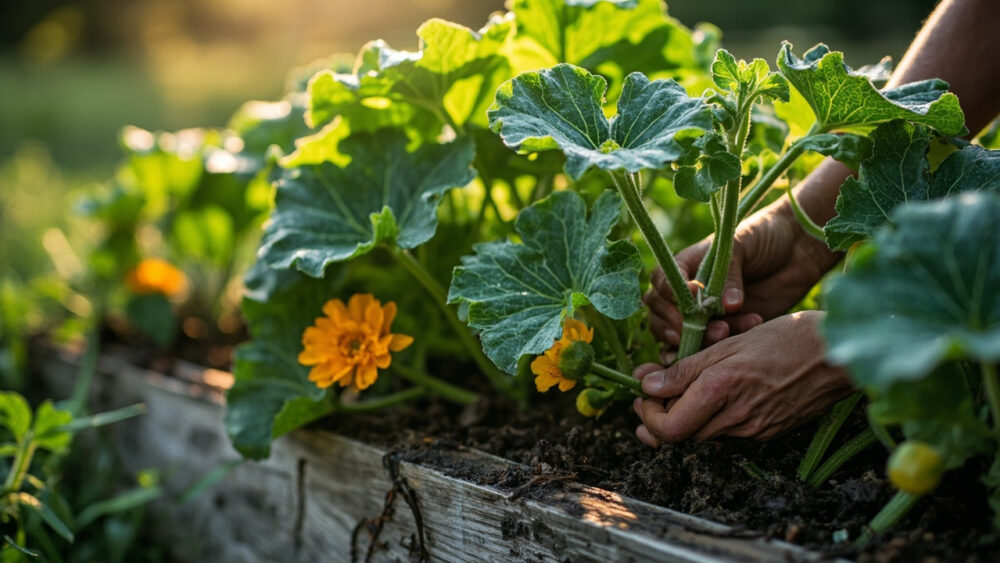
Zucchini produces separate male and female flowers on the same plant, and the plant often opens a wave of male flowers first, sometimes for a week or two, before any female flowers show up. Female flowers have a small swollen bulge at the base, right behind the petals, that looks like a tiny zucchini. Male flowers have a plain thin stem.
Without bees moving pollen from male to female flowers, even a plant loaded with both flower types will drop female flowers without setting fruit. This is common early in the season when bee activity is low, or in a garden with heavy pesticide use nearby.
You can hand-pollinate: take a male flower, strip the petals back, and gently press its center directly into the center of an open female flower, early in the morning while flowers are open. Do this every day or two once female flowers appear if you are not seeing bee traffic.
Flowers and pollination are only half the battle, the other half is keeping the plant healthy enough to finish what it started.
Problems That Actually Take Down Zucchini Plants
Powdery mildew shows up as white, powder-like patches on leaves, usually mid to late summer. Improve airflow by spacing plants correctly from the start, water at the base, and remove badly affected leaves early. If it spreads, a fungicide labeled for powdery mildew on vegetables can help; always follow the product label exactly.
Squash vine borers tunnel into the base of the stem and cause sudden wilting of an otherwise healthy-looking plant. Check the base of the stem for small holes with sawdust-like frass around them. There is no fix once a plant is badly infested, but row covers over young plants until flowering, then removed for pollination, prevent most damage.
Squash bugs cluster on the undersides of leaves and along stems, especially on plants that are stressed or crowded. Check leaf undersides weekly for their bronze, egg clusters and squash them by hand while numbers are low.
Blossom end rot, a soft dark patch on the fruit’s blossom end, usually means inconsistent watering, not a lack of calcium as most gardeners assume. Even soil moisture solves it far more often than any calcium spray does.
Catch these early and your plants will outgrow most of them, which brings you to the part everyone is actually here for.
When and How to Harvest Zucchini
Zucchini is ready to pick at 6 to 8 inches long for most varieties, usually 45 to 55 days after planting from seed. Skin should be glossy and firm, not dull.
Check plants every one to two days once fruit starts forming. Zucchini grows shockingly fast in warm weather, sometimes two inches a day, and a fruit left three extra days can turn into an oversized baseball bat with tough skin and big seeds.
Cut the stem with a knife or pruners about an inch above the fruit rather than twisting it off, which can damage the main stem.
Keep picking consistently. A plant left to hold a few oversized fruit will slow down and produce less overall, since it puts energy into maturing those seeds instead of setting new flowers.
Everything above works together, so here is the whole season in one place.
Zucchini at a Glance
- When to plant: after soil hits 60 to 70°F, about one to two weeks past your last frost date.
- Spacing: 24 to 36 inches between plants, two to three plants per standard 4-by-8 raised bed.
- Planting depth: ½ to 1 inch for seed, same depth as the pot for transplants.
- Water needs: 1 to 1.5 inches per week, at the base of the plant, more during heat.
- Sun: six to eight hours of direct sun minimum.
- Days to harvest: 45 to 55 days from seed, fruit ready at 6 to 8 inches long.
- Watch for: powdery mildew, squash vine borers, squash bugs, and poor fruit set from weak pollination.
Space it right and water at the base, and you will fix most zucchini problems before they start. Everything else on this page is just cleanup for the rare plant that still finds trouble.