Growing thyme from seed comes down to patience and restraint: sow it shallow in warm soil (70 to 80°F), keep the medium barely moist, and expect germination to trickle in over 14 to 28 days, slower and spottier than almost any other kitchen herb you’ve started. That slowness is normal, not failure. Most people give up around day ten and either drown the tray or toss it, which is exactly the mistake that ends most attempts before the plant ever gets a fair shot.
There’s a second mistake almost nobody sees coming: thyme seed is so fine that “planting” it the way you plant basil or beans buries it too deep to ever sprout. And once seedlings do show up, they look so thin and unconvincing that most growers either overwater them into damping-off or transplant them too early and lose the whole batch to a cold night.
I’ll walk you through timing, sowing, germination, hardening off, and the slow build to your first real harvest. Save the “Thyme at a Glance” card at the very bottom for the numbers you’ll want again in three weeks when you’ve forgotten all of this.
When to Start Thyme Seeds
Start thyme indoors 8 to 10 weeks before your last expected frost. Thyme seed and seedlings are slow enough that direct sowing outdoors works only in mild climates with a long, steady warm season, USDA zones 7 and up mostly.
Everywhere colder, direct-sown thyme either germinates too late to size up before summer heat or gets outcompeted by weeds while it dawdles. Starting indoors under control is genuinely the better path for most gardeners, not just the cautious one.
If you do direct sow, wait until the soil is reliably above 60°F, usually two to three weeks after last frost.
Next comes the part where most people plant it wrong before it even has a chance.
Sowing Thyme Seed Step by Step
Thyme seed is tiny, almost dust-like, and that changes how you handle every step below.
Medium and container
Use a light, well-draining seed-starting mix, not garden soil and not anything heavy or peat-dense that stays soggy. A shallow tray or small cells work fine since you’ll transplant before roots need much room.
Depth
Barely cover the seed, about 1/16 inch, or simply press it into the surface and leave it exposed to light. Bury thyme seed a half inch deep the way you would a pea and it will never see daylight again.
Moisture and temperature
Mist the surface rather than watering from above, which displaces seed that’s barely covered. Keep the medium consistently damp, never waterlogged, and hold the tray at 70 to 80°F, using a seedling heat mat if your house runs cooler.
Light
Thyme seed benefits from light during germination, so don’t bury the tray in a dark cabinet. A bright windowsill or grow light 2 to 3 inches above the tray keeps things moving.
Now comes the waiting, and this is where nerve matters as much as technique.
Germination: What’s Normal and What’s a Warning Sign
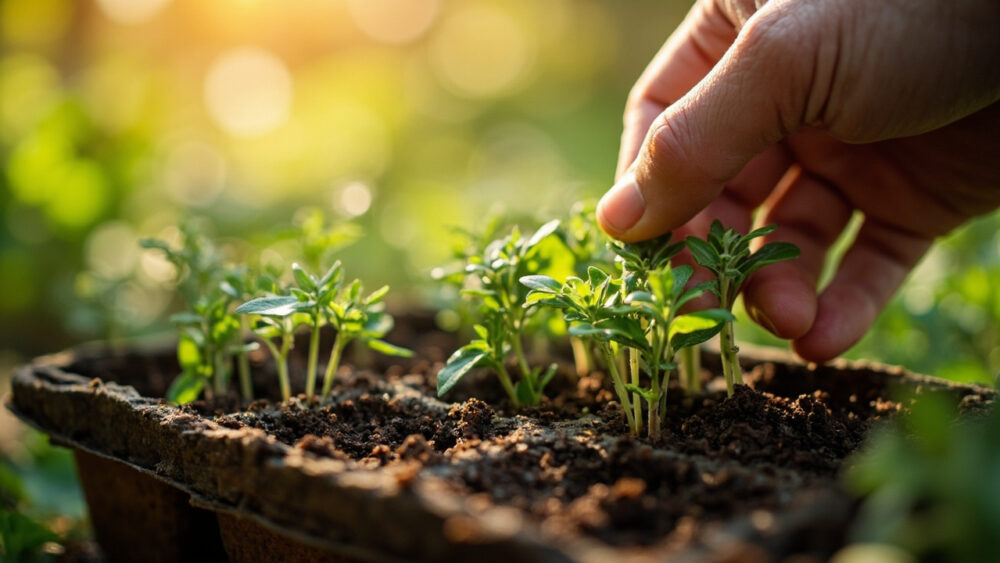
Expect germination in 14 to 28 days, and expect it uneven, with a few seedlings up on day 12 and stragglers still arriving on day 25. If you assumed slow germination means bad seed or a ruined batch, that assumption costs more thyme starts than any pest ever does.
What actually kills seedlings at this stage is overcorrecting: soaking the tray because nothing’s happened by day eight, which invites damping-off, a fungal collapse that turns seedlings brown and thread-thin right at the soil line overnight.
The real warning signs are a sour or moldy smell, a fuzzy gray coating on the surface, or seedlings that sprout upright and then keel over within a day or two. Isolated sprouting failures across three-plus weeks with no rot smell is just thyme being thyme.
Keep air moving with a small fan or a cracked lid once you see green, since airflow does more to prevent rot than any fungicide at this stage.
Once you’ve got a real stand of seedlings, the next danger is moving them outside too soon.
Hardening Off and Transplanting
Wait until seedlings have two to three sets of true leaves and are at least 2 to 3 inches tall before you even think about outdoor soil, which usually lands 6 to 8 weeks after germination.
Harden off over 7 to 10 days: a couple hours outside in filtered shade the first day, building up sun exposure and time each day until they’re outside full-time.
Transplant only after your last frost has passed and nighttime lows sit reliably above 45 to 50°F. Thyme tolerates cool weather once established but young seedlings straight from a warm windowsill can stall or die back if hit by a cold, wet night.
Space plants 8 to 12 inches apart in full sun, in soil that drains fast, sandy or rocky is fine, even good. Thyme grown in rich, moisture-retentive soil grows leggy and is far more prone to root rot.
Get the spacing and drainage right here and the rest of the season mostly takes care of itself.
Caring for Thyme Through the Season
Water sparingly once established, letting the top 1 to 2 inches of soil dry out completely between waterings. Thyme is a Mediterranean herb bred by nature for neglect, and overwatering is the single most common way people kill an otherwise healthy plant.
Skip heavy feeding. A light application of balanced fertilizer once in spring is plenty, since excess nitrogen produces soft, floppy growth with weaker flavor.
Trim plants back by about a third once they hit 6 to 8 inches tall to encourage bushier, denser growth rather than one leggy stem. This also delays flowering, which is useful if leaf production matters more to you than blooms.
Established thyme handles light frost fine and, in zones 5 through 9, often overwinters outdoors with minimal protection.
All that low-maintenance growing is building toward the moment you actually get to use it.
When Thyme Is Ready to Harvest or Bloom
You can start snipping lightly once plants reach about 6 inches tall, usually 3 to 4 months after sowing, taking no more than a third of the plant at a time so it can keep recovering. Flavor is strongest right before flowering, when the oils concentrate in the leaves.
Small purple, pink, or white flowers usually show up in the plant’s second season, sometimes late in the first if it got an early, warm start. Once flowering begins, leaf flavor drops off a bit, though the plant is still fully usable and the blooms draw in pollinators, which is a fair trade if you’re not precious about it.
For the biggest harvest, cut whole stems in the morning after dew dries but before the day’s heat hits, which is when essential oil concentration peaks.
Everything above compresses down to a handful of numbers, and that’s what’s waiting for you next.
Thyme at a Glance
- When to plant: start seeds indoors 8 to 10 weeks before last frost, or direct sow outdoors once soil is above 60°F.
- Sowing depth: barely cover the seed, about 1/16 inch, or press into the surface and leave exposed to light.
- Germination: 14 to 28 days at 70 to 80°F, uneven timing is normal, not a failure sign.
- Transplant timing: after last frost, once seedlings have 2 to 3 sets of true leaves and nights stay above 45 to 50°F.
- Spacing: 8 to 12 inches apart, full sun, fast-draining soil.
- Water and feeding: let soil dry 1 to 2 inches deep between waterings, feed lightly once in spring only.
- First harvest: once plants reach about 6 inches tall, roughly 3 to 4 months from sowing, taking no more than a third at a time.
Thyme rewards restraint more than effort: less water, less fertilizer, and more patience during germination than feels reasonable.
Get the soil dry and the light bright, and the plant genuinely does most of the rest itself.