The only propagation method that reliably works on a staghorn fern is pupping division, cutting away a self-rooted offset (called a pup) that has formed at the base of the mother plant, keeping its roots intact, and mounting it separately. Spores exist and technically work, but they take one to three years to become a plant you’d recognize, and most home attempts fail from contamination before that. If you clicked this looking for a fast, reliable way to propagate staghorn fern, division of an existing pup is that way.
Here’s the part almost nobody tells you going in: the mistake that kills most attempts isn’t a bad cut, it’s cutting too early. A pup that looks separable at 3 inches tall usually has no independent root system yet, and severing it then just gives you a dying frond fan with nothing underneath.
There’s also a timing sign everyone misreads, a rooting medium question with a genuinely counterintuitive answer, and a mounting mistake that rots plants that survived everything else. All of it gets covered below, and the Staghorn Fern at a Glance card waits at the bottom so you can save the exact numbers to your phone before you make the cut.
Why Division Beats Every Other Method
Staghorn ferns (Platycerium species) grow two types of fronds: flat, brown shield fronds that hug the mount and antler-shaped fertile fronds that stick out and eventually carry spores on their undersides. Mature plants send out pups, genetically identical offsets, along the rhizome at the base.
Each pup is already a complete miniature plant with its own shield frond and root initials before you ever touch it. That’s why division works so much better than spores: you’re not starting from a single cell, you’re separating something that’s already 80 percent of the way to independent.
Spore propagation is real and some growers do it well, but it demands sterile technique, weeks of misting a peat surface daily, and a very long wait. For nearly everyone reading this, division is the method that actually works.
The next question is knowing which pup is actually ready to come off.
Step by Step: Taking and Rooting the Pup
Choosing and Cutting the Pup
Wait until the pup has at least one fully formed shield frond of its own and is roughly 4 to 6 inches across, sitting slightly separated from the mother’s base rather than fused flush against it. That separation, a visible seam where the pup’s own shield frond meets the parent’s, is the real readiness sign, not size alone.
This is the guess everyone gets wrong: people assume any offset that looks frond-shaped is ready. It isn’t. A pup without its own root mass will brown and die within weeks of separation no matter how carefully you mount it.
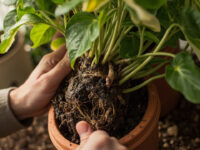
Use a clean, sharp knife to slice through the rhizome connection between pup and parent, staying as close to the parent as you can while keeping the pup’s own root ball intact. Some root tearing is normal and not fatal.
Getting a clean cut with roots attached is only half the job, the medium you set it in decides the rest.
Rooting Medium and Mounting
Skip soil entirely. Staghorn ferns are epiphytes in the wild, growing on tree bark with roots exposed to air, and potting soil around the root ball invites rot fast.
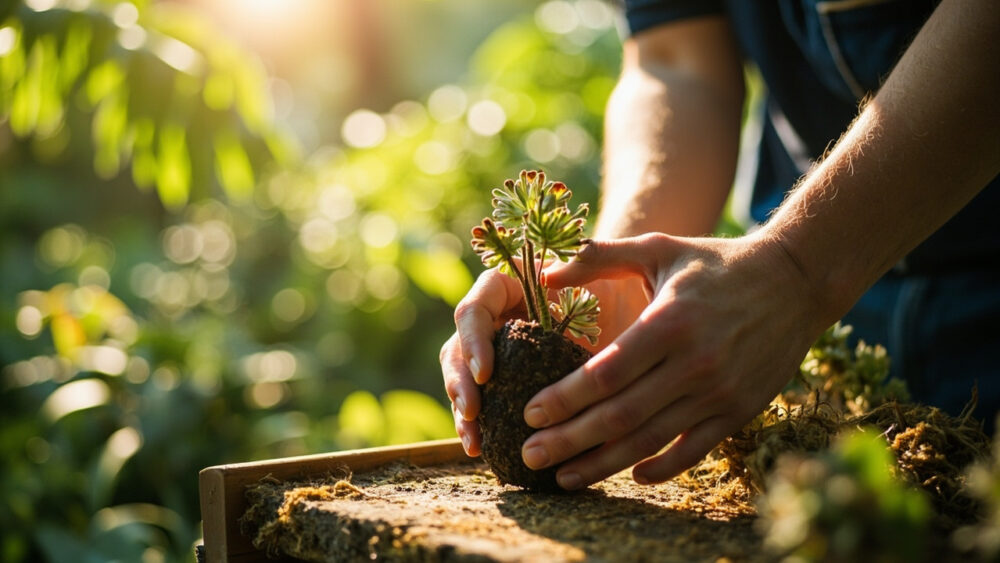
The traditional and still-best setup is a pad of damp sphagnum moss packed against the roots, tied onto a mount of untreated wood, cork, or a wire basket with fishing line, twine, or thin wire. Nest the root ball into the moss so roots touch moisture but the shield frond stays clear of standing wetness.
Here’s the counterintuitive part: more moss is not better. A thick, soggy moss pad rots roots just as fast as soil does. You want the moss damp like a wrung-out sponge, not wet, and thin enough that air still reaches the root ball.
Mist the moss every 1 to 2 days rather than soaking it, and keep the whole mount in bright, indirect light with daytime temperatures around 65 to 80°F.
Once it’s mounted and misted, the waiting game starts, and knowing what’s normal saves you from pulling it apart to check.
Week by Week: What Actually Happens
Weeks 1 to 2: the pup often looks worse before it looks better. Some frond droop and slight browning at the edges is normal transplant stress, not failure.
Weeks 3 to 4: if roots were intact at cutting, you should see the shield frond firming back up and pressing flatter against the mount, a sign it’s anchoring in.
Weeks 6 to 8: new root growth visibly threads into the moss, and you may see the beginning of a new small frond emerging from the center.
By month 3 to 4, a healthy division is putting out fresh fronds at a pace close to what it would on the parent plant.
If you’re past week 4 with no firming and increasing brown, that pup likely didn’t have enough root mass to make it, and no amount of extra misting will reverse that now.
Once new growth is established, the next decision is whether and when to move it to a bigger mount.
Potting Up and Moving to a Permanent Mount
A newly rooted pup doesn’t need repotting in the traditional sense since it’s mount-grown, but it will outgrow its first small board within 1 to 2 years. The sign to watch for is the shield frond starting to wrap around the edge of the mount rather than lying flat on its face.
Move it up, don’t crowd it: transfer to a larger board or basket in spring as new growth starts, keeping the same damp-sphagnum method and gently working the existing root mass into fresh moss without tearing it apart.
Staghorn ferns resent disturbance once established, so plan on remounting only when genuinely necessary, not on a fixed schedule.
Getting the pup this far still isn’t a guarantee, so it’s worth knowing exactly where these propagations usually go wrong.
Why Attempts Fail (And the Fixes That Actually Matter)
Cutting too early, before independent roots exist, is the single biggest cause of failure, and there’s no fix once it’s severed. Wait for the visible seam and a self-supporting root ball before you cut, full stop.
Overwatering the moss is the second-biggest killer. Soggy sphagnum rots roots in the exact way that “watching it more” makes worse, not better.
Low humidity and low light stall growth without killing the plant outright, so a pup that just sits for months with no new fronds is usually telling you it needs brighter indirect light or more consistent misting, not more water at the roots.
Mounting the root ball too deep in moss, so the shield frond itself stays damp, invites fungal rot at the crown, which is often fatal.
Get the cut timing and the moss moisture right, and the rest of this plant more or less takes care of itself.
Staghorn Fern at a Glance
- Best method: division of a self-rooted pup, not spores, for anyone who wants a plant within months rather than years.
- When to cut: once the pup has its own shield frond and a visible root ball separate from the parent, usually 4 to 6 inches across.
- Rooting medium: damp, not wet, sphagnum moss packed against the roots, never potting soil.
- Mount: untreated wood, cork, or wire basket, secured with fishing line, twine, or wire.
- Conditions: bright indirect light, 65 to 80°F, misted every 1 to 2 days.
- Timeline: firming and re-anchoring by week 3 to 4, visible new growth by week 6 to 8, established growth pace by month 3 to 4.
- Biggest failure point: cutting before roots exist or keeping the moss soggy enough to rot the crown.
Get the timing of that cut right and everything downstream gets easier.
Mist like you mean it, not like you’re drowning it, and this plant will forgive almost everything else.