Yes, you can regrow lettuce from scrapsbut only romaine and butterhead types regrow reliably from their stem base, and what you get is a second, smaller flush of leaves rather than a full new head. Set the root end of a lettuce stump in about half an inch of water, keep it on a sunny windowsill, and you will see new leaf growth in 3 to 5 days. That windowsill regrowth is really just stage one, though, and the real payoff is transplanting that regrown stump into soil, which is what most people who click this never get told to do.
Here is the mistake that kills most attempts before they start: people use loose-leaf or crisphead (iceberg) lettuce, which has no real growing base left after you cut it, and nothing regrows. Romaine and butterhead work because they leave a solid core with an intact growing point. Get that part wrong and you can water a stump for two weeks and get nothing but mush.
Below I will walk through exactly which scraps regrow, how to move them from water to soil without losing them, how to keep the new growth from bolting or bitter-ing out, and what actually goes wrong most often. Save-able specifics, including timing and spacing, are in the Lettuce at a Glance card at the very bottom, so keep scrolling once you have the method down.
Which Scraps Actually Regrow
Romaine and butterhead (Bibb, Boston) lettuce regrow well. Cut the head about 1 to 2 inches above the base, leaving the stump with its root nub intact, and that stump is your regrowth engine.
Loose-leaf varieties and iceberg do not have a usable stem base once harvested, so save your effort for romaine and butterhead. If you buy a head at the store specifically to regrow, check that the base looks firm and pale, not brown and slimy, because a stump that is already breaking down will not sprout.
The stump you choose today decides whether this works at all.
When to Move It Outdoors (or to a Pot)
The windowsill stage can happen any time of year indoors, but moving your regrown stump into soil outdoors depends on real weather, not the calendar. Lettuce is a cool-season crop that germinates and grows best when soil temperature sits between 40 and 70 degrees F, with 60 to 65 the sweet spot.
Plant outside 2 to 3 weeks before your last expected frost in spring, since lettuce tolerates light frost down to about 28 to 30 degrees F once established. In zones 3 to 6, that is typically anytime soil is workable in early spring; in zones 7 to 10, you can also grow a second round starting 6 to 8 weeks before your first fall frost.
If you missed spring, do not force it in the heat of summer.
The Heat Problem Nobody Mentions
Lettuce bolts (sends up a bitter flower stalk) once daytime temperatures push consistently past 75 to 80 degrees F. If you’re regrowing scraps in June or July, grow the stump in a pot in light afternoon shade rather than baking it in a full-sun bed.
That heat sensitivity is also the honest answer to a question a lot of readers are about to ask next.
Why Your Regrown Lettuce Might Taste Bitter
If you assumed bitterness means the lettuce is old or diseased, that guess misses the real cause almost every time. Bitterness in regrown lettuce is almost always heat stress or the plant beginning to bolt, not age or a lack of nutrients.
Once you see a thick central stalk starting to elongate in the middle of the rosette, the plant has committed to flowering and the leaves will turn bitter within days regardless of what you do. Harvest immediately at that point rather than waiting for more growth.
Keeping the plant cool and consistently watered is the actual fix, and that is exactly what the next two sections cover.
Choosing the Spot and Prepping the Soil
Lettuce wants at least 4 to 6 hours of sun, but in warm climates or during a summer regrow, afternoon shade is a genuine advantage rather than a compromise. Loose, well-drained soil with a good amount of compost worked in gives the shallow roots what they need.
Aim for a soil pH between 6.0 and 6.8and avoid heavy clay that stays soggy, since lettuce roots are shallow and rot quickly in waterlogged ground. If you’re using a container, anything at least 6 to 8 inches deep works fine because lettuce does not need deep soil, just consistent moisture.
Once the bed or pot is ready, the actual transplant takes less effort than most people expect.
Planting the Regrown Stump Step by Step
- Root first: stand the cut stump in half an inch of water, root end down, changing the water every day or two until you see roots forming, usually within a week.
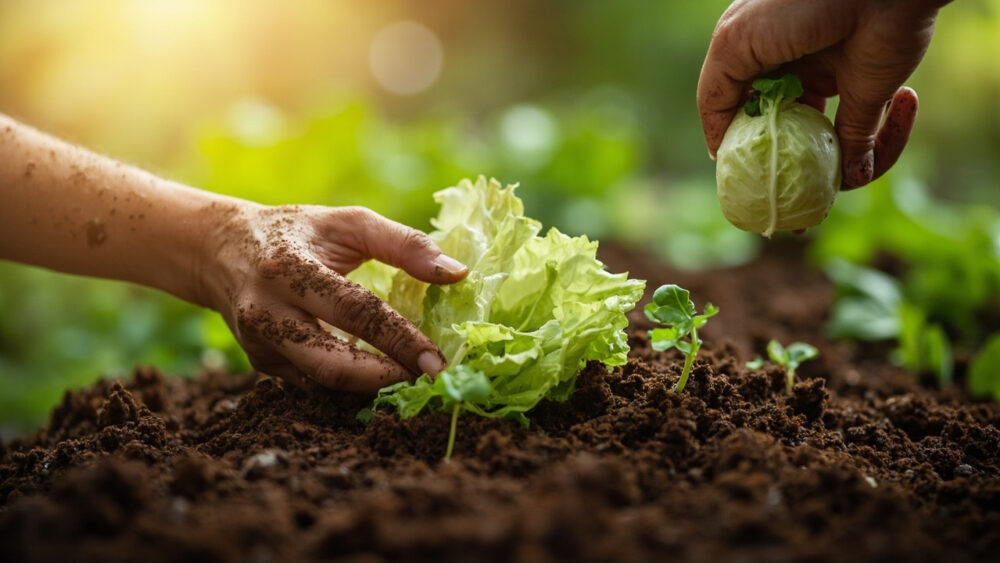
- Depth: plant the rooted stump so the base sits just at soil level, roots buried, with the new leaf growth above the surface.
- Spacing: give each stump 8 to 10 inches in every direction if planting more than one, since lettuce spreads out as it grows.
- Firm and water: press soil gently around the base and water immediately so there are no air pockets around the roots.
- Shade the first few days: a bit of temporary shade cloth or a light cover for 2 to 3 days helps the stump adjust before full sun exposure.
Get it in the ground correctly and the next few weeks are mostly about staying consistent with water.
Watering and Feeding While It Regrows
Keep the soil evenly moistnever bone dry and never waterlogged, checking by pressing a finger an inch into the soil. If it feels dry at that depth, water; if it is still damp, wait.
Lettuce has shallow roots, so it dries out faster than deep-rooted vegetables, especially in a container. In hot weather that can mean watering every day.
Feed lightly with a balanced, diluted liquid fertilizer once every 2 to 3 weeks, since regrown scraps are working with limited stored energy and benefit from a boost. Skip heavy nitrogen feeds, which push leafy growth fast but make leaves more prone to wilting and bitterness under stress.
Water and feeding are half the job, but knowing what will try to take the plant down early is the other half.
Problems That Show Up Most Often
Regrown lettuce faces the same short list of problems every time, and almost all of them are preventable.
- Rot instead of roots: if the stump turns brown or slimy in water instead of sprouting, it was already past its point and should be composted, not replanted.
- Slugs and snails: these are the most common pest on young lettuce, chewing ragged holes in leaves overnight. Hand-picking in early morning or evening and clearing nearby debris keeps numbers down.
- Aphids: clusters on the undersides of leaves, treatable with a strong water spray or insecticidal soap applied per the product label.
- Powdery mildew or leaf rot: usually from overcrowding or wet leaves sitting overnight. Water at the base in the morning instead of overhead in the evening.
- Bolting: covered above, and once it starts there is no reversing it, only harvesting fast.
Head these off early and there is genuinely little standing between your stump and a real harvest.
When and How to Harvest
Regrown lettuce matures faster than lettuce grown from seed, often giving pickable leaves in 3 to 4 weeks after transplanting rather than the 6 to 8 weeks seed takes to full head. Harvest outer leaves individually once they reach 3 to 4 inches long, cutting with scissors just above the base so the center keeps producing.
You will not get a full, tight head the way you did from the original store-bought lettuce. Regrowth from scraps gives a smaller, looser rosette of leaves, and that is the honest ceiling on this method. It is real food, just not a full replacement head.
Once the center starts pushing up a thick stalk, stop waiting and harvest everything at once before it turns bitter.
Lettuce at a Glance
- Regrows well: romaine and butterhead (Bibb, Boston) only, from a stump with 1 to 2 inches of base intact.
- Water stage: half an inch of water, root end down, changed every 1 to 2 days, roots form in about a week.
- When to transplant outside: 2 to 3 weeks before your last spring frost, or 6 to 8 weeks before first fall frost in mild climates.
- Ideal soil temperature: 60 to 65 degrees F, tolerable range 40 to 70 degrees F.
- Spacing: 8 to 10 inches between plants, soil depth 6 to 8 inches in containers.
- Water needs: evenly moist soil, check by finger an inch deep, often daily in hot weather.
- Harvest window: outer leaves at 3 to 4 inches long, roughly 3 to 4 weeks after transplanting.
Regrowing scraps will never give you back the full head you started with, and that is fine. Treat it as a free extra harvest of loose leaves, not a replacement crop, and you will never be disappointed by it.