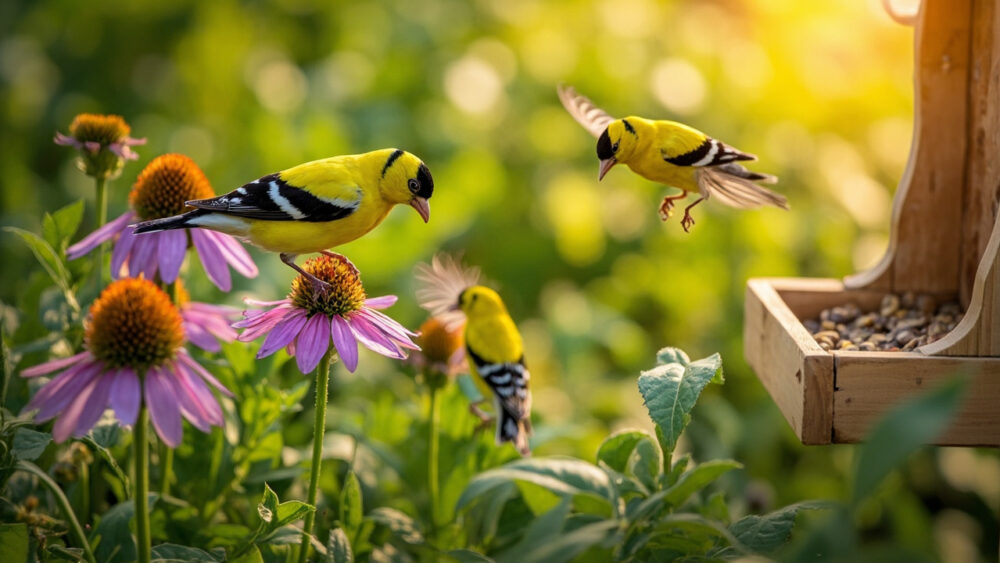
The fastest way to attract goldfinches is to plant or hang nyjer seed and native seed heads like coneflower and cosmos, then leave those seed heads standing instead of cutting them back in fall. Goldfinches are seed specialists, not bug eaters, so your setup has to look completely different from a standard suet-and-sunflower feeding station. Get the seed source and the timing right and you can have a bright yellow crowd at your window within a couple of weeks.
There is a mistake buried in almost every “how to attract goldfinches” feeder setup, and it has nothing to do with the seed. It is about how you clean, or don’t clean, the feeder itself.
There is also a timing detail most people get backward, involving exactly when goldfinches show their brightest color and when they actually nest. Stick around, because the Wildlife at a Glance card at the bottom has the seven facts worth saving to your phone before you buy anything.
What Goldfinches Actually Want, and Why Sunflower Alone Falls Flat
Goldfinches are among the strictest vegetarians in the songbird world. They rarely touch insects, suet, or fruit, and they process seed differently than almost every other feeder bird, which is why generic “wild bird mix” full of milo and cracked corn does nothing for them.
Nyjer seed (sometimes sold as thistle) is the single best draw. It is tiny, oil-rich, and matches the shape of a goldfinch’s narrow bill perfectly.
Black oil sunflower seed is a strong second choice, and unlike nyjer it also pulls in chickadees and nuthatches if you want a busier feeder.
Live plants matter just as much as feeders. Coneflower, cosmos, black-eyed Susan, zinnias, and native thistle all produce the seed heads goldfinches forage on directly in the garden, no feeder required.
The seed is only half the equation, because the feeder you hang it in decides whether birds can even get to it.
Setting Up a Feeder Goldfinches Will Actually Use
Goldfinches feed differently than most backyard birds. They cling and hang, often upside down, which is why a mesh sock or a tube feeder with small nyjer ports outperforms a standard platform or hopper feeder every time.
A nyjer sock made of fine mesh is the cheapest, most reliable option. Fill it, tie it off, and hang it at roughly 5 to 6 feet high near shrub or tree cover, but not directly under a branch a cat could use as a launch point.
A tube feeder with dedicated small nyjer slots works just as well and holds up better in rain than a mesh sock does.
Give the feeder some open sky nearby. Goldfinches like a clear approach and a perch to watch from before committing.
Skip the perches molded right onto cheap nyjer feeders if you can. Birds cling to the mesh or the ports fine on their own, and extra perches mostly just give house sparrows an easier foothold.
Once the feeder is hung, the calendar decides how fast word gets out.
Timing: When Goldfinches Show Up and When They Actually Breed
If you assumed goldfinches nest early like robins and cardinals, that guess is backward. Goldfinches are late nesters, often not starting until mid to late summer, well after most songbirds have already raised a brood, because they time their nesting to when thistle and other native seed heads go fluffy for nest lining.
In much of the country, goldfinches are present year round, but the ones you see in winter look almost drab olive, not bright yellow.
Males molt into their vivid lemon-yellow breeding plumage in early to mid spring, so if you are trying to attract that classic postcard bird, late spring through summer is your window, not January.
Feeders can run all year, but activity typically spikes in spring migration and again in late summer when family groups move through together.
Get the seed heads and feeders in place before that spring color change, and you get to watch the transformation happen at your own feeder.
The Mistakes That Quietly Empty the Feeder
Old, damp nyjer seed is goldfinch enemy number one. Nyjer that has sat through a few rainstorms clumps, molds, and stops smelling like food to a bird with a nose built for fresh oil-rich seed.
Dirty feeders are the other silent killer, and this is the mistake almost nobody blames first. Mold and bacteria build up around wet feeding ports and can sicken birds at the feeder, not just goldfinches but whatever else shares the yard.
Wash nyjer feeders every 2 to 4 weeks with hot water and a stiff brush, more often in humid or rainy stretches, and let them dry completely before refilling.
- Buying cheap mixed birdseed with fillers goldfinches ignore, which then rots in the tray
- Cutting back coneflower and other seed heads in fall instead of leaving them standing
- Hanging feeders in full exposed sun where seed dries out and oils go rancid fast
- Placing feeders where cats have easy cover to stalk from
Fix the seed and skip the cleaning, and you have solved half the problem while quietly running the other half in reverse.
Keeping the Goldfinches Coming Back Year After Year
A single good feeding season gets you a visit. A yard that keeps working gets you a resident flock that treats your property as home base.
Leave the garden messy on purpose going into fall. Standing seed heads on coneflower, cosmos, and native thistle are a free food source that costs you nothing and looks intentional if you frame it as a wildlife bed.
Keep a water source nearby, even a shallow birdbath refreshed every few days, since goldfinches drink and bathe often in warm weather.
Resist the urge to spray for aphids or other soft-bodied pests on your seed-head plants with anything broad-spectrum. Follow any pesticide label exactly if you must use one, since the same chemicals that kill pests can knock back the seed production and the beneficial insects goldfinches’ nestlings occasionally rely on.
Do this for two or three seasons running and the flock stops being visitors and starts being residents.
Wildlife at a Glance
- Best food: nyjer seed first choice, black oil sunflower seed as a strong second, avoid cheap mixed birdseed with fillers.
- Best feeder type: mesh nyjer sock or tube feeder with small nyjer ports, hung around 5 to 6 feet high.
- Best plants: coneflower, cosmos, black-eyed Susan, zinnias, and native thistle, left standing through fall and winter.
- Peak color: males turn bright yellow in early to mid spring, look olive and drab in winter.
- Nesting timing: mid to late summer, later than most songbirds.
- Feeder cleaning: wash with hot water and a stiff brush every 2 to 4 weeks, more often in humid weather.
- Water: a shallow birdbath refreshed every few days keeps them coming through warm months.
Fresh nyjer and standing seed heads do more work than any fancy feeder. Keep the feeder clean and the garden a little messy, and the goldfinches take care of the rest.