Here is how to care for staghorn fern in one breath: bright, indirect light, water by soaking or heavy misting only when the mount or roots feel dry, mount it on wood or bark instead of burying it in soil, and keep it above 50°F with decent humidity. Get those four things right and a staghorn will live for decades, sprout new fronds every few months, and eventually outgrow whatever wall you gave it. Get the watering wrong, and it rots from the inside where you can’t see it happening.
That’s the part almost nobody gets right on the first try. Staghorns don’t grow in soil in the wild, they grow clamped onto tree bark, and most of the failures I see come from someone treating it like a potted plant instead of the epiphyte it actually is.
There’s also a sign everyone misreads: the round, brown, shield-shaped fronds at the base look dead or diseased to a new owner. They’re not. Killing those “ugly” basal fronds by mistake is one of the fastest ways to lose the whole plant, and I’ll explain why further down. Stick around, too, because the full at-a-glance care card is waiting at the bottom, the kind of thing worth screenshotting before you walk away from this plant today.
Light, Placement, and Temperature
Staghorn ferns want bright, indirect light, the kind you’d find a few feet back from an east or south window, or dappled light under a porch roof outdoors. Direct, hot afternoon sun scorches the fronds into brown, crispy patches. Too little light and growth stalls, with new fronds coming in thin, pale, and spaced far apart.
Outdoors, staghorns thrive in the shade of a tree canopy in warm climates, roughly zones 9 through 12 for year-round outdoor living. Everyone else grows them as a houseplant or moves them outside for summer and back in before frost.
Temperature matters more than people expect. These ferns like it between 60°F and 85°F and start showing damage below 50°F. A single hard frost can kill an unprotected staghorn outright, so if yours summers outside, bring it in well before the first frost date for your area, not the week of.
Placement decided, the next question is the one that kills more staghorns than anything else.
Watering: How Much, How Often, and How to Tell
If you assumed a fern wants to stay constantly moist, that guess is what rots a staghorn. These plants are epiphytes built to dry out between rains, and a mount that never dries invites root and rhizome rot that you often can’t spot until the whole center of the plant goes soft and dark.
The real rule: water thoroughly, then let it dry out most of the way before watering again. For a mounted staghorn, that means soaking the whole root mass under a faucet or in a sink for 10 to 15 minutes, or misting heavily until water runs through, then not touching it again for anywhere from 5 days to 2 weeks depending on humidity and season.
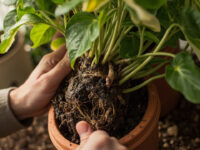
Check by feel, not by calendar. Press a finger into the moss or root mass at the base of the mount.
- If it feels damp and cool, wait.
- If it feels dry and light, water it thoroughly right now.
- In winter or low light, stretch the interval further since the plant is using less water.
Underwatering shows up as fronds that go limp and droopy but still green, an easy fix. Overwatering shows up as darkening at the base and a sour smell, a much harder fix.
Get the water right and the next thing to sort out is what it’s actually rooted into.
Mounting, Potting Mix, and Feeding
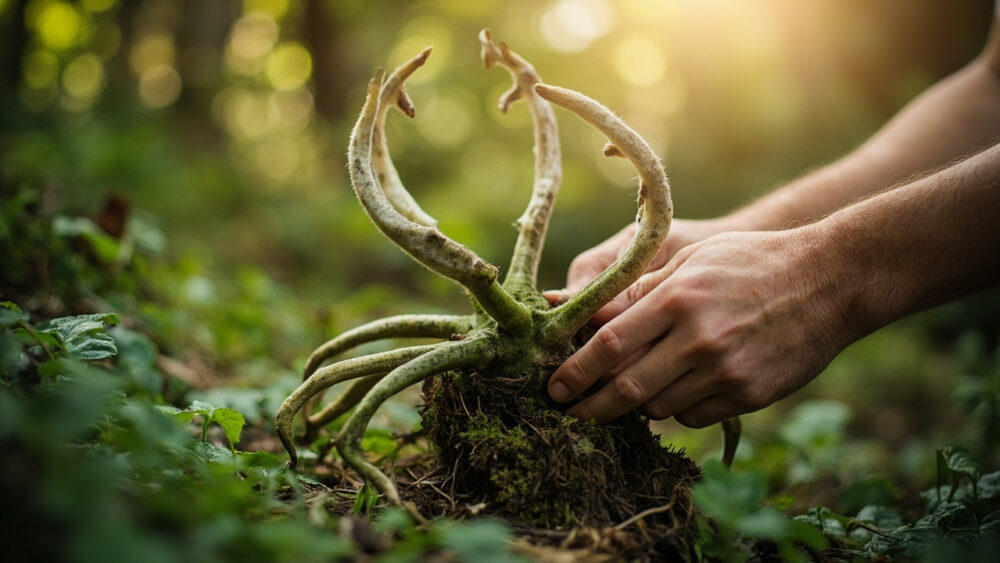
Skip regular potting soil entirely. Staghorns are traditionally mounted on a slab of wood or cork bark with a pad of sphagnum moss behind the roots, tied on with fishing line or wire until the roots grip the mount themselves, usually within 6 to 12 months.
If you’d rather pot one, use a well-draining epiphyte mix, chunky bark, perlite, and sphagnum, in a shallow container, never a dense bagged soil that holds water against the roots.
Feeding is light and infrequent. Use a balanced liquid houseplant fertilizer diluted to about a quarter strength, applied by misting the fronds or watering it in once a month during active growth in spring and summer. Skip feeding in winter when growth slows.
A well-fed staghorn on the right mount is a plant you’ll barely need to touch, which brings up the one job people get backwards.
Pruning, Cleaning, and the Basal Fronds You Should Never Cut
Here’s the payoff on that shield-shaped frond at the base. Those flat, round, brown fronds are the plant’s basal or shield fronds, and they’re doing essential work: catching water, trapping debris for nutrients, and shielding the root mass. They turn papery brown as part of their normal job, not because they’re dying.
Never trim them off. Cutting basal fronds is one of the single most common ways owners accidentally weaken or kill an otherwise healthy staghorn.
The fronds you can prune are the upright, antler-shaped fertile fronds, and only once they’ve fully browned and gone crisp. Snip those at the base with clean shears. Leave any frond that’s still green or only partly browning.
Routine care beyond that is simple: wipe dust off fronds occasionally with a damp cloth or give the plant a gentle rinse, and re-secure the mount if roots outgrow their moss pad, usually every 2 to 4 years for a happily growing plant.
Most of what goes wrong after that isn’t pruning, it’s pests and rot, so here’s what to watch for.
The Problems Most Likely to Strike
The two big threats are rot and scale insects, and they look nothing alike.
- Rot: the base or center of the plant turns dark, soft, and mushy, often with a sour smell. It’s caused by a mount that never dries out. There’s no fixing rotted rhizome tissue, only cutting away affected areas and hoping enough healthy plant remains, so prevention through proper drying-out time is the real cure.
- Scale insects: small brown or tan bumps that cling to the fronds and don’t move, often with a sticky residue nearby. Treat by wiping them off by hand with a damp cloth or cotton swab dipped in isopropyl alcohol, repeating every few days for a couple weeks. For heavier infestations, an insecticidal soap or horticultural oil labeled for ferns works, applied exactly per the product label.
- Brown, crispy antler fronds with no other symptoms is usually just underwatering or low humidity, not disease.
- Fronds staying small and pale points to too little light rather than a nutrient problem.
Staghorns are mildly toxic-adjacent in the sense that, like most ferns, they’re not a known systemic poison, but any houseplant ingestion in a pet is worth a call to your veterinarian rather than guessing, since individual reactions vary and it’s always the safer move.
Once pests and rot are off the table, the only question left is whether the plant is actually happy.
How to Tell It’s Genuinely Thriving
A thriving staghorn pushes out a new antler frond every 2 to 4 months during the growing season, each one a little larger than the last if the plant is mature and well fed. The basal shield fronds should be expanding too, gradually wrapping further around the mount.
New fronds should emerge pale green and fuzzy with fine white or silvery hairs, then darken and firm up as they mature. That fuzz, called trichomes, is normal and actually helps the plant handle drier air.
A plant that’s stalled, not dying, just sitting still season after season, usually needs either more light or a slightly longer dry period between waterings.
Everything above adds up to the short list worth keeping on hand.
Staghorn Fern at a Glance
- Light: bright, indirect light, no direct hot afternoon sun.
- Temperature: keep between 60°F and 85°F, protect from anything below 50°F and from all frost.
- Watering: soak or heavily mist, then let the mount dry mostly out before watering again, roughly every 5 to 14 days depending on humidity and season.
- Mount or mix: wood or cork bark with sphagnum moss, or a chunky bark and perlite mix if potted, never dense potting soil.
- Feeding: quarter-strength balanced fertilizer misted or watered in once a month, spring through summer only.
- Pruning: remove only fully browned, crisp antler fronds, never the flat brown basal shield fronds.
- Signs of health: a new antler frond every 2 to 4 months, expanding shield fronds, fuzzy pale green new growth.
Get the drying-out period right and leave the shield fronds alone, and a staghorn fern will outlast most of the other plants on your windowsill.
Everything else is just details around those two facts.