Caring for lemongrass comes down to four things: give it full sun, keep the soil consistently moist but never soggy, feed it regularly since it grows fast and hungry, and bring it indoors before the first frost if you don’t live somewhere warm year-round. Get those right and you’ll have stalks thick enough to cook with by late summer. Miss one, and you’ll get a sad, thin clump that never bulks up.
Most people who kill lemongrass make the same mistake, and it’s not underwatering. It’s planting it somewhere that looks sunny in spring but gets shaded out by June, or potting it in something so small the roots strangle themselves by midsummer. There’s also a sign of thriving growth that new growers almost always misread as a problem, and a watering habit that seems careful but actually starves the roots of oxygen.
I’ll walk through all of it: light and placement, watering, feeding, the seasonal chores, what actually goes wrong, and how to spot real vigor versus a plant just limping along. Save the “Lemongrass at a Glance” card at the bottom for your phone. It’s the fast version of everything below.
Light, Placement, and Temperature
Lemongrass wants full sun, at least 6 hours a day, more if you can give it. This is a tropical grass native to warm, open conditions, and it will grow leggy and pale in anything less. If you’re growing it in a pot, that pot needs to move with the sun or sit somewhere unobstructed all season, not just in a spot that’s bright in April before the trees leaf out.
Temperature matters more than most herb guides let on. Lemongrass stalls out below about 50°F and will die back hard, sometimes for good, once frost touches it. It’s only reliably hardy outdoors year-round in zones 9 through 11. Everywhere colder, treat it as an annual in the ground or grow it in a pot you can haul indoors before the first frost warning.
Indoors over winter, it wants your brightest window and will still slow down and look rough. That’s normal, not a death sentence.
Watering: How Much, How Often, and How to Tell
Water lemongrass enough to keep the soil consistently moist, not wet. In active summer growth that often means every 2 to 3 days in a pot, less in the ground where roots spread and hold moisture longer. Stick a finger 1 to 2 inches down: if it’s dry there, water. If it’s still damp, wait a day.
Here’s the counterintuitive part. A lot of gardeners assume a plant this lush and tropical-looking wants to sit wet all the time, so they let water stand in the saucer or plant it somewhere low and swampy. That’s the mistake that quietly rots the roots.
Lemongrass wants moisture, but it also wants drainage. Standing water suffocates roots just as fast as drought stresses them, sometimes faster. The plant wilts either way, which is exactly why so many people respond to root rot by watering more.
Check the base of the clump, not just the leaf tips, when you’re deciding whether to water.
Soil, Pots, and Feeding
Lemongrass wants rich, well-draining soil, loose enough that water moves through it in seconds rather than pooling. A basic potting mix with some compost worked in does the job. In the ground, amend heavy clay with compost before you plant, or lemongrass will sit wet and sulk.
If you’re growing it in a container, size up. A single lemongrass plant needs at least a 12 to 16 inch pot, because it forms a dense, expanding clump, and a cramped pot is the second most common way people stall this plant out for good.
Feed it regularly. This is a fast, heavy grower, closer in appetite to corn than to a typical potted herb. A balanced liquid feed every 2 to 3 weeks during the growing season, or a slow-release granular fertilizer worked in at planting, keeps stalks thick instead of thin and wiry.
Skip the feeding and you’ll still get a plant, just not one worth harvesting.
Pruning, Repotting, and Seasonal Cleanup
Lemongrass doesn’t need much routine maintenance, but the few tasks it does need have real timing. Trim brown or dry outer leaves anytime you see them, cutting at the base rather than mid-blade. This keeps airflow good and keeps the clump looking like something you’d want to cook with.
Divide and repot when the clump outgrows its container, usually once a year for actively growing plants, more often if you started with a small pot. You’ll see roots crowding the drainage holes or the whole plant lifting slightly out of the soil. Split it into smaller sections with a sharp knife or saw, keeping a few stalks and a healthy root mass per division.
Going into fall, if you’re overwintering indoors, cut the plant back hard to about 6 inches before bringing it in. This is where a lot of people hesitate, because it feels brutal.
It’s not. A hard cutback right before the move indoors is what lets the plant recover instead of sulking under low winter light with too much foliage to support.
Problems That Actually Show Up
Lemongrass is genuinely low-drama compared to most herbs, but a few issues do show up consistently.
- Yellowing leaves, especially lower ones: usually overwatering or poor drainage, not a nutrient problem. Check the soil before you reach for fertilizer.
- Thin, weak stalks that never thicken: almost always underfeeding or a pot that’s too small for the clump to spread.
- Brown, crispy tips: low humidity or underwatering, common on indoor plants over winter. A light misting or a nearby humidity tray helps.
- Spider mites or aphids: occasional, especially on stressed indoor plants. Rinse the foliage or treat with insecticidal soap, following the product label exactly.
- Rust-colored spots on leaves: a fungal issue tied to overcrowding and poor airflow. Thin the clump and avoid overhead watering that keeps foliage wet.
None of these are usually fatal if you catch them early, which is the real difference between a plant you save and one you start over.
The Sign of Real Vigor (Not the One You’d Guess)
Most people assume a thriving lemongrass plant looks like tall, dramatic, arching blades, the kind you see in photos. That’s part of it, but height alone can be deceptive, especially on a plant that’s stretching toward weak light.
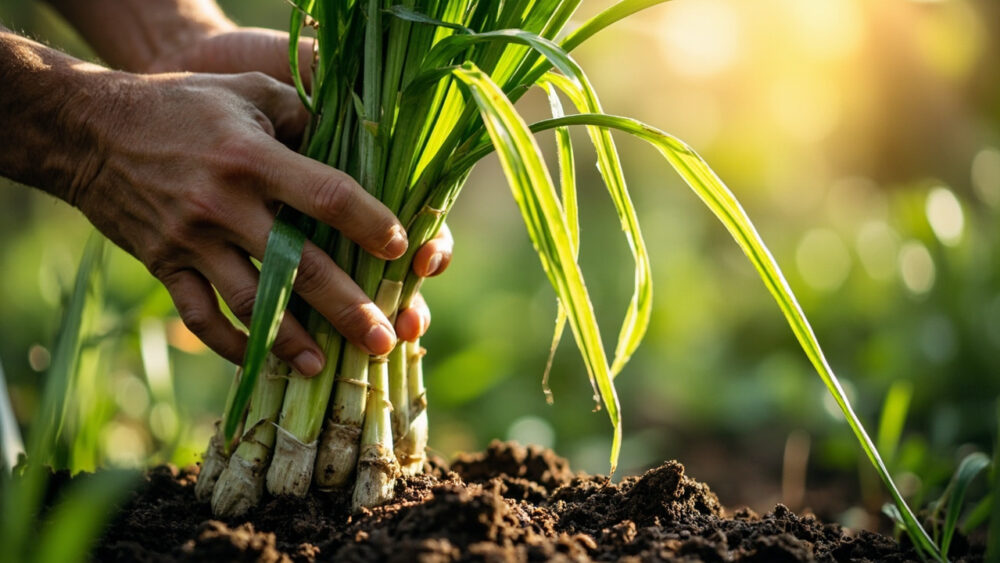
The real tell is at the base. A genuinely healthy clump is dense and multiplying, pushing out new stalks from the center, thickening rather than just growing taller. If you can see individual thin stalks with obvious gaps between them, it’s surviving, not thriving.
Color matters too. Vigorous lemongrass holds a strong blue-green color, with new growth emerging almost purplish at the base before greening up. Pale, yellow-tinged new growth, even on a tall plant, means something upstream, usually feeding or light, isn’t right.
Check the base of the clump before you judge the plant by its height.
Lemongrass at a Glance
- Light: full sun, at least 6 hours daily, more is better.
- Water: keep soil consistently moist, check 1 to 2 inches down, never let it sit in standing water.
- Soil: rich, well-draining mix with compost worked in.
- Feeding: balanced liquid fertilizer every 2 to 3 weeks in the growing season, or slow-release granules at planting.
- Temperature: stalls below 50°F, dies back at frost, hardy outdoors year-round only in zones 9 through 11.
- Pot size: at least 12 to 16 inches for a single clump, size up as it spreads.
- Overwintering: cut back to about 6 inches before bringing indoors, keep in your brightest window.
If you remember one thing, remember the base of the clump, not the height of the blades, tells you the truth about this plant.
Get the drainage and the feeding right, and lemongrass more or less takes care of itself.