Growing avocados comes down to three things: protecting a young tree from frost and wind, giving its roots soil that drains fast, and accepting that patience is not optional. Plant a grafted tree in spring once nights stay above 30°F, give it full sun and a spot the size of a small car, and you can pick your first fruit in 2 to 4 years. Grow one from a pit instead and you might wait 10 to 15 years, if it fruits at all.
Here is the part almost nobody wants to hear: that avocado pit sitting in a glass of water on your windowsill will probably never give you fruit worth eating. There is a real reason for that, and it is not bad luck. There is also a specific watering mistake that kills more avocado trees than cold ever does, and a ripeness test that has nothing to do with squeezing the fruit on the tree.
Stick with this guide and you will know exactly when to plant, how to plant, and how to read the signs your tree gives you all season. Save the “Avocados at a Glance” card at the very bottom for the numbers you will want to check again next week.
When to Plant an Avocado Tree
Plant in spring, after your last frost date has passed and soil temperatures have warmed into the 60s F. A young avocado tree has almost no cold tolerance, and a late frost can kill it in one night. In mild-winter climates you can also plant in early fall, giving roots a head start before summer heat arrives.
Avocados are only reliably grown outdoors in USDA zones 9 through 11, though a few cold-hardier Mexican-type varieties push into protected zone 8 spots. Everywhere colder, you are growing a container plant that spends winter indoors near a bright window.
Skip the pit-in-water method if you actually want fruit. Seed-grown trees are wildly unpredictable and usually take a decade or more to bear, if they bear at all.
Buy a grafted tree instead, and the next question is where to put it.
Choosing the Spot and Prepping the Soil
Avocados want full sun, at least 6 to 8 hours a day, and shelter from strong wind, which shreds leaves and knocks off developing fruit. Give the tree 15 to 25 feet of clearance from structures and other trees at full size, though dwarf varieties like Little Cado stay closer to 10 feet.
Drainage is everything. Avocado roots rot fast in soggy soil, so heavy clay is a real problem unless you amend it or plant on a mound.
Work compost into the top 12 to 18 inches of soil and aim for a slightly acidic to neutral pH, roughly 6 to 7. If water still puddles an hour after a hard rain, build a raised mound 12 to 18 inches high and plant into that instead of fighting the native soil.
Good drainage solves problems before they start, but planting technique is where most people lose the tree in year one.
Planting an Avocado Tree Step by Step
This is the part where the guessable move backfires. Most people plant the same way they’d plant a tomato: deep, snug, and settled in. An avocado punishes that.
1. Dig the hole wide, not deep
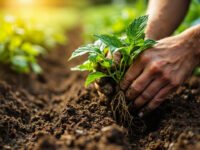
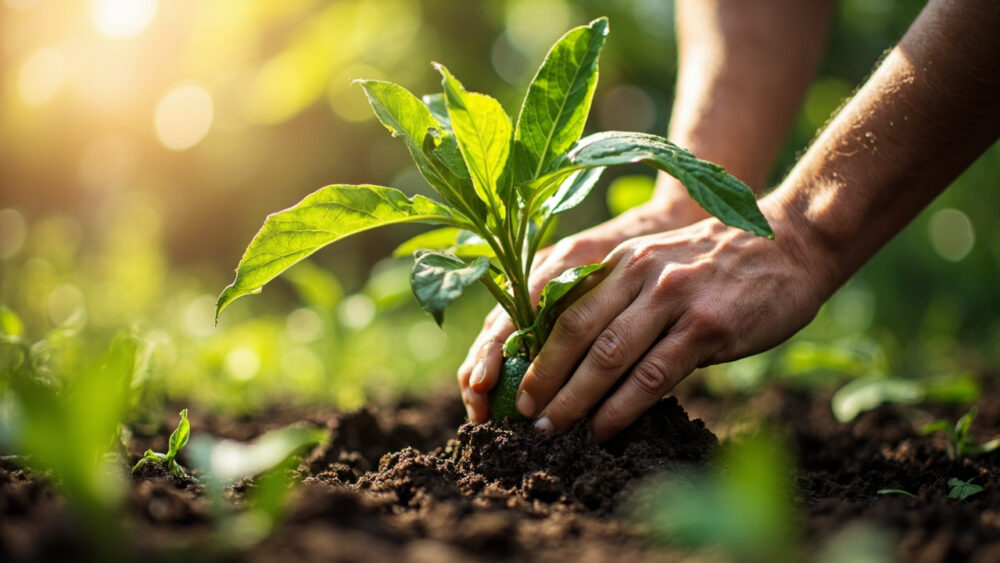
Make the hole 2 to 3 times as wide as the root ball but no deeper than the root ball itself. Planting too deep is one of the most common killers of a young avocado tree.
2. Keep the graft union and trunk flare above soil level
The point where the trunk widens at the base, and the graft scar a few inches above it, should sit an inch or two above the surrounding soil once you’re done. Settling happens, so plant a little high on purpose.
3. Set the tree and backfill gently
Loosen the root ball slightly, set it in the hole, and backfill with the native soil you dug out mixed with compost. Firm it down by hand, not by stomping, to avoid compacting the roots.
4. Water in and mulch
Water deeply right after planting to settle the soil around the roots. Spread 2 to 3 inches of mulch in a ring starting several inches from the trunk, never piled against it.
5. Stake if needed, and protect from sun scald
A young trunk sunburns easily. Wrap it loosely with tree wrap or paint it with diluted white latex paint if it’s had no canopy protection.
Get the tree in the ground correctly and the next challenge starts the very next day: how much water it actually wants.
Watering and Feeding Through the Season
If you assumed more water is always safer for a thirsty-looking avocado, that assumption is exactly what drowns most trees. Avocado roots need oxygen almost as much as they need water, and soil that stays wet suffocates them.
Water when the top 2 to 3 inches of soil dry out, not on a fixed schedule. For a young tree that’s often every 2 to 3 days in hot weather and once a week or less once established, always adjusted to your soil and climate.
Drooping, curling leaves with dry, crispy brown edges usually mean underwatering or salt buildup. Yellowing leaves that stay soft, combined with wet soil, point to overwatering or root rot instead. Same symptom family, opposite causes, so always check the soil with your finger before reacting.
Feed lightly. Use a balanced fruit tree fertilizer or one formulated for citrus and avocado, applied in small doses through spring and summer following the label rate, and stop feeding by late summer so the tree can harden off before any cool weather.
Watering right prevents most disasters, but a few pests and diseases will still test you.
Problems That Actually Show Up
Root rot from phytophthora is the big one, caused almost entirely by poor drainage and overwatering. Wilting despite wet soil and dieback in the canopy are the signs. Prevention through drainage is far more effective than any treatment once it’s established.
Sunburned bark on young, unprotected trunks shows up as sunken, cracked patches on the sun-facing side. Wrap or paint young trunks before this happens rather than treating it after.
- Persea mite and other leaf mites: cause stippled, bronze-colored leaves. A strong hose spray and encouraging natural predators handles light infestations.
- Avocado lace bug: leaves brown fine speckling on leaf undersides. Healthy, unstressed trees tolerate it well.
- Anthracnose and other fungal fruit spots: show up as dark sunken spots on ripening fruit, worse in humid weather. Improve airflow through pruning and avoid wetting foliage when you water.
For anything that looks like a serious infestation or disease outbreak beyond light cultural fixes, follow the label directions exactly on any product you choose, and when in doubt ask a local extension office rather than guessing.
Handle the pests and the drainage, and eventually your patience gets rewarded with actual fruit.
When and How to Harvest Avocados
Here’s the part almost every new grower gets backwards: avocados do not ripen on the tree. They mature on the tree but only soften after picking, which is why squeezing fruit while it hangs tells you nothing useful.
Depending on variety, fruit matures anywhere from 6 to 18 months after flowering, and different varieties on the same tree can mature at wildly different times of year. The real test is picking one sample fruit and letting it sit at room temperature for a few days.
If it shrivels instead of softening, it wasn’t mature yet and you should wait several more weeks before trying again. If it softens evenly and tastes right, the rest of that size and color of fruit on the tree is ready to pick.
Mature fruit can hang on the tree for weeks to a few months without spoiling, which gives you a harvest window rather than a single deadline. Clip fruit with a bit of stem attached rather than yanking it, which tears the skin and speeds rot.
Everything above is the real process, and here is the short version to save.
Avocados at a Glance
- When to plant: spring after last frost once soil hits the 60s F, or early fall in mild-winter climates.
- Where it grows outdoors: USDA zones 9 through 11, with a few hardy types tolerating protected zone 8 spots.
- Spacing: 15 to 25 feet from structures and other trees, 10 feet or so for dwarf varieties.
- Planting depth: hole no deeper than the root ball, trunk flare and graft union an inch or two above soil level.
- Watering: when the top 2 to 3 inches of soil dry out, never on wet, soggy ground.
- Time to first fruit: 2 to 4 years for a grafted tree, 10 to 15 years or never for a seed-grown one.
- Harvest test: pick one fruit and let it soften at room temperature for a few days before picking the rest.
Get the drainage and the planting depth right, and most other problems solve themselves.
Everything else is just patience, a hose, and learning to trust the soil under your finger instead of the leaves above it.