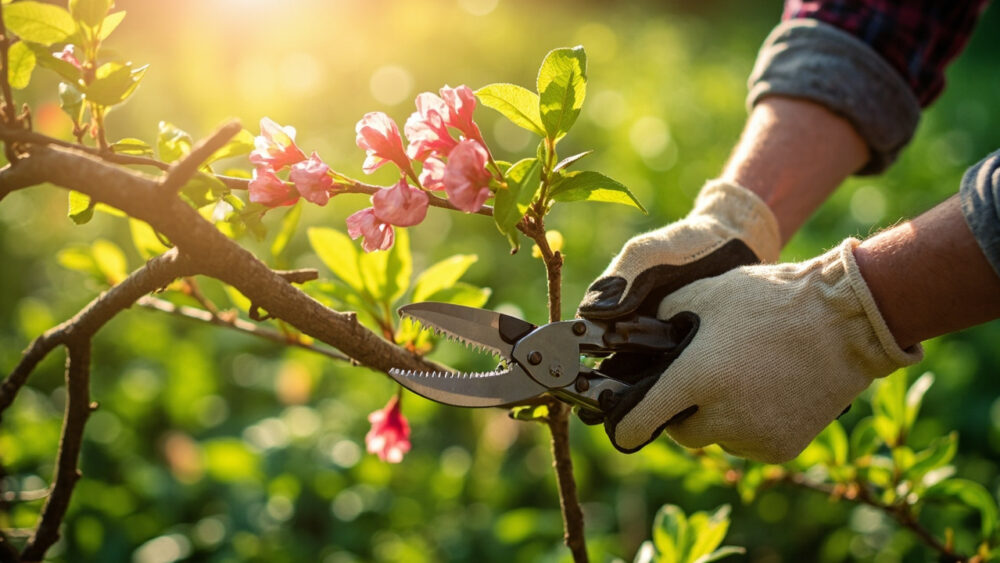
The best time to prune weigela is right after it finishes blooming in late spring or early summer, not in fall or winter like most shrubs. Cut spent flowering branches back by about one-third, remove any dead or crossing wood down to the base, and stop by midsummer so next year’s flower buds have time to form. Get the timing wrong and you will not kill the shrub, but you will cut off next year’s flowers before they even show themselves.
That timing mistake is the one that trips up almost everyone who prunes weigela, and it is not the only one. There is also a sign on the shrub itself that most people read backward, thinking it means the opposite of what it actually means.
And once you get past timing, there is the honest question everyone asks next: how much can you actually cut without losing the shape for a year or two. I will answer all of it, and the save-able Weigela at a Glance card is waiting at the bottom once you have the full picture.
When to Prune Weigela, and When to Leave It Alone
Weigela sets its flower buds on old wood, meaning the growth it puts out this year is what blooms next spring. That is the whole reason timing matters so much here.
Prune right after the spring flower show fades, typically late spring into early summer depending on your zone. The shrub then has the whole growing season to push new wood and set buds for next year.
Do not prune in fall, winter, or early spring before it blooms. That wood is holding next year’s flowers, and cutting it off now means a nearly flowerless shrub next season.
The one exception is a quick pass for winter-damaged or dead branches, which you can remove any time you spot them.
Once you know the window, the next question is what you actually need in hand before you make a cut.
Tools and the One Prep Step That Matters
You need bypass pruners for anything pencil-thick or thinner, loppers for branches up to about an inch and a half across, and a pruning saw for anything thicker than that at the base of an older shrub.
Sharp and clean matters more than expensive. Dull blades crush stems instead of slicing them, and that crushed tissue heals slower and invites disease.
Wipe the blades with rubbing alcohol before you start, especially if you pruned a diseased plant recently. This is the prep step people skip, and it is how fungal and bacterial problems hop from one shrub to the next in your yard.
Take a minute before cutting anything to actually look at the shrub’s shape from a few feet back, not up close.
Once your tools are ready and you have eyes on the whole shrub, it is time to start cutting.
Step 1: Remove the Dead, Damaged, and Diseased Wood First
Cut out any branch that is obviously dead, cracked, or diseased before you touch anything else. Cut back into healthy wood, where the center is pale green or cream rather than brown and dry.
Step 2: Take Out the Oldest, Thickest Stems at the Base
Weigela blooms best on younger wood, so remove one-quarter to one-third of the oldest, thickest stems each year, cutting them near ground level. This is how you keep a mature shrub full of vigorous, flower-heavy wood instead of tall bare canes with blooms only at the very top.
Step 3: Shape by Cutting Spent Flower Branches Back by a Third
On the branches that just finished blooming, cut back about one-third of their length, making the cut just above an outward-facing bud or side shoot. This encourages branching, which means more flowering wood next year rather than a few long whips.
Step 4: Thin Crowded Interior Growth
Reach into the center of the shrub and remove a few of the thin, crossing, or crowded branches. Good airflow through the middle keeps foliage healthier and shows off the arching form weigela is known for.
What happens after this first cut is where most people start second-guessing themselves.
What to Expect After You Prune
New growth usually shows up within two to three weeks if the shrub is healthy and the weather is warm enough. That flush of green is exactly what you want to see.
Here is the sign people misread: a burst of new shoots right after pruning looks aggressive, almost like the shrub is stressed and scrambling to recover. It is not stress. It is the shrub doing precisely what a summer prune is supposed to trigger.
That new wood is what carries next spring’s flowers, so a vigorous flush now is a good omen, not a warning sign.
You likely will not see any blooms again until next spring, and that is normal, not a failure on your part.
A shrub that was pruned hard for renewal may look sparse through midsummer before it fills back in, which brings up the mistakes that actually cost people flowers.
The Mistakes That Cost You Next Year’s Flowers
Pruning at the wrong time of year is the single biggest flower-killer, and it is worth repeating because it is so easy to do by accident. A fall cleanup pass, done out of habit because that is when you prune everything else, removes the exact wood that would have bloomed in spring.
Shearing the shrub into a ball is the second big mistake. Hedge shears create a dense outer shell of growth while starving the interior of light, and weigela’s naturally arching, fountain-like habit disappears for good.
Removing more than a third of the shrub’s total growth in one year is a third common error. It can trigger a stress response that shows up as weak, leggy regrowth instead of the full, floriferous shrub you were aiming for.
Leaving old, woody stems untouched for years is the quieter mistake. The shrub keeps blooming, but the flowers migrate higher and higher out of sight while the base goes bare and twiggy.
- Pruning in fall, winter, or early spring before bloom
- Shearing into a formal ball or hedge shape
- Removing more than a third of the shrub in a single year
- Never renewing old wood at the base
- Using dull or dirty blades that crush rather than cut
Avoid those five and you are already ahead of most people with pruners in hand.
What If Your Weigela Is Old, Woody, and Overgrown
If the shrub is mostly bare stems with flowers only at the top, a hard renewal cut is the honest fix, not a light trim. Cut the entire shrub back to 6 to 12 inches from the ground right after it blooms, and it will spend the rest of the season rebuilding vigorous new wood.
You will lose most of that year’s flowers doing this, and there is no way around that tradeoff.
By the following spring or the one after, you get a fuller, better-shaped shrub in return.
Everything you need to remember about doing this right, in one place, is right below.
Weigela at a Glance
- When to prune: right after spring flowering finishes, typically late spring to early summer, never in fall or winter.
- How much to remove: no more than one-third of total growth in a single year, plus one-quarter to one-third of the oldest stems cut at the base.
- Where to cut: just above an outward-facing bud on flowering branches, and at ground level for old, thick renewal stems.
- Tools needed: bypass pruners, loppers for thicker branches, a pruning saw for old wood, blades wiped clean with rubbing alcohol first.
- Renewal cut for overgrown shrubs: cut the whole shrub back to 6 to 12 inches after bloom, expect a lighter flower year, full recovery in one to two seasons.
- What to expect after: new growth within two to three weeks, no more blooms until next spring, that is normal.
- Biggest mistake to avoid: pruning at the wrong time of year, which removes next year’s flower buds before they form.
Prune weigela right after it blooms, take no more than a third, and cut old stems at the base every year.
Get those two things right and the flowers take care of themselves.