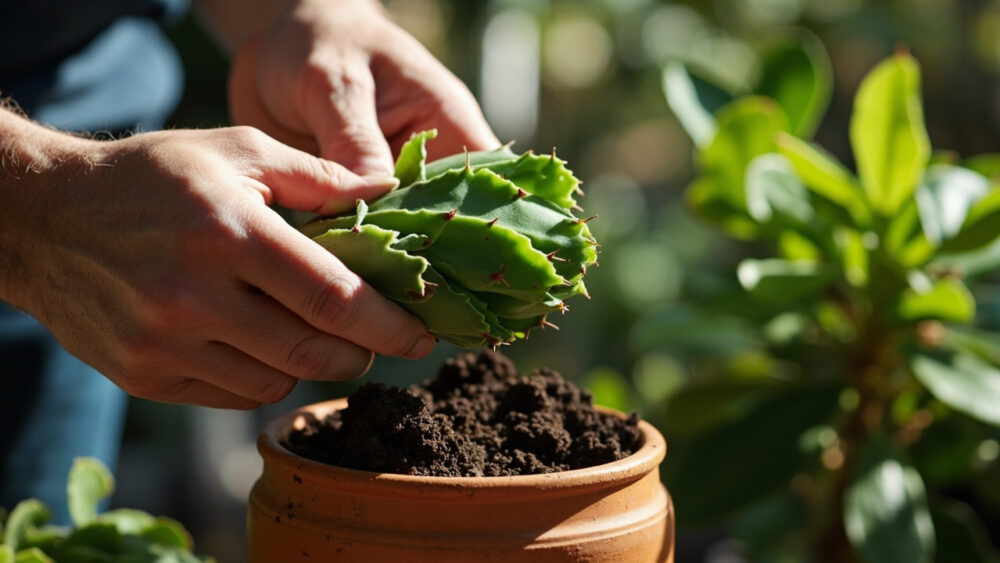
The method that actually works is stem cuttings rooted in barely damp perlite or a cactus mix, not water. You’ll learn how to propagate christmas cactus from a 2-3 segment cutting that you let dry for a day or two before it ever touches soil, and that drying step is the part almost everyone skips. Skip it and you’re not propagating, you’re composting.
Here’s what nobody tells you upfront: the segment count on your cutting matters more than the size, the “rooting in water” method that works for pothos will quietly rot a Christmas cactus, and the biggest sign of success in week two looks almost identical to the biggest sign of failure. I’ll untangle all three.
Stick around for the week-by-week timeline, the exact reasons most cuttings fail, and a save-able Christmas Cactus at a Glance card at the bottom with every number in one place.
Why Stem Cuttings Beat Every Other Method
Christmas cactus (Schlumbergera) is a jungle cactus, not a desert one, and it propagates the way most succulent-adjacent plants with flat, jointed stems do: from segment cuttings. Division works if your plant already has multiple crowns, but most houseplants don’t, so cuttings are the practical default.
Leaf propagation isn’t a real option here because there are no true leaves, just flattened stem segments called phylloclades. People try to root a single segment all the time. It can work, but a 2-3 segment cutting roots faster and gives you a fuller plant sooner, because you’re not waiting on one growth point to do all the work.
The other reason cuttings win: timing flexibility. You can take them any time the plant isn’t actively budding or flowering, which in most homes means late winter through summer.
Next up is exactly where to cut and how long to let the wound sit before it meets soil.
Step by Step: Taking the Cutting and Getting It to Root
Taking the cutting
Twist off a piece 2 to 3 segments long where two segments join, rather than cutting through the middle of a segment. A gentle twist at the joint separates cleanly with your fingers, no blade needed.
Take the cutting from a healthy, plump stem, never from a segment that’s gone limp or wrinkled.
The drying step everyone skips
Set the cutting somewhere out of direct sun for 1 to 3 days so the cut end calluses over. This is the single most-skipped step, and it’s why so many first attempts turn to mush. A fresh, wet wound sitting in damp mix is an open door for rot.
Rooting medium and conditions
Use a mix that drains fast: a standard cactus or succulent mix, or perlite with a little potting soil mixed in. Water, despite being the internet’s favorite shortcut, produces weaker roots that struggle when you eventually pot into soil.
Insert the calloused end about half an inch to an inch deep, just enough for the cutting to stand upright on its own. Water lightly once, then let the top inch of mix go completely dry between waterings until you see new growth. Keep it in bright, indirect light and normal room temperature, ideally 65 to 75°F.
Get the callous and the medium right and the rest is mostly waiting, which is its own kind of test.
Week by Week: What You’re Actually Looking For
Week 1 to 2: nothing visible happens above the soil, and that’s normal. Underneath, if conditions are right, root initials are forming at the calloused end.
Here’s the sign everyone misreads: a cutting that looks slightly shriveled or dull at week two is often fine, that’s just it running on stored moisture while roots establish. A cutting that turns soft, dark, or mushy at the base, on the other hand, is rotting, not rooting. Same “not much is happening” appearance, opposite outcome, and the only way to tell them apart is to check the base for firmness, not color.
Week 3 to 4: give the cutting a gentle tug. Resistance means roots have formed. No resistance yet doesn’t mean failure, some cuttings take 5 to 6 weeks, especially in cooler rooms.
Week 5 to 8: you should see a new segment starting to form at the tip, which is the clearest possible confirmation that it’s rooted and growing.
Once you’ve got real resistance and new growth, it’s time to think about a proper pot.
When and How to Pot Up
Move a rooted cutting into its own small pot once you feel that tug resistance and ideally see a new segment forming, typically 4 to 8 weeks after planting. A 3 to 4 inch pot is plenty for a single 2-3 segment cutting.
Choose a pot with drainage holes, no exceptions, since this plant’s biggest enemy indoors is soggy, airless soil. Use the same fast-draining cactus mix you rooted it in, or transition to a peat-based mix with extra perlite folded in.
Plant at the same depth it was rooting at, water it in once, then hold off on fertilizer for about a month while it settles. After that, feed lightly during spring and summer growth with a diluted balanced houseplant fertilizer, and skip fall and winter feeding entirely.
A newly potted cutting still isn’t out of danger, and here’s where most people lose it anyway.
Why Most Attempts Fail (and the Fix for Each)
- Rooting in water: produces thin, brittle roots that often can’t make the transition to soil. Root in mix from the start.
- Skipping the callous: a fresh wound in damp soil rots before it roots. Always dry 1 to 3 days first.
- Overwatering after planting: the top inch of mix should go bone dry between waterings until you see growth. Constant dampness is the top cause of a mushy base.
- Cutting mid-segment instead of at a joint: a mid-segment cut heals poorly. Twist at the natural joint every time.
- Cold, drafty windowsills: rooting stalls below about 60°F. Keep cuttings at normal room temperature, not on a chilly sill.
- Taking cuttings while the plant is budding or blooming: the plant’s energy is elsewhere and cuttings root poorly. Wait until after flowering.
Fix those six and you’ve solved the vast majority of failed attempts before they happen.
Christmas Cactus at a Glance
- Best method: stem cuttings, 2 to 3 segments long, twisted off at a natural joint.
- Callous time: let the cut end dry 1 to 3 days before planting, this is the step that saves most cuttings.
- Rooting medium: cactus or succulent mix, or perlite with a little potting soil, never plain water.
- Planting depth: half an inch to one inch deep, just enough to stand upright.
- Conditions: bright indirect light, 65 to 75°F, top inch of mix dry between waterings.
- Timeline: root check at 3 to 4 weeks, new growth visible by 5 to 8 weeks.
- Pot up when: a gentle tug meets resistance and a new segment starts forming, into a 3 to 4 inch pot with drainage holes.
Get the callous and the moisture level right and this plant nearly propagates itself.
Everything else on this page is just insurance against the two mistakes that actually cause failure.