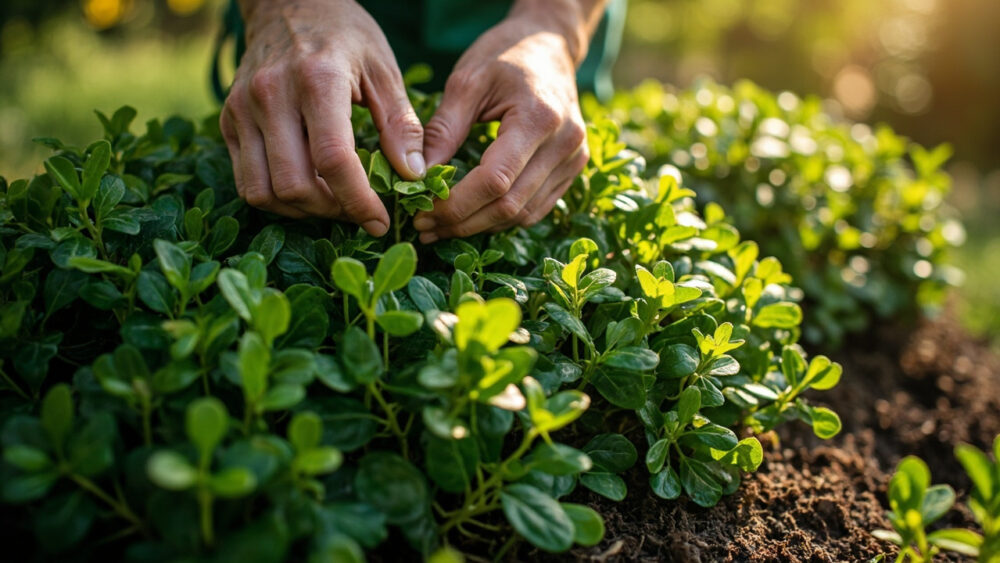
Boxwood grows best planted in early fall or early spring, spaced 2 to 3 feet apart for a hedge, set no deeper than it sat in its nursery pot, in soil that drains well and stays on the sweet side of neutral. If you’re standing next to a row of boxwoods right now trying to figure out how to grow boxwood without losing half of them by next summer, that’s the whole game in one sentence. The details are where people go wrong.
Most boxwood failures trace back to one habit: planting too deep and mulching too heavy right against the stem. It looks tidy for about a year, then the plant declines for reasons that seem mysterious but aren’t. There’s also a sign of trouble almost everyone misreads as a watering problem when it’s actually a fungal disease with a specific name and a specific fix.
I’ll walk through timing, siting, planting depth, feeding, and the diseases that actually kill boxwood, in the order you’ll hit them. Save-able specifics, including spacing and soil pH, are waiting in the Boxwood at a Glance card at the bottom.
When to Plant Boxwood
Early fall, roughly six weeks before your ground typically freezes, is the best window. Soil is still warm, air is cooling, and roots settle in without the stress of summer heat. Early spring, once soil is workable and nighttime temps stay reliably above the mid 20s F, is the solid second option.
Avoid planting boxwood in the dead of summer if you can help it. New transplants in 85 F heat need constant babysitting to avoid transplant shock, and in zones 5 and 6 a late fall planting risks the roots not anchoring before hard freeze.
Boxwood is reliably hardy in zones 5 through 9 depending on variety, with some cultivars like Green Gem and Green Velvet tolerating colder winters better than English boxwood.
Timing gets you a good start, but the spot you choose decides whether that start holds.
Choosing the Spot and Prepping the Soil
Boxwood wants part sun to light shade, protection from harsh winter wind, and soil that drains well. Full, blasting afternoon sun in a hot climate scorches the foliage bronze. Deep shade makes growth thin and leggy. A spot with morning sun and afternoon shade, or dappled light all day, is close to ideal.
Soil pH matters more with boxwood than with most shrubs. It prefers slightly alkaline to neutral soil, roughly 6.5 to 7.5. If your soil tests acidic, working in a little garden lime before planting corrects it; a soil test is worth the few dollars before you guess.
Drainage is non-negotiable. Boxwood roots sit shallow and rot fast in soil that stays soggy, so if water pools after rain, build a raised bed or amend heavily with compost before you plant anything.
Get the site right and the next part, actually putting the plant in the ground, is almost foolproof.
Step-by-Step Planting
- Dig the hole wide, not deep: two to three times the width of the root ball, but only as deep as the root ball itself.
- Check the root flare: the point where the trunk widens into roots should sit level with or very slightly above the surrounding soil, never buried.
- Loosen circling roots: if the plant is rootbound, score or gently tease the outer roots so they grow outward instead of continuing to spiral.
- Backfill with native soil mixed with compost, tamping gently to remove air pockets without compacting it hard.
- Space plants 2 to 3 feet apart for a solid hedge line, or 3 to 5 feet for specimens meant to stay separate and fill out individually.
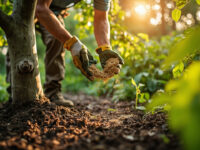
- Mulch 2 inches deep, pulled back a few inches from the stem so bark stays dry.
- Water deeply right after planting to settle the soil around the roots.
That mulch gap around the stem is the detail almost nobody follows, and it’s the difference between a healthy trunk and a rotting one.
Watering and Feeding Through the Season
New boxwood needs consistent moisture for its first full year, about 1 inch of water a week between rain and irrigation. Check the soil 2 to 3 inches down; if it’s dry at that depth, water. Established boxwood, three years in and older, tolerates short dry spells but still wants water during real drought, especially going into winter when a well-hydrated plant handles cold better than a stressed one.
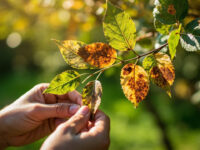
If you assumed a boxwood turning yellow or bronze needs more water, that guess is usually wrong and can make things worse by keeping roots wet. Bronzing in winter is often just sun and wind exposure on evergreen foliage, a cosmetic issue that greens back up in spring. Constant yellowing in growing season points more often to poor drainage or a pH problem than thirst.
Feed lightly, once in early spring with a balanced, slow-release fertilizer formulated for shrubs, or with a half-inch layer of compost worked into the top of the soil. Boxwood does not want heavy nitrogen. It pushes soft, fast growth that’s more vulnerable to disease and winter dieback.
Get the water and food right and boxwood is low-maintenance, but it isn’t problem-free, and that’s the part worth knowing before you see it.
The Problems That Actually Take Boxwood Down
Boxwood blight is the one to know by name. It shows up as dark leaf spots, black streaks on stems, and rapid, sudden browning and defoliation, especially in humid weather. It spreads fast on wet foliage and contaminated tools and pruning shears. There’s no cure once it’s established. Badly infected plants usually need to be removed and destroyed rather than treated indefinitely.
Volutella blight and boxwood leafminer are more common and more manageable. Volutella causes patchy dieback and pinkish spore masses on the underside of leaves in damp conditions. Pruning out dead wood and improving airflow handles most cases. Leafminer larvae tunnel inside leaves, causing blistered, off-color patches. A well-timed treatment following the product label, applied when adults are active in spring, keeps populations down.
Prevent more than you treat. Space plants for airflow, avoid wetting foliage when you water, sanitize pruning tools between plants, and avoid working around boxwood when leaves are wet. Most disease pressure on boxwood is a humidity and airflow problem before it’s anything else.
If you’re growing boxwood as a formal hedge, the last piece is knowing when and how to shape it without opening the door to disease.
Pruning and Shaping: Boxwood’s Version of Harvest
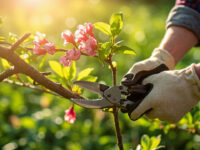
Boxwood doesn’t fruit or flower for harvest, its “maturity” is really about shape and density, and pruning is how you get there. Light shearing for shape is best done in late spring to early summer, after the first flush of new growth has hardened off slightly. A second light trim in late summer is fine in most zones, but stop pruning at least 6 weeks before your first expected fall frost so new growth has time to harden before cold hits.
For a young hedge, resist shearing hard in the first year or two. Light shaping cuts encourage the dense, twiggy growth that makes boxwood look full. Heavy cuts on an immature plant just set it back.
Always prune on a dry day, and clean your shears with rubbing alcohol between plants, especially if you’ve seen any blight symptoms anywhere nearby.
Get the timing and the tool hygiene right, and a boxwood hedge only gets denser and more useful every year.
Boxwood at a Glance
- When to plant: early fall about six weeks before hard freeze, or early spring once soil is workable.
- Spacing: 2 to 3 feet apart for a hedge, 3 to 5 feet for standalone specimens.
- Planting depth: root flare level with or slightly above the soil surface, never buried.
- Soil and pH: well-drained soil, pH 6.5 to 7.5, amended with compost if heavy or acidic.
- Light: part sun to light shade, protection from harsh winter wind and blasting afternoon sun.
- Water and feed: about 1 inch weekly the first year, light balanced fertilizer once in early spring.
- Watch for: boxwood blight, volutella blight, and leafminer, headed off with airflow, dry foliage, and clean tools.
Get the planting depth and the fall or spring timing right, and boxwood forgives almost everything else.
Everything past that is just shaping the plant into what you pictured.